DOE Launches $5B ‘Genesis Mission’ to Supercharge AI Research
The United States Department of Energy (DOE) has officially signaled a transformative shift in its research strategy with the launch of the ‘Genesis Mission.’ Spearheaded by Secretary of Energy Chris Wright, this $5 billion federal initiative represents one of the most significant government-led efforts to integrate artificial intelligence (AI) directly into the backbone of scientific discovery and energy security. With the selection of 278 high-impact projects, the initiative is designed to bridge the gap between theoretical research and tangible, scalable solutions for the nation’s energy future.
Redefining Scientific Discovery with AI
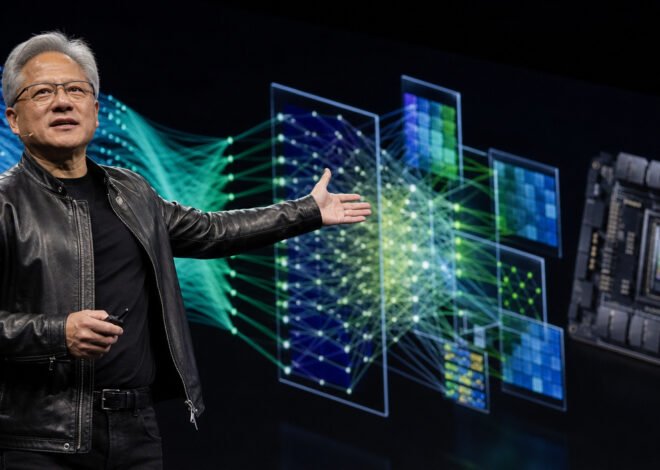
The core of the Genesis Mission lies in the transition from traditional, trial-and-error laboratory experimentation to AI-driven, predictive modeling. By leveraging massive datasets generated by the DOE’s existing network of national laboratories, the Genesis Mission aims to compress decades of research cycles into months.
Secretary Wright emphasized that the integration of AI is not merely a tool for efficiency, but a requisite for national security. The selected 278 projects are tasked with addressing some of the most complex challenges in modern science: discovering next-generation battery materials, stabilizing fusion reactions, and optimizing the nation’s electrical grid against both climate volatility and cyber threats. By deploying advanced neural networks and machine learning algorithms, researchers can simulate molecular interactions at unprecedented speeds, identifying promising material candidates that would have previously taken years to isolate in a physical lab environment.
The $5 Billion Blueprint: Strategy and Scope
The allocation of $5 billion is strategically tiered across the 278 selected projects. This funding is not distributed evenly; it is performance-based and milestone-driven, ensuring that projects demonstrate rapid prototyping capabilities and clear paths toward real-world application.
The initiative focuses on three core pillars: Energy Sovereignty, National Security, and Computational Acceleration. For instance, projects under the Energy Sovereignty pillar are currently utilizing AI to refine carbon capture technologies, making them commercially viable at a scale that can impact industrial manufacturing. Meanwhile, projects under the National Security pillar are utilizing predictive AI to map vulnerabilities within the national energy grid, allowing for automated, self-healing protocols to be tested in sandbox environments before field deployment.
A Collaborative Ecosystem: Labs, Academia, and Industry
A hallmark of the Genesis Mission is its mandatory collaborative framework. To be eligible for the funding, projects were required to form cross-sector partnerships. This means that a university with leading-edge theoretical research must pair with a private industry player that can provide the manufacturing capability, and a national lab that provides the high-performance computing (HPC) infrastructure.
This “triple-helix” approach—Academic Research, Private Sector Innovation, and National Lab Computing Power—is designed to solve the ‘Valley of Death,’ the period where promising scientific inventions often fail to reach commercialization due to lack of funding or infrastructure. By integrating these three sectors from day one, Secretary Wright’s Genesis Mission ensures that discoveries move from the conceptual phase to prototype and market-ready products with unprecedented velocity.
National Security and the Energy Grid
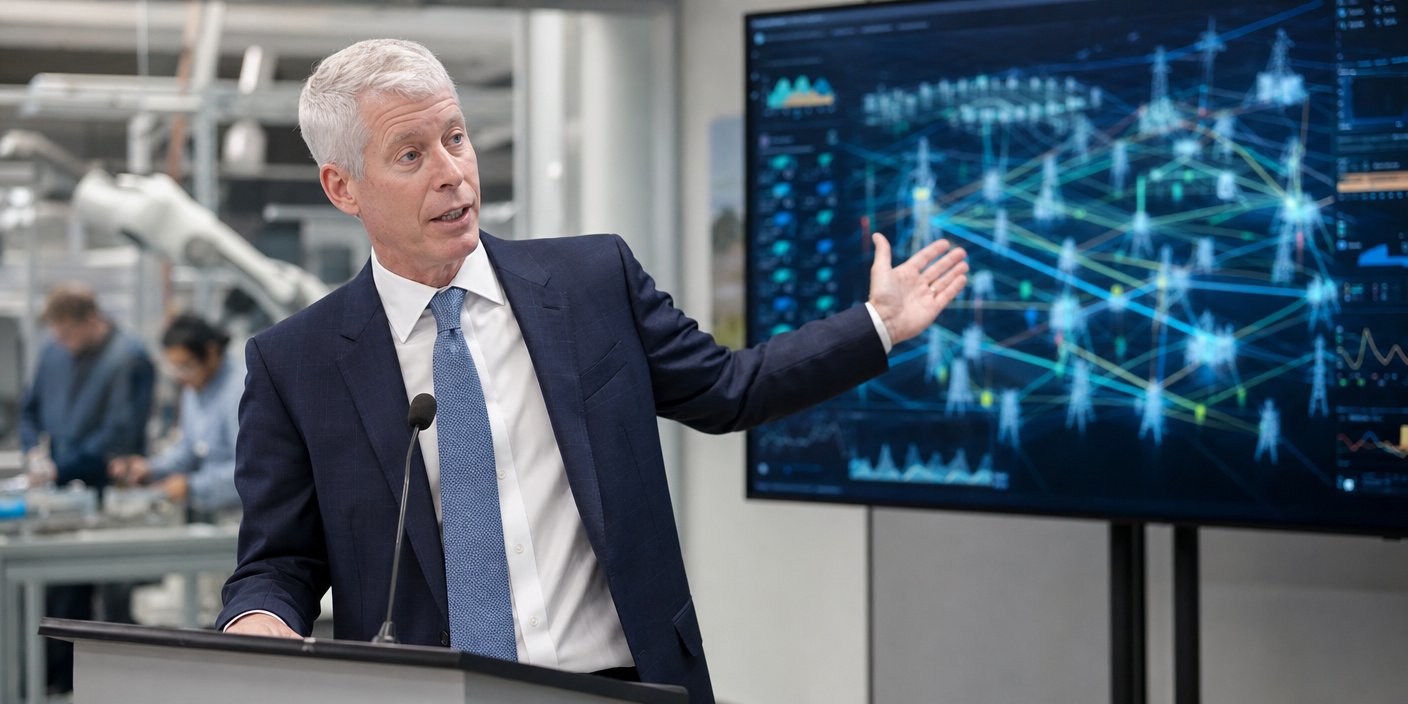
Perhaps the most pressing aspect of the Genesis Mission involves the hardening of national infrastructure. Modern electrical grids are increasingly interconnected and reliant on complex software systems that are vulnerable to sophisticated cyber threats. The Genesis Mission has prioritized 45 of its 278 projects specifically for ‘Grid Resilience.’
These projects are using AI to build ‘Digital Twins’ of the U.S. power grid. These digital replicas allow researchers to stress-test the entire national infrastructure against simulated cyber-attacks or catastrophic weather events without risking actual power outages. The AI learns from these simulations, creating defensive protocols that can evolve in real-time, effectively creating a self-defending energy network that can reroute power and isolate compromised segments autonomously.
Future-Proofing the American Economy
Looking forward, the success of the Genesis Mission will likely define the trajectory of the U.S. energy sector for the coming decades. By institutionalizing AI as a partner in discovery, the DOE is creating a feedback loop: every new discovery feeds into the AI models, making them smarter and more capable of the next breakthrough. This recursive innovation cycle is expected to lead to a surge in patents, startups, and industrial advancements centered on energy independence. As Secretary Wright noted during the announcement, this is not just about funding science; it is about securing the technological infrastructure that will underpin the American economy for the next century.


Related Posts