DHS Declares FIFA World Cup 2026 a Historic Security Success
The U.S. Department of Homeland Security (DHS) has officially designated the FIFA World Cup 2026 as the most secure and expansive sporting event in modern history, marking a watershed moment for federal interagency coordination and global event management. Following the tournament’s conclusion, the DHS released an internal summary acknowledging the successful mitigation of complex threats, praising the unprecedented collaboration between federal, state, and local law enforcement agencies that ensured the safety of millions of international spectators and participants.
Key Highlights
- DHS officially identifies the 2026 FIFA World Cup as the largest and most secure sporting event in global history.
- Success is attributed to a massive, unified interagency framework involving federal, state, and local partners.
- Implementation of advanced real-time intelligence sharing and cybersecurity protocols prevented significant disruptions.
- The operational blueprint developed for the tournament now serves as the new gold standard for future large-scale international gatherings in the United States.
The Architecture of a Secure Tournament
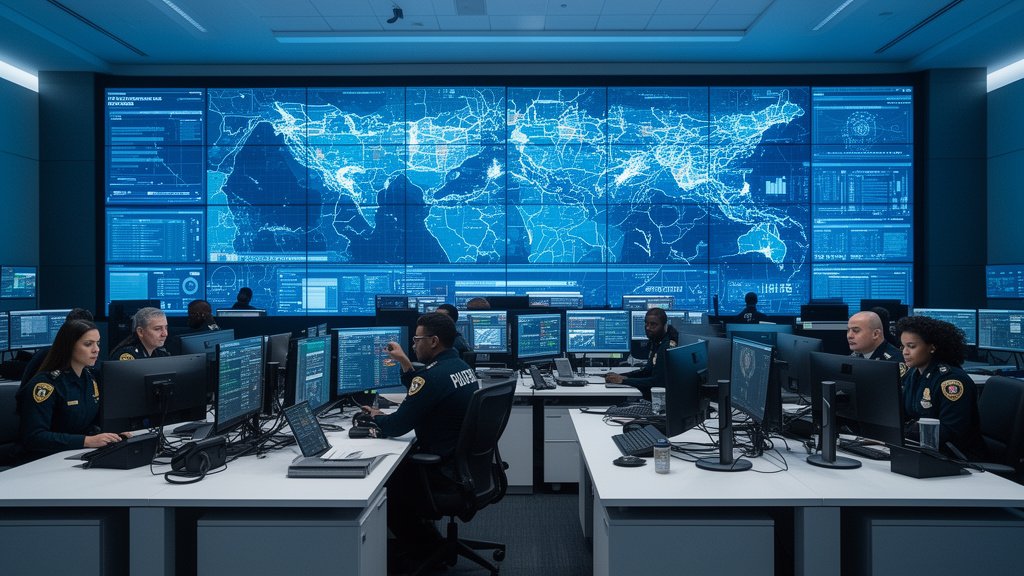
The logistical complexity of the FIFA World Cup 2026—spanning multiple host cities across the United States—presented an unprecedented security challenge. DHS, working in conjunction with the Federal Bureau of Investigation (FBI), the Cybersecurity and Infrastructure Security Agency (CISA), and the Transportation Security Administration (TSA), established a ‘Unified Command’ structure that operated 24/7 throughout the tournament. This structure was designed to centralize decision-making and ensure that information flowed instantly between local police departments and federal intelligence centers.
Scaling Security to Unprecedented Levels
In previous sporting events, security silos often hindered effective communication. For the 2026 World Cup, the DHS mandated a shared intelligence platform that integrated local law enforcement data with federal surveillance capabilities. This interoperability allowed authorities to monitor and respond to potential threats, ranging from cyberattacks on ticketing infrastructure to physical security breaches at stadiums, with granular precision. The success of this integration demonstrated that decentralized hosting could be managed centrally from a security standpoint without compromising local operational control.
The Role of Technological Integration
Central to the DHS report was the role of technological modernization. CISA played a pivotal role in hardening critical infrastructure, specifically focusing on the digital backbone of the tournament. With millions of fans relying on mobile applications for ticketing, transportation, and venue access, the threat of cyber-disruption was significant. The agency utilized advanced threat-hunting capabilities to identify vulnerabilities in venue networks before they could be exploited. This proactive ‘defense-forward’ posture effectively neutralized potential digital threats that might have otherwise paralyzed venue operations during peak game times.
Interagency Cooperation: The Force Multiplier
Perhaps the most significant factor cited by the DHS was the scale of interagency cooperation. Agencies that historically struggled with data sharing—including transit authorities, private stadium security firms, and local health departments—were folded into a comprehensive federal oversight umbrella. This synergy enabled a ‘whole-of-government’ approach to event safety. By standardizing training protocols across these disparate entities, the DHS ensured that a stadium guard in Los Angeles operated under the same intelligence awareness as a federal agent monitoring a high-traffic hub in New York.
The Future of Event Security
The successful execution of the 2026 FIFA World Cup has profound implications for how the United States approaches the security of major international events. The DHS has signaled that the operational lessons learned—specifically the integration of AI-assisted surveillance and real-time interagency data fusion—will be codified into a new standard operating procedure. This ‘2026 Protocol’ is expected to be the baseline for upcoming international events, including future Olympic Games held on U.S. soil. The tournament has essentially reset the expectations for public safety, proving that despite the massive scale, modern intelligence and cooperation can render even the most vulnerable public spaces secure.
FAQ: People Also Ask
What specific security measures did the DHS implement for the 2026 FIFA World Cup?
The DHS implemented a multilayered security strategy, including enhanced cybersecurity for venue infrastructure, real-time intelligence sharing between federal and local law enforcement through a Unified Command center, and the deployment of advanced screening technologies at high-density fan zones.
How did the DHS manage the scale of the 2026 tournament compared to previous events?
By creating a ‘Unified Command’ structure, the DHS bridged communication gaps between federal agencies like the FBI and TSA and local law enforcement. This interoperability allowed for a centralized response to localized threats across various host cities, ensuring a consistent security posture throughout the nation.
What impact does this success have on future events in the U.S.?
The operational framework and the ‘whole-of-government’ approach used during the 2026 World Cup have set a new benchmark for major international events in the U.S., including future Olympic Games, providing a proven, scalable model for ensuring public safety in massive public gatherings.


Related Posts