Chanel Claims Q2 2026: eBay’s $1.2B Depop Play Shakes Market
Chanel has solidified its position as the world’s hottest brand, reclaiming the top spot in the Lyst Index for Q2 2026. This resurgence of traditional luxury prestige coincides with a major market upheaval in the secondary sector, as eBay finalized a $1.2 billion acquisition of the Gen Z-focused platform Depop. These simultaneous developments signal a bifurcated fashion economy where legacy house power and peer-to-peer resale agility are increasingly driving the industry’s narrative. Meanwhile, luxury conglomerates LVMH and Kering have reported mixed quarterly growth, painting a complex picture of a cooling primary luxury market.
Key Highlights
- Chanel crowned the #1 brand in the Lyst Index for Q2 2026, reflecting high search demand and strong cultural resonance.
- eBay confirms the acquisition of Depop for $1.2 billion, a strategic maneuver to capture the Gen Z resale market.
- LVMH and Kering release mixed quarterly earnings, indicating a deceleration in high-end consumer spending.
- The fashion sector is currently defined by the tension between aspirational heritage buying and the increasing institutionalization of the resale market.
The Dual Reality of the 2026 Luxury Market
The landscape of the global fashion industry has undergone a radical transformation by the second quarter of 2026. Data from the latest Lyst Index confirms that while economic headwinds persist, consumer appetite for top-tier, heritage-driven legacy brands like Chanel remains remarkably resilient. This ‘flight to quality’ phenomenon is not merely an indicator of brand loyalty but suggests that in an era of global economic uncertainty, consumers are prioritizing assets—both physical and financial—that retain value. Chanel’s retention of the top spot highlights the brand’s masterclass in balancing exclusivity with digital-first storytelling, effectively insulating itself from the volatility impacting its peers.
The ‘Chanel Effect’ and Brand Exclusivity
Chanel’s success in Q2 2026 isn’t just about revenue; it’s about the ‘Hottest Brand’ metrics that Lyst tracks: social media mentions, search volume, and purchase intent. By maintaining strict control over distribution and limiting wholesale presence, Chanel has created a feedback loop where demand perpetually outstrips supply. This scarcity model is particularly effective in a digital age where social proof is the ultimate currency. Analysts note that Chanel’s ability to remain ‘top of mind’ for the average luxury consumer, despite the general malaise in the luxury sector, suggests that the gap between the ‘megabrands’ and the rest of the market is widening significantly. While other brands oscillate between relevance and over-saturation, Chanel has cemented its status as a foundational pillar of the industry.
The eBay-Depop Acquisition: A $1.2 Billion Bet on Gen Z
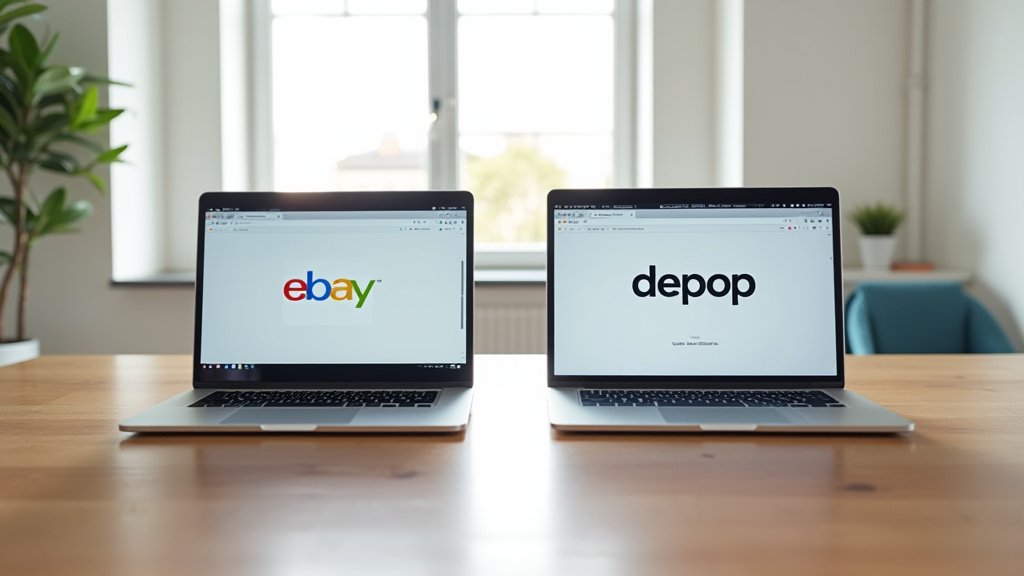
Perhaps the most consequential piece of business news this week is the confirmation of eBay’s $1.2 billion acquisition of Depop. This move represents a tectonic shift in the resale economy. For years, eBay has functioned as the ‘digital flea market’ of the internet, but it has faced stiff competition from vertical-specific platforms like Depop, Vinted, and The RealReal. By integrating Depop, eBay is effectively buying into the Gen Z demographic that it had struggled to capture organically.
This $1.2 billion price tag is a clear signal that the resale market is no longer a fringe component of fashion; it is a core business segment. The synergy here is clear: eBay provides the logistics, the massive server infrastructure, and the global reach, while Depop provides the ‘cool factor,’ the community, and the specific user interface habits of younger consumers. This acquisition puts pressure on other luxury players to decide whether to build their own resale infrastructure or partner with existing giants, effectively ending the era of luxury houses operating in complete isolation from the secondary market.
The Conglomerate ‘Growth Hangover’
Contrasting with Chanel’s dominance and the resale boom, the luxury conglomerate sector—specifically represented by LVMH and Kering—has reported mixed quarterly growth. The ‘post-pandemic boom’ that saw unprecedented year-over-year growth for these groups appears to have hit a ceiling. The Q2 2026 earnings reports show a deceleration in demand, particularly in key markets like North America and China, where inflation and shifting consumer priorities are causing a pullback in discretionary spending.
The Institutional Slowdown
For LVMH and Kering, the challenge is twofold: they must continue to raise prices to maintain margins, but they are reaching the psychological price ceiling for even their wealthiest customers. The ‘mixed growth’ narrative in these earnings calls often masks the fact that while high-end leather goods remain stable, the entry-level luxury categories (small accessories, branded streetwear) are seeing a decline. This creates a difficult balancing act for CEOs: how do you keep a brand aspirationally ‘everywhere’ while keeping the actual sales volume exclusive? As the Lyst Index data shows, the market is moving toward the extremes—either the absolute pinnacle of high-luxury (Chanel) or the hyper-efficient, value-oriented resale economy (Depop/eBay). The ‘middle’ is increasingly being squeezed, a fact that is clearly visible in the quarterly performance of these massive conglomerates.
Secondary Angles: Future Implications
1. The Institutionalization of Circular Fashion: The eBay/Depop deal is the final nail in the coffin for the argument that resale is an ‘amateur’ pursuit. It is now a high-stakes, multi-billion-dollar corporate game.
2. The End of ‘Logo-Mania’ Growth: As growth slows, the conglomerates will likely move away from the growth-at-all-costs model. Expect a shift toward ‘quiet luxury’ and extreme scarcity to artificially prop up demand.
3. Data-Driven Fashion: The dominance of the Lyst Index proves that fashion is now an algorithm-driven industry. Brands that don’t participate in the digital ecosystem or that fail to curate their social metrics will be left behind in 2026 and beyond.
FAQ: People Also Ask
Q: Why is Chanel considered the ‘hottest brand’ in 2026?
A: The Lyst Index calculates this based on search volume, social media mentions, and user engagement. Chanel’s consistent high ranking is attributed to a combination of effective digital marketing, sustained desirability of its classic products, and a lack of aggressive discount or clearance strategies.
Q: What does the eBay acquisition of Depop mean for the average user?
A: While users may not see immediate changes, the acquisition will likely lead to better technical integration, faster shipping, and potentially more ‘authentic’ verification processes for luxury items sold on the platforms, backed by eBay’s massive operational scale.
Q: Are LVMH and Kering in trouble?
A: Not in trouble, but they are experiencing a normalization of growth. The unprecedented growth numbers from previous years were not sustainable indefinitely. They are currently transitioning from a ‘growth’ phase to a ‘value and margin preservation’ phase.
Q: How does the luxury market compare to the resale market in terms of growth?
A: The primary luxury market is currently stable but showing signs of saturation, whereas the resale market is experiencing rapid expansion and consolidation, evidenced by massive investments like the $1.2 billion Depop deal.


Related Posts