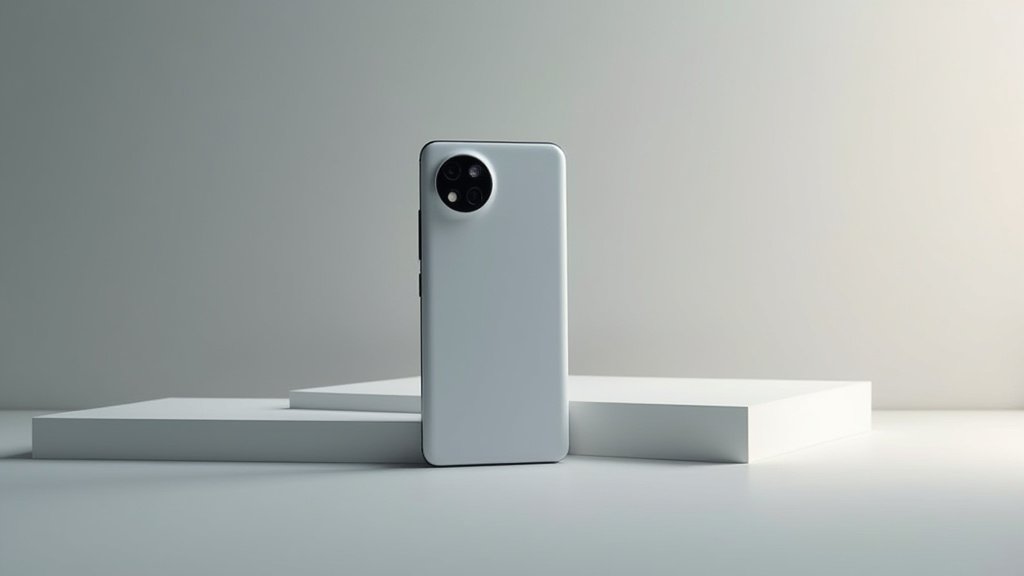
Google Unveils Pixel 11: AI-Powered & Slimmer Design
The Google Pixel 11 has officially arrived, signaling a pivotal evolution in the company’s mobile strategy. By pivoting toward a more streamlined hardware profile and aggressively doubling down on artificial intelligence, Google is positioning the Pixel 11 not merely as a smartphone, but as a sophisticated mobile computing platform. The most immediate visual change is the refinement of the device’s chassis, which incorporates a significantly slimmer camera bump, addressing a long-standing point of user feedback regarding the bulkiness of previous generations. Beneath the surface, the device represents a fundamental shift in user expectations, headlined by a jump to a 256GB base storage capacity and an optimized power management system that promises to redefine expectations for daily endurance.
Key Highlights
- Advanced AI-First Architecture: Deep integration of Google’s latest AI models directly into the device’s kernel for real-time processing.
- Refined Industrial Design: A new, significantly slimmer camera housing reduces device bulk while maintaining sensor fidelity.
- Extended 30-Hour Battery: Next-generation power optimization techniques deliver a true 30-hour battery life under standard usage patterns.
- Elimination of 128GB Base Model: The Pixel 11 lineup now starts at 256GB, reflecting the growing storage demands of modern generative AI features and high-resolution media.
The Engineering Evolution of the Pixel 11
The most striking aspect of the Pixel 11’s debut is the successful reconciliation of high-performance optics with a slimmer, more ergonomic form factor. Historically, the trade-off for superior camera hardware has been a protruding, often unwieldy camera ‘visor.’ With the Pixel 11, Google engineers have utilized new, high-density sensor packaging that allows for full-size performance within a reduced footprint. This hardware advancement is not just aesthetic; it improves the device’s stability on flat surfaces and enhances the overall tactile experience of holding the phone. By streamlining the hardware, Google is signaling a departure from the ‘bulky tech’ aesthetic of the early 2020s, favoring a more refined, professional look that prioritizes ease of use without sacrificing internal capabilities.
AI Integration: The Invisible Engine
While the hardware is slimmer, the software is arguably ‘heavier’ and more capable than ever. Google has woven its proprietary AI technology deeper into the Android OS, allowing for more intuitive, on-device operations. Unlike previous iterations that relied heavily on cloud-based processing for complex tasks, the Pixel 11 leverages localized AI reasoning for many primary functions. This shift minimizes latency and enhances privacy, as complex data tasks are handled directly on the chipset. The integration of this technology is seamless, operating in the background to handle everything from real-time noise cancellation to dynamic, AI-assisted image post-processing that happens in the fraction of a second after a shutter click.
The Storage Pivot: A Response to Modern Demands
Perhaps the most consumer-focused update is the decision to eliminate the 128GB base model entirely. In an era of 4K video recording, heavy AI application caching, and high-fidelity media streaming, 128GB has become the modern equivalent of 16GB storage—a limitation that frustrates power users. By establishing 256GB as the new baseline, Google is acknowledging the reality of modern mobile usage. This move also serves as a subtle industry nudge, likely forcing competitors to re-evaluate their own tiered pricing models. For the end user, this ensures that the device remains performant and useful for years to come, preventing the ‘storage anxiety’ that often plagues mid-lifecycle devices.
Market Impact and Secondary Strategic Angles
The launch of the Pixel 11 provides a fascinating lens through which to view current market trends.
Firstly, consider the Economic Impact of Storage Standardization. By removing the entry-level 128GB option, Google is essentially raising the effective barrier to entry for the Pixel lineup. This suggests a confidence in the brand’s value proposition—the company believes customers are willing to pay for a ‘pro-sumer’ experience from the start.
Secondly, we must analyze the Computational Photography Arms Race. As physical hardware size reaches a ceiling due to physics, the battleground has shifted to post-processing algorithms. The Pixel 11 proves that the ‘best’ camera is no longer the one with the biggest lens, but the one with the most intelligent software stack.
Finally, there is the Privacy-First AI Paradigm. By moving more AI tasks to local hardware, Google is creating a moat against privacy concerns, which have become a primary friction point for users considering AI-integrated devices. The ability to perform AI tasks locally, without sending sensitive user data to the cloud, is a key competitive advantage that the Pixel 11 exploits to the fullest.
FAQ: People Also Ask
Q: What is the main benefit of the slimmer camera profile on the Pixel 11?
A: The primary benefit is improved ergonomics and aesthetics. A slimmer profile reduces the device’s bulk, making it easier to slip into pockets, and it enhances stability when the phone is laid flat on a surface, all while maintaining high-end sensor performance.
Q: Why did Google decide to remove the 128GB storage model?
A: As apps, high-quality photos, and AI-driven features consume significantly more space, 128GB has become insufficient for the average power user. Providing 256GB as the new base model ensures long-term usability and reduces consumer frustration.
Q: How does the 30-hour battery life compare to previous models?
A: The 30-hour battery life represents a significant optimization in power management, utilizing both hardware efficiency improvements and advanced AI-driven background process management to ensure the phone lasts a full day and well into the next under standard usage.
Q: Is the new AI integration dependent on an internet connection?
A: No, a key feature of the Pixel 11 is its capability to perform many complex AI tasks locally on the device’s chipset, ensuring faster processing speeds and enhanced data privacy for the user.


Related Posts