
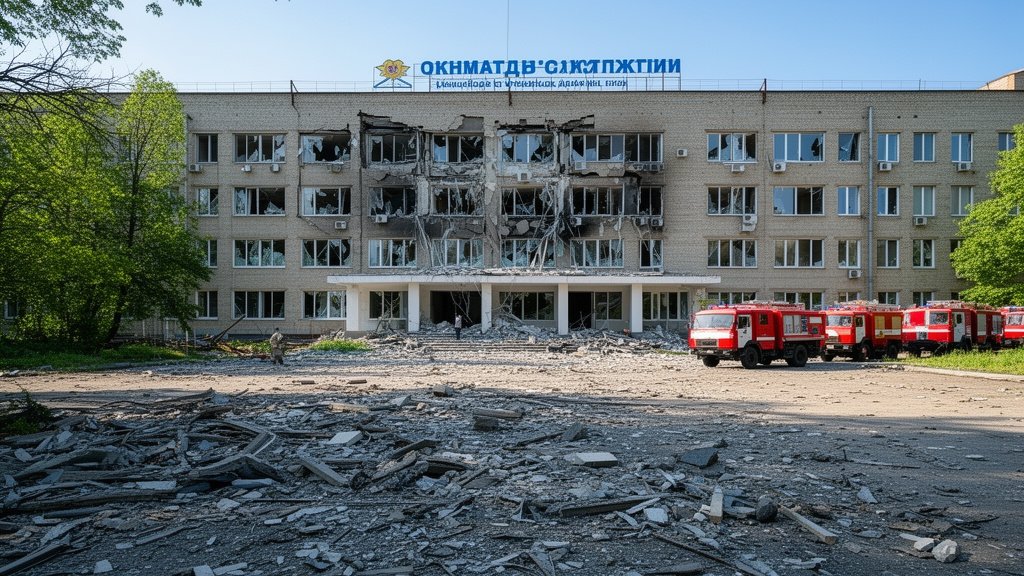
Kyiv Under Siege: 17 Confirmed Dead in Targeted Russian Missile Barrage
A wave of Russian missiles struck the heart of Kyiv on July 8, claiming at least 17 lives and inflicting catastrophic damage on critical civilian infrastructure, most notably the Okhmatdyt Children’s Hospital. The coordinated daytime barrage, which utilized a mix of cruise and ballistic missiles, stands as one of the most brazen assaults on a medical facility since the full-scale invasion began, triggering a wave of grief and international outrage across the globe.
Key Highlights
- Casualty Figures: At least 17 individuals have been confirmed dead in Kyiv alone, with emergency responders continuing to sift through the wreckage.
- Hospital Strike: The Okhmatdyt Children’s Hospital, the largest children’s medical center in Ukraine, suffered direct hits, forcing the evacuation of patients into the streets.
- Tactical Escalation: The attack occurred during daylight hours, a departure from typical nocturnal patterns, aimed at maximizing civilian panic and infrastructural damage.
- Global Response: The United Nations and various international human rights organizations have condemned the strike, highlighting the protected status of hospitals under international humanitarian law.
The Anatomy of an Attack: Analyzing the Kyiv Barrage
The events of July 8 mark a harrowing inflection point in the ongoing conflict. As the sirens wailed across Kyiv, the city’s air defense systems were overwhelmed by a complex, multi-vector attack. While many projectiles were intercepted, the sheer volume of incoming fire allowed several missiles to penetrate the capital’s protective umbrella, resulting in the tragic loss of at least 17 lives. This escalation serves as a stark reminder of the limitations of regional air defense and the evolving strategies of Russian military command.
The Assault on Okhmatdyt Children’s Hospital
Perhaps the most searing image of the day was the destruction of the Okhmatdyt Children’s Hospital. This facility is not merely a medical center; it is a critical hub for complex pediatric surgeries, dialysis, and oncology treatments in Ukraine. The strike caused the collapse of a toxicology ward and damaged the intensive care units. Eyewitness accounts described medical staff performing life-saving procedures in the open air, their scrubs stained with dust and blood, while parents frantically carried children on gurneys away from the smoldering debris. The psychological impact of targeting such a location cannot be overstated; it strikes at the fundamental pillars of a society’s future.
Geopolitical and Legal Implications
From a legal standpoint, the targeting of a hospital—unless used for military purposes, of which there is no credible evidence in this instance—constitutes a prima facie violation of the Geneva Conventions. The United Nations Human Rights Monitoring Mission in Ukraine has expressed deep concern, with observers suggesting that the specific trajectory of the missiles indicates an intentional strike on protected civilian objects. This event has renewed calls within the European Union and NATO for the expedited delivery of advanced air defense systems, such as the Patriot or NASAMS units, to ensure that major urban centers like Kyiv are not left defenseless against future barrages.
Strategic Shifts and Resilience
Why this shift to daylight attacks? Military analysts suggest that Russia is attempting to deplete Ukraine’s interceptor stockpile by forcing the use of expensive air defense missiles at high-frequency intervals. By attacking in the morning, the aggressor aims to disrupt not only physical infrastructure but the rhythm of daily life and economic stability. Yet, the response from the citizens of Kyiv—who organized spontaneous clean-up crews and supply drives within hours of the strike—demonstrates a level of societal resilience that continues to defy strategic calculations.
The Secondary Angles of Modern Warfare
To understand the broader implications of this tragedy, one must look at three critical secondary vectors:
1. The Economic Burden of Medical Reconstruction: The cost of rebuilding specialized medical facilities like Okhmatdyt is astronomical, not just in materials but in the specialized equipment required. This diverts essential state funds away from the defense budget, effectively creating an economic secondary front.
2. The Trauma of the Next Generation: The psychological scarring of children who witnessed the destruction of their hospital and the deaths of peers will create a long-term mental health crisis, requiring international aid for decades to come, independent of the ongoing kinetic war.
3. The Intelligence Failure Paradox: The ability of Russian intelligence to identify the precise coordinates of protected civilian buildings raises questions about internal security protocols. There is a pressing need for a full investigation into how these facilities were targeted, looking for potential local informants or systemic cybersecurity failures that allowed for such precise targeting data to be leaked.
FAQ: People Also Ask
Q: What is the current status of the Okhmatdyt Children’s Hospital?
A: The hospital suffered severe structural damage, forcing the relocation of critical pediatric patients to other regional facilities. While emergency efforts continue, a significant portion of the specialized surgical and oncology infrastructure is currently offline.
Q: Why was this attack considered a major shift in the conflict?
A: The attack was notable for occurring during the day, specifically targeting the heart of the capital and a high-profile civilian facility, which military analysts view as an escalation intended to maximize psychological terror and challenge the effectiveness of Western-supplied air defenses.
Q: Is there evidence that the hospital was being used for military purposes?
A: No. International observers and humanitarian groups have repeatedly confirmed that Okhmatdyt remains a strictly civilian medical facility, making the strike a likely violation of International Humanitarian Law.


Related Posts