‘Heritage in Resistance’: Paris Exhibition Omits Gaza
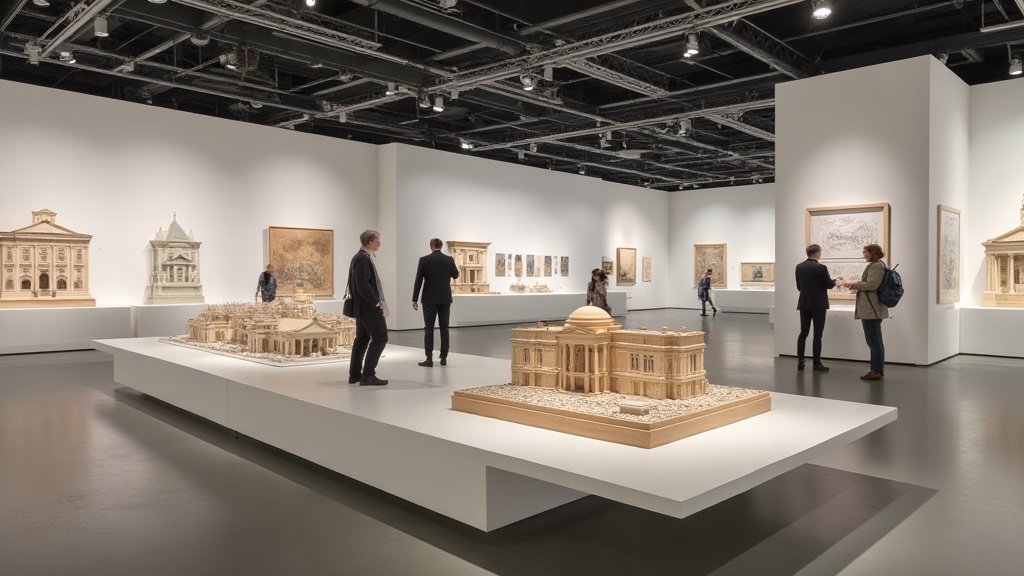
The Cité de l’Architecture et du Patrimoine in Paris, currently hosting the ambitious exhibition “Heritage in Resistance: Timbuktu to Odessa,” has found itself at the center of a growing controversy. While the exhibition is designed to celebrate the resilience of cultural sites and the heroic efforts to protect history amidst conflict—specifically focusing on the defense of Timbuktu’s manuscripts and the protection of heritage in Ukraine—critics argue that its narrative is fatally incomplete. By conspicuously omitting the widespread destruction of cultural sites in Gaza, the institution is facing allegations of double standards and political erasure, raising uncomfortable questions about whose history is deemed worthy of preservation in the eyes of Western cultural bodies.
Key Highlights
- Strategic Omission: The exhibition focuses heavily on geopolitical conflicts in Timbuktu and Odessa, yet makes no reference to the extensive damage to cultural, educational, and historical sites in the Gaza Strip.
- Defining ‘Cultural Cleansing’: Critics argue that the exhibition’s framework for identifying “cultural cleansing” appears geographically restricted, failing to apply the same criteria to Palestinian heritage.
- Institutional Accountability: Major organizations like the Cité de l’Architecture et du Patrimoine are being pressured to justify why certain zones of conflict are included in the narrative of “resistance” while others are excluded.
- The Cost of Silence: Scholars point out that institutions like the Al-Isra University and the Great Omari Mosque in Gaza represent irreplaceable heritage that has been lost, challenging the curatorial integrity of the Paris display.
The Selective Lens of Heritage: A Crisis of Omission
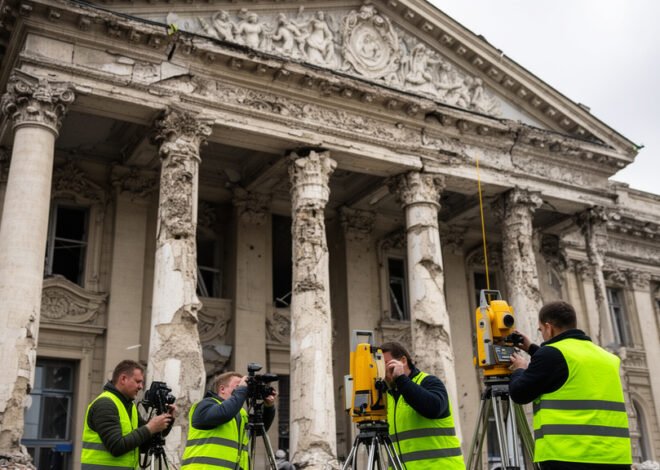
The exhibition “Heritage in Resistance,” which seeks to document the frontlines of architectural preservation, has become a lightning rod for the broader debate regarding the neutrality of museum spaces. Curated to honor the “protection” of built environments under fire, the exhibit effectively chronicles the heroics of librarians, archivists, and architects who have risked their lives to save civilization’s collective memory. However, the absence of any discourse regarding the cultural landscape of Gaza has been described by some cultural observers as a “curatorial blind spot” that is not merely an oversight, but a political choice.
The Absence of Gaza: Data vs. Narrative
To understand the gravity of the omission, one must look at the data. According to reports from the Palestinian Ministry of Culture and various independent observers, over 200 heritage sites, including the Great Omari Mosque, the ancient Port of Gaza, and several historical archives, have been significantly damaged or completely destroyed since October 7th. Furthermore, the systematic demolition of educational institutions, such as Al-Isra University, has resulted in the loss of thousands of years of intellectual output.
The exhibition’s failure to incorporate these facts into its “Timbuktu to Odessa” narrative suggests a bifurcated standard. While the protection of Ukrainian heritage—rightfully treated with global urgency by UNESCO and ICOM—receives dedicated spotlighting, the architectural devastation in Gaza is relegated to an invisible footnote. This disparity forces the viewer to ask: on what metric does an institution decide that a cathedral in Odessa or a manuscript in Timbuktu is a site of ‘resistance,’ while a centuries-old mosque in Gaza is not?
Curatorial Responsibility and Cultural Cleansing
The term “cultural cleansing” has specific, legalistic definitions within international law, often associated with the destruction of identity-defining structures. By failing to acknowledge the destruction in Gaza, the Cité de l’Architecture et du Patrimoine risks sanitizing the very concept it aims to protect. If a museum exhibition defines itself as a chronicle of heritage under attack, any selective reporting implicitly validates one narrative of loss while delegitimizing another.
Curators often claim neutrality in the face of complex political conflicts. Yet, in the realm of heritage, neutrality is often indistinguishable from negligence. When a major Parisian institution ignores the leveling of ancient archives, it signals to the public that some cultural memories are permanent and worth saving, while others are expendable. This creates a dangerous precedent, undermining the universal mission of organizations like the International Council of Museums (ICOM), which advocates for the protection of heritage regardless of political boundaries.
The Geopolitical Framing of History
The second, more structural angle involves the geopolitical positioning of Western heritage institutions. The “Timbuktu to Odessa” arc is one that aligns with established geopolitical interests. The preservation of Ukrainian culture has become a symbolic battleground in the broader conflict with Russia, supported heavily by European funding and public discourse. Conversely, the situation in the Middle East involves more nuanced—and often more polarizing—political allegiances for many European institutions.
By omitting Gaza, the museum does not simply avoid controversy; it inadvertently participates in the erasure it claims to document. If the goal of the exhibition is to foster global empathy for threatened heritage, the choice to filter which heritage is “threatened” undermines the exhibition’s own stated ethos. This is a classic example of how institutional biases shape the historical record in real-time, effectively “writing out” the destruction of Palestinian culture to maintain a clean, uncontroversial, and palatable narrative for a Western audience.
Moving Toward an Inclusive Documentation
Looking toward the future, this controversy serves as a necessary wake-up call for the museum sector. The era of “curated silence” is ending. Audiences are increasingly demanding transparency and intellectual rigor from institutions that define the cultural canon. For future iterations of this exhibition—or any show dealing with war and architecture—there must be a mechanism for accountability.
This would involve not just displaying the sites that are currently being saved, but also acknowledging those that have already been lost, without fear or favor. To ignore Gaza is to ignore a massive theater of cultural loss. If museums intend to function as bastions of history, they must prove they are capable of documenting that history even when it is inconvenient, painful, or politically sensitive. Until the Cité de l’Architecture et du Patrimoine addresses these gaps, the “Resistance” described in its title will remain incomplete, a project that seeks to save heritage while simultaneously enabling its erasure through silence.

Related Posts