
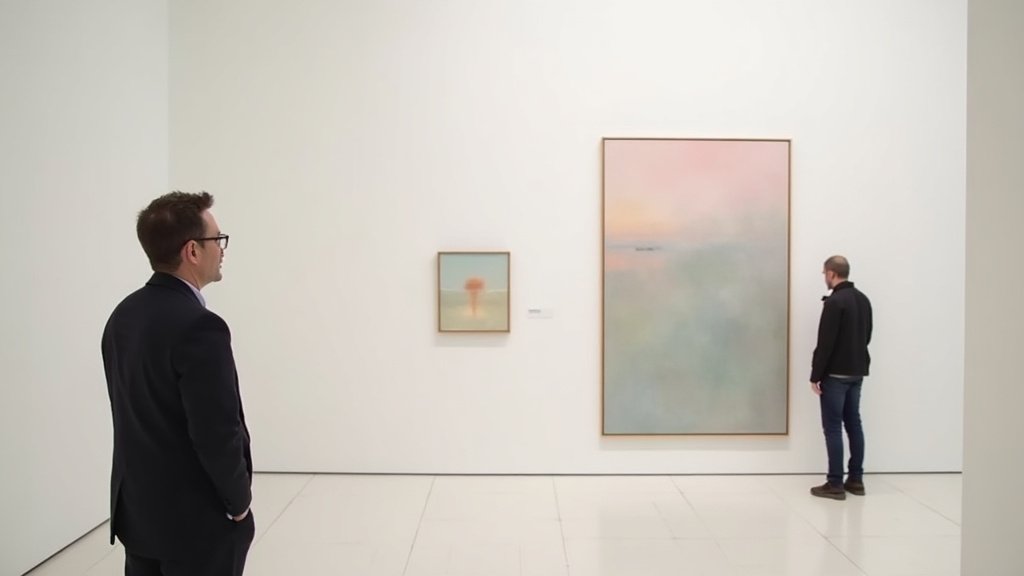
Museum Wellness Metrics: Rethinking Impact Beyond Surveys
As the global cultural sector faces increasing pressure to justify funding through data, museums are undergoing a fundamental transformation in how they measure the success of their wellness and accessibility initiatives. For decades, the industry standard for evaluating social impact has relied on the Likert scale—paper-based surveys asking participants to rate their experience from 1 to 5. However, this quantitative rigidity is being abandoned by progressive institutions, most notably Seattle’s Frye Art Museum, in favor of qualitative, observation-driven metrics, particularly when serving populations with memory loss or neurodivergence.
The Failure of the ‘Likert’ Standard
The traditional survey model, while statistically convenient, creates a significant barrier to entry for marginalized groups. For participants in programs designed for those with early-stage Alzheimer’s or other forms of dementia, the cognitive load required to parse a survey and provide an abstract numerical rating is often counterproductive. It transforms a moment of therapeutic engagement into a task-based performance, potentially inducing anxiety rather than measuring the wellbeing of the participant. Experts in the field of arts-based wellness have identified that these formal assessments often fail to capture the ‘in-the-moment’ emotional arc of an art-viewing session.
Pioneering New Qualitative Frameworks
The shift at the Frye Art Museum and similar vanguard institutions represents a move toward ‘Creative Aging’ evaluation frameworks. Instead of asking participants to report on their wellness, trained facilitators are now performing direct, ethnographic observation. This involves documenting specific indicators of engagement: duration of gaze on a particular piece of art, non-verbal cues such as facial expressions, the quality of social interaction with peers, and spontaneous verbal contributions during guided discussions. By shifting the focus to these observable behaviors, museums can gather richer, more accurate data that reflects the actual cognitive and emotional benefits of the program without placing the burden of assessment on the participant.
The Intersection of Neuro-Aesthetics and Arts Participation
To understand the viability of this new measurement method, we must look at the emerging field of neuro-aesthetics. This discipline studies the biological impact of aesthetic experiences on the brain. When a museum visitor engages with a painting, their neural pathways are stimulated in ways that simple surveys cannot quantify. By using observational metrics, institutions are finding that they can correlate art-based wellness programs with measurable physiological markers, such as reduced cortisol levels or increased heart-rate variability, simply by documenting sustained focus and positive emotional responses. This provides a bridge between subjective experience and objective data, creating a more robust argument for the continued funding of arts-based therapeutic programs.
Economic Implications and Donor Relations
For non-profit arts organizations, the economic reality is stark: funders demand ROI (Return on Investment). Traditionally, this ROI was expressed as ‘number of attendees’ or ‘average satisfaction score.’ However, donors are becoming increasingly sophisticated. They are beginning to prioritize ‘Social Return on Investment’ (SROI). By utilizing qualitative metrics, museums like the Frye are successfully presenting a narrative of social impact that goes deeper than attendance figures. They can demonstrate that their programs are actively improving the quality of life for vulnerable populations, which is an increasingly attractive metric for philanthropic organizations and health-focused grant makers. This creates a sustainable pipeline for long-term program funding by aligning museum goals with broader public health objectives.
Future Predictions: The Integration of Tech and Humanity
Looking toward the next decade, the methodology of measuring wellness will likely evolve from manual observation to AI-assisted analysis. While this raises ethical concerns regarding privacy, the potential for using anonymized video analysis to measure engagement markers—such as pupil dilation, body language, and vocal tonality—could revolutionize the field. These tools will not replace the human touch of a facilitator but will instead act as a ‘lens’ to augment human observation. We expect to see museums partnering with tech firms to develop proprietary software that automates the collection of these qualitative data points, allowing institutions to process larger datasets without sacrificing the delicate, human-centric nature of the programming.
The Holistic Approach to Accessibility
Finally, this shift toward qualitative measurement is intrinsically linked to the broader push for accessibility in museums. When an institution commits to measuring wellness through observation rather than surveys, it signals a commitment to universal design. It suggests that the institution is willing to adapt its internal metrics to accommodate its audience, rather than expecting the audience to adapt to the institution’s bureaucratic needs. This is the hallmark of a modern, inclusive, and forward-thinking cultural entity.
FAQ: People Also Ask
Q: Why are traditional surveys ineffective for memory loss populations?
A: Surveys require a high level of cognitive processing, including memory, abstract thinking, and the ability to articulate feelings in a structured format. For those with memory loss, this can cause ‘test anxiety’ and does not accurately capture the emotional uplift they may have experienced during the session.
Q: How does the Frye Art Museum track progress without surveys?
A: They utilize trained staff who employ observational frameworks. These facilitators note behavioral markers such as the duration of engagement with artworks, non-verbal cues (smiles, posture), and the nature of peer-to-peer social interaction, documenting these as evidence of program effectiveness.
Q: What is ‘Creative Aging’ in the context of museum studies?
A: ‘Creative Aging’ is a framework that emphasizes the importance of lifelong learning and artistic expression in maintaining cognitive and emotional health for older adults. It prioritizes the process of creation and appreciation over the final output.
Q: Can qualitative data truly be used for grant reporting?
A: Yes. Many modern grant-makers and philanthropic foundations are moving away from purely quantitative data and are increasingly looking for ‘narrative impact’ and qualitative case studies that demonstrate real-world, human-centric benefits, which these observational methods excel at providing.

Related Posts


