Notre Dame Unveils Landmark 2027 Arts Biennial: A ‘Symbiosis’ of Culture
The University of Notre Dame is set to redefine the landscape of collegiate cultural programming with the announcement of its inaugural Arts Biennial. Scheduled to unfold over a expansive six-month window from January to June 2027, this festival represents a significant investment in the intersection of academic inquiry and creative expression. By centering the event on the provocative theme of ‘symbiosis,’ the university aims to foster a deep dialogue between scientific ecological processes and artistic innovation, creating a framework where diverse disciplines intersect.
A Curatorial Vision for the Future
The choice of ‘symbiosis’ as the inaugural theme is deliberate, reflecting Notre Dame’s unique position as a major research institution that holds the humanities in high regard. Organizers have indicated that the Biennial will not be a singular exhibition but rather a sprawling cultural ecosystem. The six-month timeline allows for a developmental approach to programming, where workshops and exhibitions will evolve in real-time, inviting students, faculty, and the public to participate in a living conversation rather than a static display of finished works.
This approach underscores a movement in contemporary curatorial practice—shifting away from the ‘festival-in-a-weekend’ model toward sustained engagement. By stretching the programming from January through June, the university ensures that the Biennial becomes an indelible part of the academic and community calendar, allowing for multiple layers of interaction, critique, and reflection. The scheduling also mirrors the cyclical nature of the academic year, effectively bookending the spring semester with a continuous influx of artistic inquiry.
The Architectural and Literary Titans Leading the Charge
Central to the Biennial’s anticipated impact is the inclusion of globally recognized heavyweights: architect Maya Lin and author Zadie Smith. Their involvement elevates the event from a local university showcase to an international cultural destination.
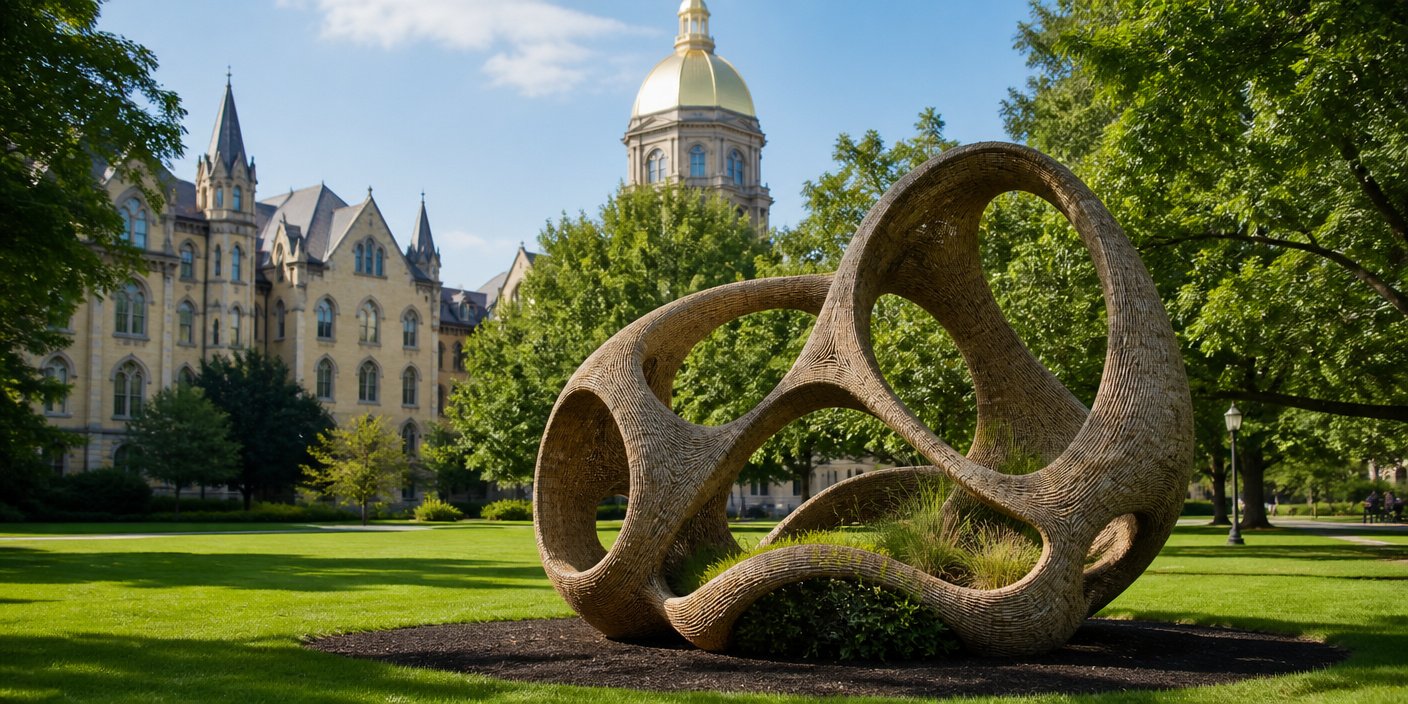
Maya Lin, renowned for her ability to fuse land art with minimalist architecture, is uniquely positioned to interpret the theme of ‘symbiosis.’ Her history of creating spaces that emphasize the relationship between human-built structures and natural environments aligns perfectly with the Biennial’s conceptual bedrock. Her presence suggests that the festival will likely involve site-specific installations across the Notre Dame campus, challenging visitors to reconsider the university’s physical landscape.
Zadie Smith, a towering figure in contemporary literature known for her incisive examinations of culture, identity, and social interconnectedness, will provide the literary and intellectual counterpoint. Her participation—whether through lectures, seminars, or literary salons—will offer attendees a chance to engage with the thematic ‘symbiosis’ through a narrative lens. The interplay between Lin’s spatial philosophy and Smith’s sociopolitical commentary promises to create a multi-disciplinary friction that is rare in university-led initiatives.
Logistical Magnitude: 100 Events and Beyond
With over 100 public events planned, the scale of the 2027 Biennial is undeniably grand. The programming is designed to be comprehensive, ensuring that the Biennial serves both the specialist scholar and the curious member of the general public.
The variety of these 100+ events will be the true test of the festival’s success. It will feature:
- Interactive Workshops: Hands-on sessions led by visiting artists, allowing students to learn techniques directly from practitioners.
- Performance Art: Live stage works that respond to the evolving environment of the Biennial.
- Exhibitions: Curated collections of fine art, sculpture, and new media that anchor the primary theme.
- Symposia: Academic forums where the artists’ work will be interrogated through historical, scientific, and sociological frameworks.
This broad distribution of content ensures that the Biennial is not just for art students or the university elite. It is clearly structured as a regional cultural anchor for the South Bend and Midwest area, aiming to draw visitors from across the country to witness an intersectional academic experiment.
The Broader Economic and Institutional Impact
When a major institution like Notre Dame commits to a six-month arts festival, the impact ripples outward. Beyond the educational benefits for the student body—providing them with proximity to masters of their craft—the festival acts as a significant economic engine.
Historically, arts-driven festivals of this duration stimulate local economies, from tourism and hospitality to the service sectors. Furthermore, it marks a shift in university branding. Institutions are increasingly competing on the stage of intellectual and cultural ‘soft power.’ By hosting a Biennial of this caliber, Notre Dame is signaling that it is a premier destination for high-level artistic thought, not just sports and theology. This move is a strategic investment in the school’s long-term reputation as a hub for interdisciplinary excellence, positioning it at the forefront of the academic arts movement.
FAQ: People Also Ask
Q: What is the primary theme of the Notre Dame Arts Biennial?
A: The inaugural theme is ‘symbiosis.’ This concept explores the interconnectedness between different entities—whether biological, social, or artistic—and seeks to foster a deeper understanding of how distinct fields can influence and sustain one another.
Q: Who are the confirmed guest appearances for the event?
A: The university has confirmed the participation of renowned architect Maya Lin and celebrated author Zadie Smith, both of whom will play pivotal roles in the festival’s intellectual and creative programming.
Q: How long does the Biennial last?
A: The inaugural Biennial is an extensive, six-month festival running from January through June 2027. This duration is designed to allow for continuous, evolving engagement rather than a short-term, static event.
Q: How many events can the public expect?
A: The university has announced plans for over 100 public events, including a diverse mix of workshops, performances, exhibitions, and academic lectures, ensuring a robust schedule throughout the entire six-month period.


Related Posts