389 Dead as Nepal Floods and Quakes Trigger Border Crisis
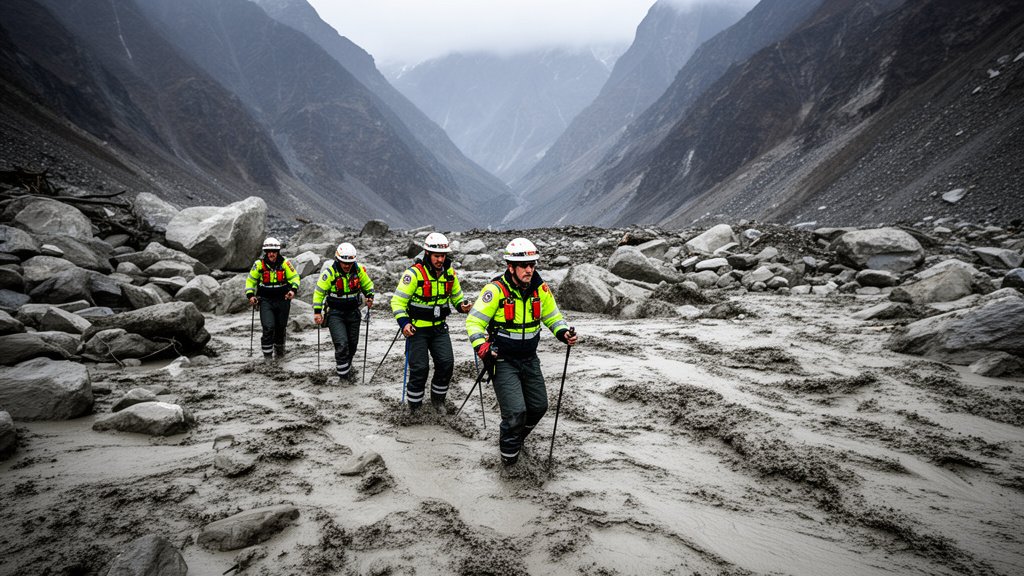
The Himalayan region is currently facing one of its most severe humanitarian disasters in recent memory. Following a catastrophic flash flood along the China-Nepal border, authorities have confirmed at least 389 fatalities, while 290 Indian nationals remain missing. In the midst of these chaotic conditions, survivors and rescue teams are dealing with the additional threat of repeated earthquake tremors, which have destabilized the rugged terrain and severed critical transportation routes. While 84 individuals have been successfully rescued thus far, the window for finding others in the treacherous, debris-choked river valleys is rapidly closing.
Key Highlights
- Confirmed Casualties: 389 individuals have been declared dead following the flash flood event.
- Missing Citizens: Search operations are ongoing for approximately 290 Indian nationals currently unaccounted for.
- Successful Rescues: Search and Rescue (SAR) teams have confirmed the survival and extraction of 84 individuals.
- Environmental Complications: Rescue efforts are being severely hindered by ongoing earthquake tremors, which threaten to trigger secondary landslides.
The Himalayan Crisis: Anatomy of a Dual Disaster
The devastation along the China-Nepal border is being described by climatologists and disaster management experts as a perfect storm of environmental instability. The initial flash flood, which caught thousands of residents and travelers off guard, was likely triggered by a combination of rapid glacial melt and sudden, intense precipitation, a phenomenon often associated with Glacial Lake Outburst Floods (GLOFs). However, the situation was drastically exacerbated by the onset of tectonic activity.
The Mechanics of the Surge
In the high-altitude topography characterizing this border region, water does not flow in a predictable manner. The sudden release of water from high-elevation basins acts as a massive hydraulic hammer, picking up boulders, glacial till, and infrastructure debris. As this sludge moves downstream, it creates a lethal barrier for anyone trapped in the narrow valleys. The 389 deaths reported are a grim testament to the speed at which these floods travel—often reaching speeds of over 30 kilometers per hour in steep channels, leaving virtually no time for evacuation. The complexity for search teams lies in the deposition of this debris; in many areas, the flood plains have been buried under meters of mud and rock, making thermal imaging and sonar detection—the primary tools for finding the 290 missing persons—incredibly difficult.
The Seismic Factor: Why Tremors Matter
The report of earthquake tremors during the recovery phase is not merely an inconvenience; it is a critical safety issue. The Himalayas sit atop the collision zone between the Indian and Eurasian tectonic plates, making them inherently seismically active. When a major flood event occurs, the soil saturation levels are at their maximum. Adding seismic vibrations to saturated, unstable mountain slopes is a recipe for massive, instantaneous landslides. Rescue teams are currently forced to pause operations every time a tremor is felt, as the risk of the surrounding valley walls collapsing onto the rescue sites is imminent. This ‘double disaster’—the flood and the tectonic activity—has created a psychological and logistical burden that is pushing emergency response resources to their breaking point.
Cross-Border Diplomatic and Operational Coordination
This disaster has necessitated a high-level coordination effort between Indian and Nepali authorities. The fact that 290 Indian nationals are among the missing has activated specific diplomatic channels. The Indian High Commission has deployed specialized disaster relief liaison officers to work alongside the Nepal Disaster Management Authority. The primary entity overseeing the tactical response, the National Disaster Response Force (NDRF), is currently coordinating with local Nepali mountain guides and paramilitary units. This collaboration is essential, as the terrain requires intimate local knowledge of the mountain passes to safely navigate the disaster zone. The ability to manage this crisis efficiently may well serve as a case study for future cross-border disaster management in the South Asian region.
Secondary Angles: Examining Future Vulnerability
To fully comprehend the gravity of this event, we must analyze it through three secondary, critical lenses:
1. The Infrastructure Vulnerability: Much of the border infrastructure, including hydropower projects and critical transport bridges, was not built to withstand the force of a modern GLOF event coupled with seismic shifts. This event raises urgent questions regarding current construction codes in high-risk seismic zones.
2. The Climate-Seismic Feedback Loop: Scientists are increasingly observing that rapid climate change is melting glaciers, which removes the ‘weight’ (isostatic pressure) from the mountains, potentially increasing the frequency of seismic slips. Whether this specific earthquake was triggered by the flood load or was a coincidental event is currently under investigation by geological surveys.
3. Economic Impact on Cross-Border Trade: The China-Nepal-India corridor is a vital economic artery. With the main transit routes effectively destroyed or blocked by landslides, the economic ripple effect will be felt for months. Supply chains for food, fuel, and medical supplies will be disrupted, requiring an immediate air-bridge to be established to prevent secondary humanitarian crises in the region.
FAQ: People Also Ask
Q: What is the primary cause of these flash floods?
A: While the specific cause is under investigation, the disaster exhibits all characteristics of a Glacial Lake Outburst Flood (GLOF), where a breach in a glacial lake causes a massive, sudden release of water and debris downstream.
Q: Why are the earthquake tremors making the situation worse?
A: The tremors are destabilizing slopes that are already saturated with water. This increases the risk of secondary landslides, which creates a highly volatile and dangerous working environment for search and rescue personnel.
Q: How many people have been found so far?
A: As of the latest update, authorities confirm that 84 individuals have been successfully rescued. Search efforts continue for the 290 missing.
Q: Is international aid involved?
A: Yes, significant coordination is occurring between the Indian High Commission and Nepalese authorities, with specialized disaster relief units from both nations collaborating on the ground.


Related Posts