Norway Enters New Era as King Haakon VIII Ascends Throne
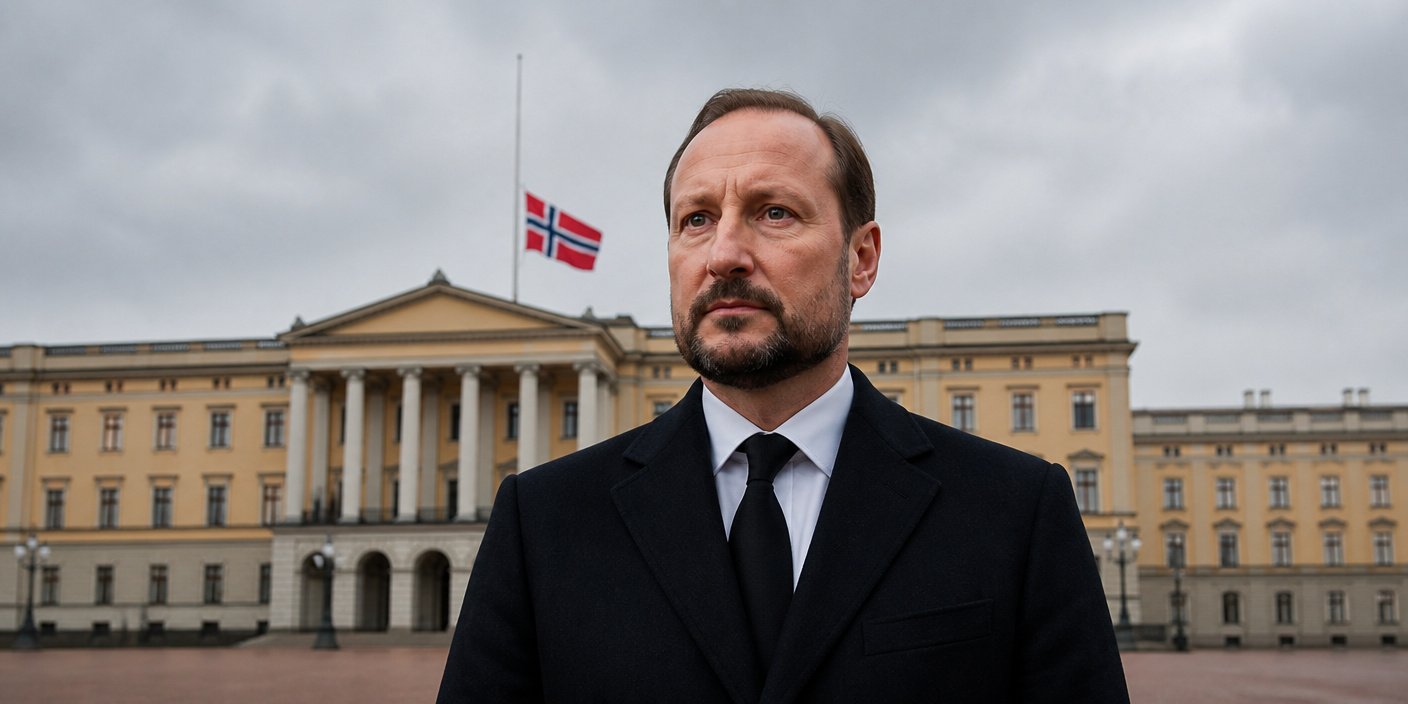
Norway is today shrouded in deep mourning as the nation reconciles with the passing of King Harald V, a monarch who served for 33 years and became a cornerstone of Norwegian identity. Amidst the national period of sorrow, the transition of power has occurred with swift constitutional precision, with Crown Prince Haakon immediately ascending the throne as His Majesty King Haakon VIII. The Royal Palace in Oslo (Slottet) confirmed the succession, signaling both the end of an era and the commencement of a new chapter for the House of Glücksburg.
Key Highlights
- Immediate Succession: Under the Constitution of Norway, Crown Prince Haakon has assumed the role of King Haakon VIII effective immediately upon the passing of his father.
- National Mourning: The Norwegian government has declared an official period of national mourning, with state flags lowered to half-mast across the country to honor the late King.
- Continuity of State: The transition ensures the constitutional continuity of the Norwegian monarchy, a role largely ceremonial but symbolically vital in maintaining national unity.
- Royal House Statement: The Royal Court, or Kongehuset, has confirmed that the new King will address the nation in a televised broadcast later this evening to provide comfort and guidance during this period of transition.
The New Monarchy: Continuity and Modernization
The Transition of the Crown
The ascension of King Haakon VIII is not merely a transfer of power; it is the culmination of years of preparation and a deep public familiarity with the new monarch. Born in 1973, Haakon has served as Crown Prince for decades, acting as Regent during periods of his father’s health challenges. This deep institutional knowledge ensures that the transition of the Norwegian throne is one of the most stable constitutional movements in Europe. Unlike nations where royal transitions can spark debate regarding the relevancy of the institution, Norway’s constitutional monarchy remains deeply embedded in the social fabric, serving as a unifying figurehead that stands above the daily fray of parliamentary politics in The Storting.
The constitutional process for this succession is defined clearly by Article 6 of the Constitution of Norway, which dictates the order of succession. As the only son of the late King Harald V and Queen Sonja, King Haakon VIII’s path to the throne was unambiguous. This legal clarity is crucial for the stability of the Norwegian state, as it prevents the administrative vacuum that often accompanies political leadership changes in republican systems. The new King has long been viewed as a modernizer, having championed environmental causes and social inclusivity, signaling that his reign will likely focus on preserving traditional values while adapting the monarchy to the 21st century.
The Legacy of King Harald V
To understand the magnitude of this shift, one must look at the legacy of the late King Harald V. Ascending the throne in 1991, Harald V navigated a period of immense change, guiding Norway through its transition into a globalized, energy-rich powerhouse. He was often celebrated as the “people’s King,” a moniker earned through his candid nature, his visible engagement in societal issues, and his ability to bridge gaps across the political spectrum. Under his leadership, the Royal House maintained remarkably high approval ratings, even as skepticism toward monarchies grew elsewhere in Europe.
His passing marks the closure of a chapter that saw the modernization of the welfare state and a heightened global profile for Norway. The late King’s ability to remain apolitical while providing a strong ethical compass for the nation has set a high bar for his successor. Analysts expect that the period of mourning will not only be a time to reflect on the late King’s achievements but also a moment for the Norwegian public to recalibrate their expectations for the role of the Crown in an increasingly digital and globalized environment.
Diplomatic and Economic Stability
While the role of the monarch in Norway is largely ceremonial, it plays a critical function in diplomatic relations and international branding. King Haakon VIII inherits a country that is a key player in the European energy market and a prominent voice in NATO. The King functions as the chief diplomat, hosting state visits and representing Norway abroad. International markets and foreign governments, which prioritize stability, view the seamless transition as a positive signal.
Economic analysts point out that the institutional stability represented by the continuation of the Royal House provides a reliable backdrop for Norway’s economic policy. The new King is expected to maintain his father’s focus on international cooperation, environmental sustainability, and the strengthening of the Nordic ties. Diplomatic sources suggest that foreign heads of state have already begun drafting messages of condolence, with the first state funerals expected to draw representatives from monarchies and governments across the globe, serving as a significant diplomatic gathering in Oslo.
Addressing the Nation: The Path Ahead
As King Haakon VIII prepares to lead, his initial focus will be to preside over the funeral arrangements and to manage the delicate emotional state of a nation in grief. The transition to the new reign will be gradual. While the title is his, the symbolic weight of the throne will be fully realized during the formal rituals that will follow.
There is also the matter of the internal restructuring of the Royal Court. Queen Mette-Marit, now assuming her new responsibilities as Queen Consort, will undoubtedly play a pivotal role in shaping the modern image of the Norwegian monarchy. Observers have noted that the couple has consistently pushed for a more accessible, transparent Royal House. It is widely anticipated that King Haakon VIII will double down on these efforts, perhaps leveraging new media channels to connect with the younger generations, ensuring that the monarchy remains relevant to the youth of Norway.
Ultimately, the ascent of King Haakon VIII is a testament to the durability of the Norwegian system. While the nation mourns the loss of a steady hand and a beloved figure, it also looks forward with cautious optimism to a reign that promises to balance the weight of historical tradition with the forward-looking demands of a modern democracy. The flags fly at half-mast today, but they also fly for a new King, signifying that the state remains whole, resilient, and prepared for the future.
FAQ: People Also Ask
1. Does Norway still hold coronations for new monarchs?
No. Norway abolished the formal coronation ceremony in 1908. Instead, the monarch receives a royal consecration (signing in) at Nidaros Cathedral in Trondheim, which is a blessing of the King and Queen rather than a secular coronation.
2. How does the Norwegian public view the transition to King Haakon VIII?
Public support for the monarchy in Norway remains high. King Haakon VIII is generally well-regarded and seen as an approachable, modern figure, which contributes to a sense of stability and continuity among the general population.
3. What is the official role of the King in Norway’s government?
Norway is a constitutional monarchy. The King’s role is primarily ceremonial and symbolic. He serves as the head of the Norwegian Church, the Commander-in-Chief of the Norwegian Armed Forces, and the head of the Council of State, though he does not hold executive political power, which resides in the government led by the Prime Minister.


Related Posts