Iran Will Pay: Trump Warns of Price Over Stalled Talks
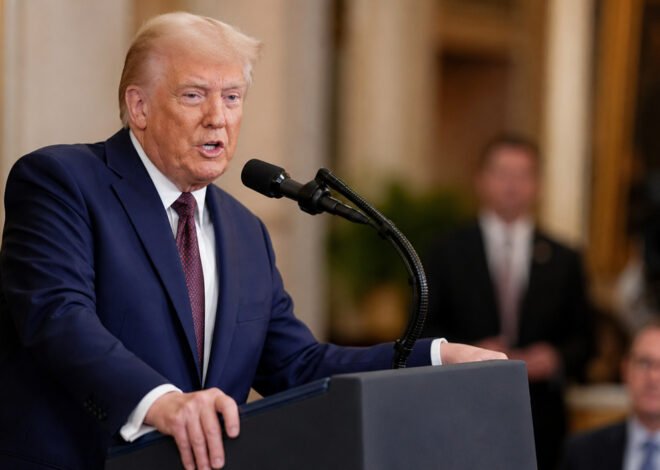
Former President Donald Trump has issued a stern warning to Iran, stating the nation will “pay the price” for its failure to engage constructively in stalled nuclear talks. This declaration comes amidst a period of heightened tensions and reciprocal actions between the United States and Tehran, further complicating diplomatic efforts and raising concerns about regional stability.
Key Highlights:
- Former President Trump directly threatened Iran with consequences over its stance on nuclear negotiations.
- The warning highlights a significant deadlock in diplomatic efforts aimed at reviving the Joint Comprehensive Plan of Action (JCPOA).
- The exchange of fire between the U.S. and Iran underscores the volatile security situation in the Middle East.
- Trump’s statement suggests a potential hardening of U.S. policy towards Iran, diverging from current administration approaches.
Shifting Sands: Trump’s Iran Stance and Diplomatic Impasse
Former President Donald Trump’s recent pronouncements regarding Iran’s nuclear program and stalled talks signal a potential return to a more confrontational U.S. foreign policy stance. Speaking at a rally, Trump asserted that Iran would ultimately “pay the price” for its intransigence, a clear indication of his dissatisfaction with the current diplomatic stalemate. This rhetoric is reminiscent of his previous administration’s “maximum pressure” campaign, which involved stringent sanctions and a withdrawal from the landmark 2015 Iran nuclear deal, the Joint Comprehensive Plan of Action (JCPOA).
The JCPOA’s Fragile State
The JCPOA, designed to prevent Iran from developing nuclear weapons in exchange for sanctions relief, has been in a precarious state since the U.S. withdrawal under the Trump administration. Despite efforts by the Biden administration to revive the agreement through indirect negotiations, significant hurdles remain. Iran’s own enrichment activities have advanced considerably, and disagreements over the scope of sanctions relief and verification measures have persistently blocked progress. Trump’s latest remarks suggest that any future attempts to re-engage Iran diplomatically under a potential Republican administration would likely face an even steeper climb, given the deep-seated mistrust and the complex web of geopolitical factors at play.
Geopolitical Tensions and Regional Implications
Trump’s warning is not merely a statement on nuclear diplomacy; it is deeply intertwined with the broader geopolitical landscape of the Middle East. The region has been a focal point of international concern, with ongoing proxy conflicts, ballistic missile programs, and threats to maritime security. The U.S. and Iran have, at various times, engaged in direct or indirect confrontations, including naval incidents in the Persian Gulf and drone strikes. The specter of a renewed escalation looms large, with analysts concerned that a breakdown in diplomatic channels could embolden hardliners on both sides and destabilize an already volatile region. Trump’s assertive language may be intended to signal a return to a policy of deterrence, aiming to prevent further Iranian provocations.
Economic Ramifications of Stalled Talks
The failure to reach an agreement on the JCPOA has had significant economic consequences, not only for Iran but also for global energy markets. Iran’s economy has been severely hampered by U.S. sanctions, limiting its oil exports and access to international finance. While this has created internal economic hardship for the Iranian population, it has also contributed to fluctuations in global oil prices. Should diplomatic efforts completely collapse, and if Trump’s administration were to reimpose even harsher sanctions, the ripple effects could be felt worldwide, particularly in energy-dependent economies. Conversely, a revived deal, though currently appearing unlikely, would signal a potential easing of global energy supply concerns.
Historical Context and Precedent
Understanding Trump’s current stance requires examining his previous approach to Iran. His withdrawal from the JCPOA in 2018 was a significant departure from the Obama administration’s policy. At the time, Trump argued that the deal was insufficient, too short-term, and did not address Iran’s ballistic missile program or its regional activities. He pursued a strategy of “maximum pressure,” imposing sweeping sanctions aimed at crippling Iran’s economy and forcing it back to the negotiating table on terms more favorable to the U.S. While this policy did increase economic pressure on Iran, it did not lead to a new, broader agreement and arguably pushed Iran further away from U.S. influence. Trump’s current warning suggests a belief that this past strategy, or a similar one, remains the most effective path forward.
FAQ: People Also Ask
What is the Joint Comprehensive Plan of Action (JCPOA)?
The JCPOA is a multilateral agreement reached in 2015 between Iran and the P5+1 countries (the United States, the United Kingdom, France, Russia, China, plus Germany) along with the European Union. It aimed to limit Iran’s nuclear program in exchange for sanctions relief. The U.S. withdrew from the deal in 2018.
Why are U.S.-Iran talks stalled?
Talks are stalled due to fundamental disagreements on the terms of a revived nuclear deal. These include the extent of sanctions relief the U.S. would offer, the specific limits on Iran’s nuclear activities, and the duration of any agreement. Iran also seeks assurances that future U.S. administrations will adhere to the deal.
What does “pay the price” mean in this context?
When former President Trump states Iran will “pay the price,” it generally implies facing severe consequences, likely including intensified economic sanctions, increased military deterrence, or other forms of international pressure. It suggests a punitive approach if diplomatic demands are not met.
How has Iran’s nuclear program progressed since the U.S. left the JCPOA?
Since the U.S. withdrawal and subsequent reimposition of sanctions, Iran has significantly advanced its nuclear program. It has increased its uranium enrichment levels beyond the limits set by the JCPOA, accumulated larger stockpiles of enriched uranium, and installed more advanced centrifuges, moving closer to potentially being able to produce weapons-grade uranium.
What are the secondary angles of the Trump-Iran standoff?
Secondary angles include the impact on regional stability, the potential for a wider conflict involving U.S. allies like Israel and Saudi Arabia, the influence of internal Iranian politics on negotiation stances, and the broader implications for international arms control and non-proliferation treaties.


Related Posts