Iran’s Strait of Hormuz Ultimatum: Washington Faces High-Stakes Choice
Tensions in the Persian Gulf have reached a critical inflection point as Tehran issues a series of stringent, sweeping new demands to Washington, conditioning the full, unrestricted reopening of the Strait of Hormuz on specific diplomatic and economic concessions. This escalation, which threatens to disrupt one of the world’s most vital maritime chokepoints, arrives at a moment of profound uncertainty for global energy security and regional stability, forcing the White House to weigh the necessity of free passage against the risks of deeper military entanglement.
Key Highlights
- The Ultimatum: Tehran’s demands reportedly include a formal framework for long-term sanctions relief and explicit security guarantees that inhibit U.S. and allied naval patrols near Iranian territorial waters.
- Economic Vulnerability: The Strait of Hormuz is the transit route for approximately 21 million barrels of oil per day, representing roughly 20-30% of the world’s total petroleum consumption, making any closure a direct shock to global markets.
- Military Posture: The Islamic Revolutionary Guard Corps (IRGC) has significantly increased its presence in the region, conducting asymmetric naval drills that simulate the closure of the channel, signaling that the rhetoric is backed by tangible military capability.
- Diplomatic Stalemate: Washington faces a bifurcated challenge: maintaining a policy of ‘maximum pressure’ while simultaneously preventing a kinetic conflict that could drag the U.S. Fifth Fleet into a localized war.
The Geopolitical Calculus of the Strait
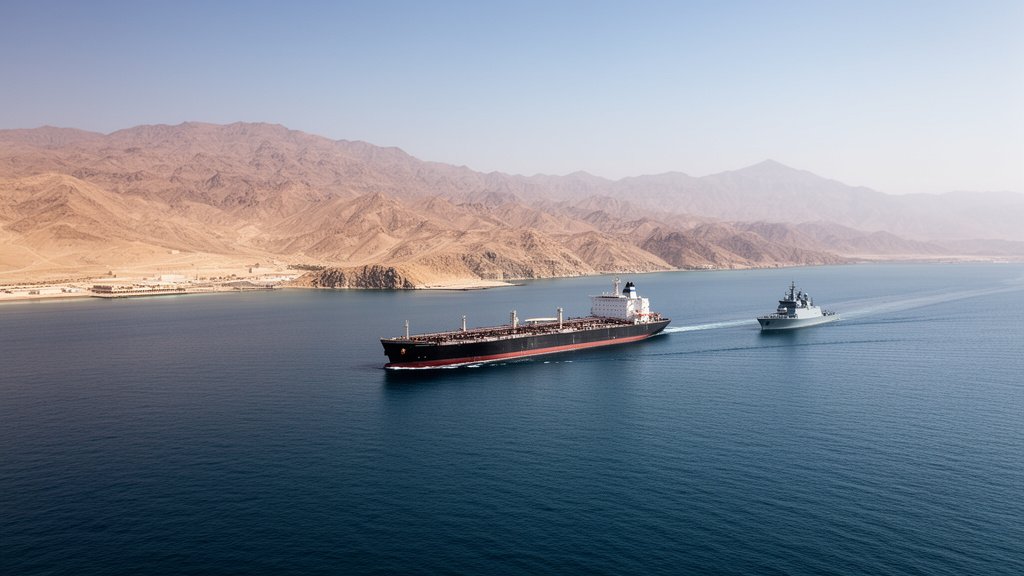
The Strait of Hormuz is more than a geographic chokepoint; it is the jugular of the global energy supply. With a width of only 21 miles at its narrowest point, and shipping lanes only two miles wide in either direction, the maritime corridor is uniquely vulnerable to state-sponsored obstruction. Tehran’s latest demands move beyond previous posturing, signaling a desire to formalize their influence over the waterway as a primary instrument of diplomatic leverage.
The Shift in Diplomatic Strategy
For decades, the United States and its partners within the Gulf Cooperation Council (GCC) have maintained that the Strait of Hormuz is an international waterway governed by the principle of freedom of navigation. By challenging this doctrine, Iran is attempting to rewrite the maritime ‘rules of the road.’ Sources indicate that Tehran’s new conditions demand a rollback of the U.S. Fifth Fleet’s standard transit operations, which they characterize as provocative and intrusive. This is a strategic shift; rather than simply threatening the Strait, Iran is now attempting to gain international, or at least U.S., recognition of its self-defined security zone.
Economic Impact and Energy Markets
The U.S. Energy Information Administration (EIA) has long identified this region as the world’s most important petroleum transit chokepoint. Even a temporary or partial restriction on transit capacity forces insurance premiums for commercial vessels to skyrocket, directly inflating the cost of crude oil for consumers in Asia, Europe, and the Americas. Analysts predict that should these demands remain unaddressed and tensions continue to fester, the global market will likely bake in a permanent ‘risk premium’ on oil prices, effectively creating an inflationary tailwind for the global economy that could persist for years.
The Military Dimension and The Shadow of Conflict
At the center of this standoff is the Islamic Revolutionary Guard Corps (IRGC). Unlike conventional navies, the IRGC Navy emphasizes asymmetric warfare—utilizing swarms of fast-attack craft, anti-ship cruise missiles, and sea mines. This strategy is designed to inflict maximum disruption with minimal visibility. Recent intelligence assessments suggest that the IRGC has been stress-testing its blockade capabilities, effectively ‘rehearsing’ the closure of the Strait. This military build-up serves as the ultimate backdrop to the diplomatic negotiations, ensuring that every message sent by Tehran in diplomatic channels carries the weight of a potential kinetic engagement.
Risk of Escalation
The danger of miscalculation remains high. History has shown that maritime incidents in the Persian Gulf—whether involving a seized tanker or a near-miss encounter between naval vessels—can escalate within hours. With the current heightened state of readiness, the margin for error for U.S. CENTCOM forces is razor-thin. Washington must now decide whether to engage in the specific conditions laid out by Tehran—a move that would be domestically controversial and potentially damaging to regional alliances—or to double down on deterrence, which increases the likelihood of a direct military encounter.
The Role of International Partners
The International Maritime Security Construct (IMSC), a multinational coalition, continues to patrol these waters, but their efficacy is limited by the very tensions currently playing out. The involvement of extra-regional powers, such as China, which is the largest importer of oil passing through the Strait, adds a layer of complexity. Tehran’s calculation likely involves leveraging Beijing’s economic interests against Washington’s security interests, creating a fractured international response that complicates any unified pressure campaign.
FAQ: People Also Ask
Q: How much of the world’s oil flows through the Strait of Hormuz?
A: Approximately 20-30% of global daily petroleum consumption, or about 21 million barrels, transits through the Strait, making it the most critical maritime oil chokepoint in the world.
Q: What is the primary role of the IRGC in the Strait?
A: The Islamic Revolutionary Guard Corps (IRGC) utilizes asymmetric naval tactics, including fast-attack swarms and anti-ship missiles, to assert regional dominance and project power, often serving as the primary instrument for Iran’s maritime pressure campaigns.
Q: Why is the U.S. Fifth Fleet presence a point of contention?
A: Tehran argues that U.S. naval operations in the Persian Gulf are provocative and violate regional sovereignty, whereas the U.S. maintains that its presence is necessary to ensure freedom of navigation under international law.
Q: What are the economic consequences of a closure?
A: A closure would cause immediate, catastrophic spikes in oil prices, surging shipping insurance costs, and potential disruption to global supply chains, leading to widespread inflation and energy insecurity.


Related Posts