ESL Pledges $2M to Revolutionize Newark Healthcare
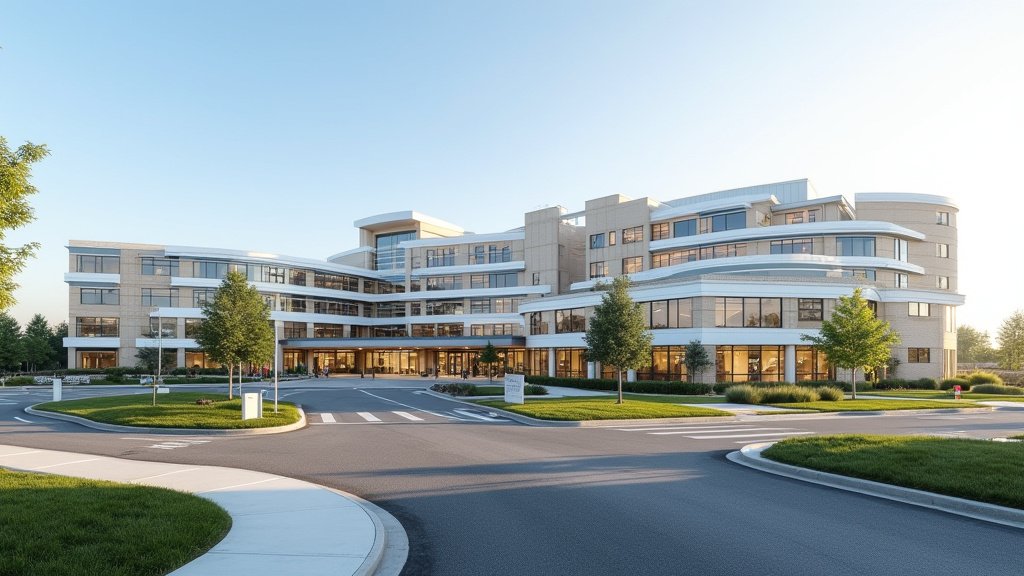
In a decisive move to bolster regional medical infrastructure, ESL Federal Credit Union has officially committed a $2 million donation to facilitate the construction of a cutting-edge Health and Wellness Campus in the Village of Newark. This substantial financial pledge, directed toward the ongoing development efforts of Rochester Regional Health’s Newark-Wayne Community Hospital, serves as a cornerstone investment that is expected to accelerate the transition from legacy healthcare models to a holistic, modern campus environment designed to meet the evolving needs of Wayne County residents. The initiative represents one of the most significant philanthropic contributions to local healthcare in recent years, signaling a long-term commitment to community stability and health equity.
Key Highlights
- Strategic $2 Million Commitment: ESL Federal Credit Union has pledged $2 million to support the capital campaign for the new Health and Wellness Campus in Newark, NY.
- Modernizing Regional Care: The funding directly supports the transformation of the Newark-Wayne Community Hospital, shifting focus toward comprehensive, integrated health and wellness services.
- Economic and Social Impact: This investment serves as a catalyst for economic development in the Village of Newark, enhancing the quality of life and healthcare accessibility for Wayne County.
- Collaborative Healthcare Expansion: The project exemplifies the synergy between regional financial institutions and major healthcare systems to address rural healthcare disparities.
Catalyzing Community Wellness: Inside ESL’s Strategic Newark Investment
The landscape of American healthcare is shifting rapidly, moving away from fragmented, acute-care-only models toward integrated, patient-centered “Wellness Campuses.” In New York’s Wayne County, this evolution has just received a massive infusion of momentum. The $2 million pledge from ESL Federal Credit Union is more than a line item in a budget; it is an endorsement of a strategic vision to reimagine how medical services are delivered to rural and semi-rural populations. As organizations like Rochester Regional Health continue to expand their footprint, the financial support provided by major corporate entities acts as the critical bridge between institutional blueprints and tangible community realities.
The Infrastructure of Change
The Newark-Wayne Community Hospital project is an ambitious undertaking that seeks to redefine the medical experience. Unlike traditional hospital renovations that focus solely on clinical upgrades, the concept of a “Health and Wellness Campus” integrates preventive care, physical therapy, outpatient services, and mental health support into a cohesive, centralized hub. The funding provided by ESL will allow for the accelerated procurement of modern medical technologies and the finalization of building phases that might have otherwise faced procurement delays. By consolidating specialized services under one roof, the hospital reduces the need for patients to travel to larger metropolitan hubs like Rochester, thereby democratizing access to high-quality care.
Analyzing the Capital Campaign
Capital campaigns for medical infrastructure are notoriously complex, requiring a delicate balance of public funding, health system reserves, and private philanthropy. The $2 million donation from ESL stands out for its specificity and timing. In the current economic climate, where construction costs for medical facilities have risen due to supply chain volatility and labor shortages, large-scale donations serve as stabilizing forces. This contribution helps to insulate the project from inflationary pressures, ensuring that the scope of the original design remains intact. Furthermore, such contributions often act as a “green light” for other philanthropic partners, signaling that the project is vetted, viable, and essential to the region’s long-term health.
Bridging the Healthcare Gap in Wayne County
For decades, Wayne County has navigated the challenges inherent to healthcare in smaller communities: aging facilities, difficulties in recruiting specialized talent, and the geographic distance between patients and specialty care. The Health and Wellness Campus represents a structural solution to these systemic issues. By investing in a facility that incorporates the latest in telehealth infrastructure alongside physical examination and rehabilitation spaces, the campus is positioned to serve as a beacon for medical recruitment. Modern facilities are a primary draw for physicians and clinical staff; thus, this investment is not just about buildings, but about the human capital required to sustain high-quality care for years to come.
The Role of Corporate Stewardship
The involvement of ESL Federal Credit Union—a financial institution deeply rooted in the region—highlights a broader trend of corporate stewardship. As regional economies become more interconnected, the health of the community is inextricably linked to the success of local businesses. An unhealthy workforce or a community with limited medical access is an economic liability. By investing in the Newark-Wayne facility, ESL is reinforcing the foundational infrastructure of its own operational territory. This stewardship model is increasingly common among credit unions and community banks, which prioritize localized, tangible impacts over national marketing campaigns. The $2 million commitment serves as a case study for how financial institutions can act as pillars of community development, leveraging their balance sheets to improve public outcomes far beyond the walls of their branches.
Anticipating Future Outcomes
Looking ahead, the completion of the Newark Health and Wellness Campus will likely serve as a model for other rural health projects across New York State. The data gleaned from patient throughput, outcomes, and community satisfaction in this new facility will be crucial for healthcare planners. If the project succeeds in reducing readmission rates and increasing preventive care engagement—as projected—it could trigger a wave of similar public-private partnerships across the region. The $2 million from ESL is the fuel for this pilot, and stakeholders across the region will be watching the construction and opening of this campus with significant interest. The project stands as a testament to the belief that localized investment can yield national-level improvements in health equity and service delivery.
FAQ: People Also Ask
Q: What is the specific purpose of the $2 million pledge?
A: The $2 million donation from ESL Federal Credit Union is allocated to the capital campaign supporting the creation of a new Health and Wellness Campus at the Newark-Wayne Community Hospital, focusing on infrastructure and facility modernization.
Q: Where exactly is the new Health and Wellness Campus located?
A: The campus is situated in the Village of Newark, within Wayne County, New York, serving as a hub for the surrounding community.
Q: Why is this considered a ‘Wellness’ campus rather than just a hospital?
A: The project moves beyond traditional acute-care hospital services to include a broader scope of integrated care, including preventive wellness programs, outpatient services, and specialized health facilities, rather than focusing solely on emergency or inpatient care.
Q: How does this donation affect local healthcare accessibility?
A: By upgrading facilities and centralizing services, the project aims to reduce the necessity for residents to travel long distances to major cities for specialized care, thereby improving local access and health equity.


Related Posts