Israel Intercepts Global Sumud Gaza Aid Flotilla, Detains Greta Thunberg Amid Global Outrage
TEL AVIV – Israeli naval forces intercepted the Global Sumud Flotilla, a large international aid convoy attempting to break the naval blockade of the Gaza Strip, on October 1-2, 2025. Hundreds of activists, including prominent climate campaigner Greta Thunberg, were detained and subsequently taken to an Israeli port for deportation. The incident has sparked widespread international condemnation and protests across several continents.
The Interception in International Waters
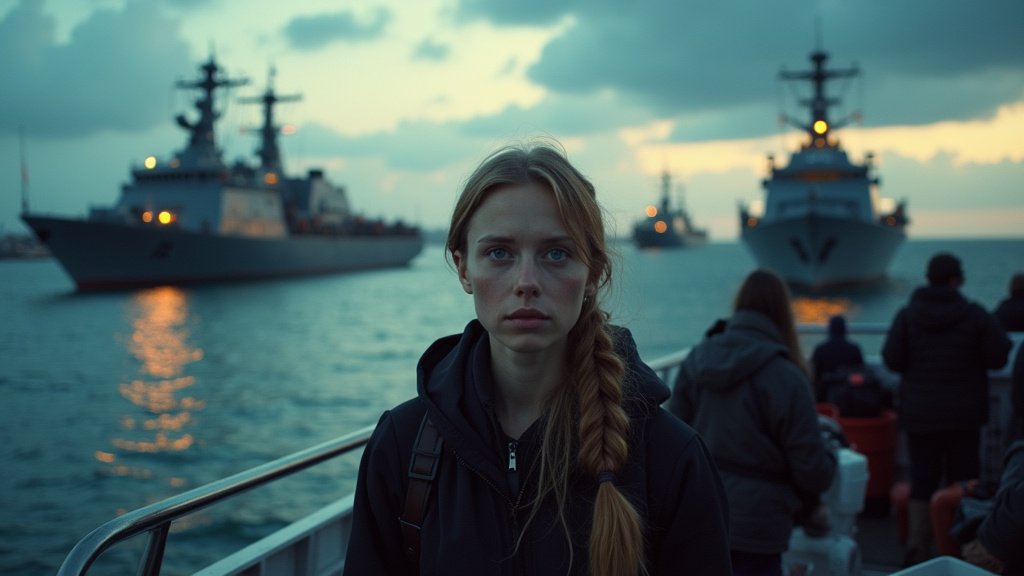
The Global Sumud Flotilla, comprising approximately 40 to 50 vessels carrying over 400 activists from nearly 50 countries, was intercepted by the Israeli navy in international waters, about 70 to 75 nautical miles off the coast of Gaza. Organizers reported that Israeli forces boarded the vessels, jammed communications, and seized the ships, detaining all passengers. Among those detained was Swedish climate activist Greta Thunberg, who had previously joined a Gaza-bound flotilla intercepted in June 2025.
Israeli authorities stated that the flotilla was approaching an “active combat zone” and attempting to breach a “lawful naval blockade”. They claimed to have warned the vessels to change course and offered to transfer aid through established channels via the port of Ashdod for security inspection. The Israeli Ministry of Foreign Affairs reported that the passengers were “safely stopped” and “transferred” to an Israeli port.
In contrast, flotilla organizers condemned the interception as an “illegal attack on unarmed humanitarians in international waters,” an act of “piracy,” and a violation of international law. Activists asserted that their mission was non-violent and humanitarian, aiming to establish a direct maritime corridor for essential supplies to the besieged Gaza Strip.
Background: The Gaza Blockade and Flotilla History
The interception occurs against the backdrop of a nearly two-decade-long Israeli blockade on Gaza, imposed after Hamas took control of the territory in 2007. This blockade severely restricts the movement of goods and people, leading to a dire humanitarian crisis, with UN agencies reporting famine conditions in parts of the enclave.
The Global Sumud Flotilla was the latest in a long series of attempts by various groups, including the Freedom Flotilla Coalition, to break this blockade by sea since 2008. While the first flotillas in 2008 managed to deliver some aid, all subsequent attempts, including those in 2010, 2011, 2015, 2018, and multiple missions in 2025, were intercepted or attacked by Israeli forces. The most notable violent incident occurred in 2010 when Israeli commandos raided a six-ship flotilla, killing nine activists aboard the Mavi Marmara.
Key Figures and Mission Objectives
The Global Sumud Flotilla was one of the largest maritime missions to challenge the Gaza blockade, involving around 500 participants from diverse backgrounds. These included politicians, lawyers, military veterans, and activists like Greta Thunberg and Mandla Mandela, grandson of Nelson Mandela. The flotilla carried symbolic humanitarian aid, including food, medicine, and basic supplies, intended for Gaza’s population facing severe shortages.
Greta Thunberg, known for her climate activism, has increasingly broadened her focus to human rights and global justice, linking climate justice with issues like the plight of Palestinians. She stated that it is her “moral obligation to use that platform” to advocate for Gaza, asserting that “climate justice cannot be separated from human rights”.
International Reactions and Implications
The interception triggered immediate and widespread condemnation from governments, international organizations, and civil society groups worldwide.
* Governments: The UK government expressed “very concerned” and called for the situation to be resolved safely, urging aid to be transferred to the ground. Australia stated it was aware of the reports and offered consular assistance. Colombia’s President Gustavo Petro ordered the expulsion of the Israeli diplomatic delegation following the detention of two Colombian citizens aboard the flotilla, calling the action a potential “new international crime”. Turkey’s foreign ministry labeled the Israeli attack as an “act of terrorism”.
* International Bodies: The Palestinian Authority’s Foreign Ministry condemned the interception as a violation of international law. Hamas described the incident as an “act of terrorism” and a “blatant Zionist attempt to deter international supporters”. The UN special rapporteur on Palestine criticized international inaction.
* Protests: Demonstrations erupted in major cities globally, including Rome, Paris, Berlin, Istanbul, Barcelona, Dublin, and Kuala Lumpur, with protesters demanding accountability and an end to the blockade. Italy’s largest union called for a general strike in solidarity with the flotilla.
* Legal Debate: Legal experts and human rights groups have raised questions about the legality of Israel’s actions in international waters. While Israel maintains its blockade is lawful for security reasons, critics argue it violates international humanitarian law and the freedom of navigation.
Conclusion
The interception of the Global Sumud Flotilla marks another contentious chapter in the ongoing struggle to challenge the Gaza blockade. While Israel asserts its right to enforce security measures, the international community’s response underscores growing concern over the humanitarian situation in Gaza and the methods used to maintain the blockade. The incident has highlighted the determination of activists to challenge the status quo and has reignited calls for international intervention to alleviate the crisis in the Palestinian territory.


Related Posts