Recent Featured News: Smart Fridge’s Software Glitch Triggers 48 Gallon Milk Order, Sparking Consumer Trust Concerns
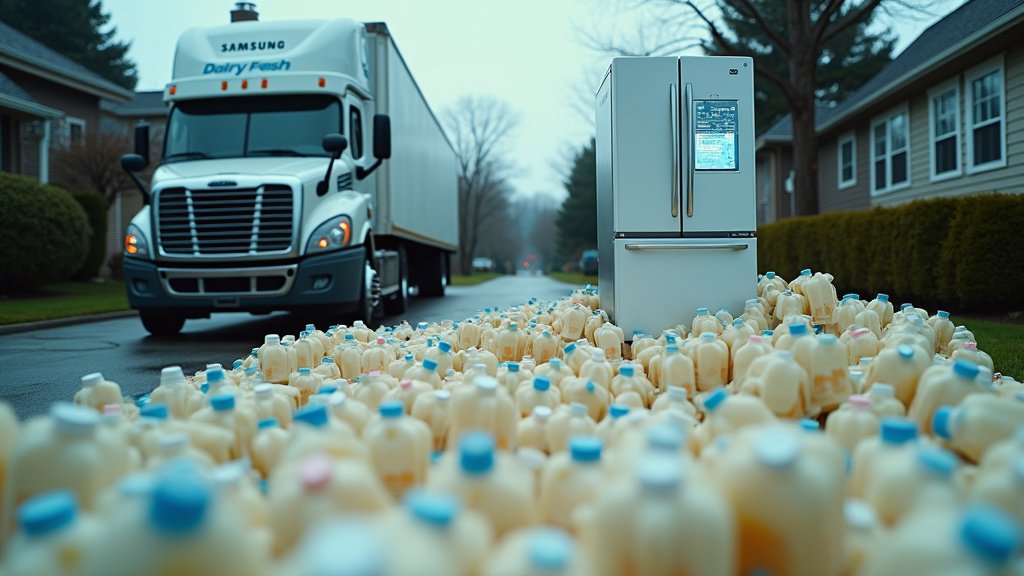
In a recent peculiar incident that highlights the growing pains of smart home technology, a high-tech refrigerator from Samsung ended up ordering a staggering 48 gallons of milk, leaving its owners bewildered and prompting broader discussions about the reliability of connected appliances. The surreal event, which unfolded in Seattle, involved a Samsung Family Hub smart refrigerator that malfunctioned due to a software update, misinterpreting a routine setting to trigger an excessive, costly, and bewilderingly large dairy delivery.
The Dairy Deluge
The unexpected deluge of milk arrived at the Johnson household, who discovered the immense order when a delivery truck pulled up with the dairy products. The bill for this accidental bounty amounted to $673.44. The refrigerator’s advanced auto-ordering feature, designed to simplify grocery management, reportedly misinterpreted a single half-gallon of milk as a need for 96 replacements, leading to the colossal quantity. This incident serves as a stark, if somewhat comical, example of how sophisticated technology, when it falters, can create significant inconvenience and unexpected expenses for consumers.
Software’s Sudden Spree
At the heart of the issue was a software glitch. Smart appliances, like the Samsung Family Hub refrigerator, rely heavily on software for their advanced functionalities, including features like inventory tracking and automated reordering. These systems are designed for convenience, aiming to streamline household tasks. However, as this recent news demonstrates, software updates, while intended to improve performance and fix bugs, can inadvertently introduce new problems. In this case, the update appears to have corrupted a parameter within the auto-ordering system, causing it to execute a command with disastrously disproportionate results. The complexity of such systems means that even minor errors in code can cascade into significant operational failures, as seen with the 48-gallon milk order.
Samsung’s Reaction and a Wider Pattern
Samsung has since apologized for the incident and offered refunds to the affected household. The company stated that over 200 other households reportedly experienced similar appliance ordering errors, suggesting this was not an isolated glitch but possibly a wider issue stemming from a specific software deployment. While Samsung has a broad support network for its products, including extensive online resources and customer service channels, this event may add to existing consumer concerns about the reliability and longevity of their smart appliances. Past reports have occasionally highlighted issues with Samsung appliances concerning repairability and lifespan, and the company has also faced scrutiny for introducing advertisements onto its smart refrigerator displays, a move that some consumers found intrusive. The responsiveness and transparency of manufacturers like Samsung are crucial for maintaining consumer trust, especially when malfunctions lead to financial losses and considerable disruption.
Erosion of Trust in the Smart Home
This milk mishap, while unusual, taps into a broader sentiment of cautious optimism—or sometimes outright skepticism—surrounding smart home technology. The promise of convenience and efficiency is often tempered by concerns about reliability, connectivity issues, and cybersecurity. Many smart devices require consistent Wi-Fi connections, and network failures can render them unusable. Furthermore, the reliance on software updates means that devices can become obsolete or even inoperable if manufacturers cease support, a concern that has been raised regarding the limited update cycles for some smart appliances. The need for specialized knowledge to troubleshoot and repair these complex devices also presents a challenge for the average homeowner. These recurring issues can chip away at consumer confidence, making potential buyers question whether the added convenience is worth the potential headaches and costs. The sheer volume of data collected by smart devices also raises privacy and security questions.
The Broader Landscape of Smart Appliances
The global smart home market continues its steady expansion, driven by consumer demand for convenience, energy efficiency, and enhanced security. Emerging technologies like AI and IoT are constantly pushing the boundaries of what smart appliances can do, creating new use cases and expanding the market’s scope. However, this growth also brings challenges, including the significant environmental impact of electronic waste (e-waste), with smart appliances contributing to a growing problem that outpaces recycling capabilities. The case of the over-ordering refrigerator underscores the need for robust quality control, thorough testing of software updates, and transparent communication from manufacturers when things go wrong. The industry faces a critical task in balancing innovation with fundamental reliability and ensuring that smart technology genuinely simplifies, rather than complicates, daily life.
The Dairy Dilemma Resolved
In the immediate aftermath of the incident, the Johnson family found themselves with an overwhelming surplus of milk. To address the excess, they chose to donate most of the 48 gallons to local charities, keeping only a few gallons for their own use. This act of generosity helped mitigate the negative impact of the technological blunder, turning a potentially frustrating situation into an opportunity to support the community.
Looking Ahead
The tale of the smart refrigerator that ordered enough milk to supply a small dairy is more than just a quirky news story; it’s a featured piece of evidence in the ongoing narrative of smart home technology. As these devices become increasingly integrated into our lives, incidents like this serve as important reminders of the need for vigilant oversight, proactive problem-solving from manufacturers, and a healthy dose of consumer awareness. The future of smart homes hinges not just on innovation, but on building and maintaining the customer trust that is essential for widespread adoption and sustained success.


Related Posts