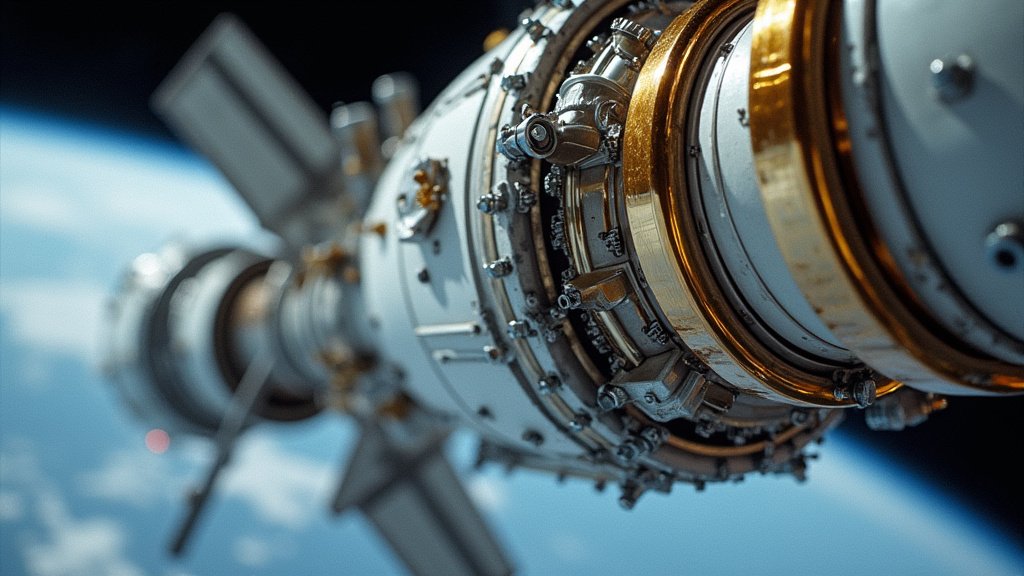
SpaceX Launches Massive Cygnus XL Cargo to ISS: NG-24 Mission Updates
At 7:41 a.m. EDT on April 11, 2026, the silence of the Space Coast was broken by the thunderous ignition of a SpaceX Falcon 9 rocket. Atop its payload fairing sat Northrop Grumman’s latest masterpiece of orbital logistics: the Cygnus XL cargo spacecraft, officially designated for the NG-24 mission. Successfully deploying into orbit, the mission marks a vital step in supporting the Expedition 74 crew currently aboard the International Space Station (ISS), ferrying over 11,000 pounds of vital cargo, scientific experiments, and essential operational hardware to the orbiting laboratory.
Key Highlights
- Mission NG-24: The latest Northrop Grumman Commercial Resupply Services flight represents the second-ever use of the upgraded Cygnus XL configuration.
Precision Delivery: The spacecraft, named the S.S. Steven R. Nagel*, is carrying over 11,000 pounds (approx. 5,000 kg) of cargo, including cutting-edge quantum physics modules and biological research equipment.
- Strategic Partnership: With Antares launch vehicles temporarily offline due to previous supply chain and geopolitical disruptions, the reliance on the SpaceX Falcon 9 highlights the adaptability of modern commercial space logistics.
- Rendezvous Timeline: The spacecraft is scheduled to rendezvous with the ISS on Monday, April 13, where Expedition 74 astronauts will initiate a robotic capture sequence using the station’s Canadarm2.
The Evolution of Orbital Logistics: The NG-24 Mission
The successful launch of the NG-24 mission serves as a critical pulse-check on the stability of the International Space Station’s supply chain. As the ISS continues to host complex, multi-national scientific research, the ability to deliver hardware and consumables on a predictable cadence remains the bedrock of orbital operations. Northrop Grumman’s decision to continue utilizing the SpaceX Falcon 9 launch platform for the Cygnus XL spacecraft is not merely a logistical convenience; it is a strategic realignment in the face of evolving global aerospace manufacturing landscapes. The transition from the legacy Antares launch vehicles to the workhorse Falcon 9 demonstrates a pragmatic approach to mission assurance, ensuring that the Expedition 74 crew receives their provisions without interruption.
The Legacy of the S.S. Steven R. Nagel
Every Cygnus vehicle is named in honor of a deceased astronaut who made significant contributions to the advancement of human spaceflight. For this mission, the S.S. Steven R. Nagel pays tribute to an American icon who served as an Air Force test pilot and flew on four Space Shuttle missions. Nagel’s career, which spanned from 1979 to 1995, was characterized by his piloting skill and command capability—qualities that the Northrop Grumman engineering team aims to reflect in the reliability and precision of the spacecraft that bears his name. This naming convention is a hallmark of the Commercial Resupply Services (CRS) program, humanizing the cold, calculated engineering required to orbit the Earth.
Scientific Cargo: Pushing the Boundaries of Physics and Medicine
The primary objective of NG-24 is not just to keep the lights on—it is to facilitate breakthroughs that are impossible on Earth. Among the 11,000 pounds of cargo, two distinct areas of study highlight the mission’s importance: quantum physics and regenerative medicine. The onboard quantum physics module is designed to expand the operational capabilities of the Cold Atom Lab, an facility that has already yielded groundbreaking insights into Bose-Einstein condensates. By operating at temperatures a fraction of a degree above absolute zero, the lab allows scientists to study matter at a fundamental level, free from the interference of Earth’s gravity. Simultaneously, the inclusion of a blood stem cell study marks a significant step forward in treating cancers and hereditary blood disorders. By observing stem cell behavior in microgravity, researchers hope to uncover insights into cellular growth and aging that could revolutionize therapies back on the surface of our planet.
Technical Hurdles and Future Transitions
The Cygnus XL variant, an evolution of the classic Cygnus, provides a significant boost in volume and payload capacity compared to its predecessors. However, the path to orbit has been fraught with structural changes. With the Antares 230+ rocket retired, Northrop Grumman is currently in a transitional phase. The development of the Antares 330, while promising, represents a complex engineering hurdle. The continued use of Falcon 9 for these resupply flights underscores the importance of inter-corporate cooperation in the space sector. It is a reminder that while private companies compete for market share, the broader goal of sustaining human life in space necessitates a high degree of interoperability and shared technical capabilities.
Operational Realities: The Capture Sequence
One of the most distinct differences between the Cygnus spacecraft and other vehicles like the SpaceX Dragon is the docking protocol. Unlike Dragon, which features autonomous docking capability, Cygnus relies on the “Capture and Berth” method. Once the vehicle reaches the vicinity of the ISS, Expedition 74 crew members—specifically astronauts Jack Hathaway and Chris Williams—will utilize the Canadarm2 robotic arm to “grapple” the free-flying spacecraft. This requires intense precision, relying on advanced computer simulations and the immense skill of the crew. After capture, the spacecraft is maneuvered to the Unity module’s Earth-facing port. This installation is a delicate, multi-hour operation that highlights the extreme control required for ISS station-keeping.
Long-Term Sustainability and Waste Disposal
Beyond the delivery of equipment, the Cygnus XL serves an equally important role as a cosmic trash compactor. Throughout the mission’s six-month lifespan, the spacecraft will become a repository for the station’s waste, experiments that have concluded, and decommissioned hardware. When the mission eventually terminates in October 2026, the vehicle will be packed full of refuse and released from the station. It will then perform a controlled, destructive re-entry into Earth’s atmosphere, safely disposing of the waste. This circular logistical loop is a fundamental aspect of ISS operations that is often overlooked but critical to preventing the buildup of debris within the habitable volume of the station.
FAQ: People Also Ask
1. What is the difference between Cygnus and SpaceX Dragon?
- The primary difference lies in the docking method. Dragon is designed for autonomous docking, meaning it guides itself to the station. Cygnus requires the ISS crew to manually operate the Canadarm2 robotic arm to capture the vehicle and guide it to the berthing port.
2. Why is this mission named NG-24?
- NG stands for Northrop Grumman, the manufacturer of the Cygnus spacecraft. The number 24 denotes that this is the 24th resupply mission conducted under NASA’s Commercial Resupply Services contract.
3. What happens to the Cygnus spacecraft at the end of the mission?
- Unlike reusable vehicles that return to Earth, Cygnus is designed for a single-use mission. Once its time at the ISS concludes, it is filled with trash and waste, then detached and sent into the atmosphere, where it burns up upon re-entry.
4. Who is the current crew on the ISS?
- The mission is supporting the Expedition 74 crew. This international crew, consisting of NASA, ESA, and other partner agency astronauts, is responsible for conducting a wide array of experiments, ranging from biological studies to station maintenance.


Related Posts