
Trump Champions New Era of Middle East Peace Post-Gaza Ceasefire at Egypt Summit
SHARM EL SHEIKH, Egypt – In a significant diplomatic push following a U.S.-brokered ceasefire, former U.S. President Donald Trump urged Israel to seize the moment for peace, addressing world leaders at a summit on Gaza’s future on October 13, 2025. The gathering in Sharm El Sheikh, Egypt, marked a critical juncture after a fragile truce paused a brutal two-year war between Israel and Hamas, coinciding with the release of the final 20 living Israeli hostages held by the militant group.
Trump’s Call for Regional Harmony
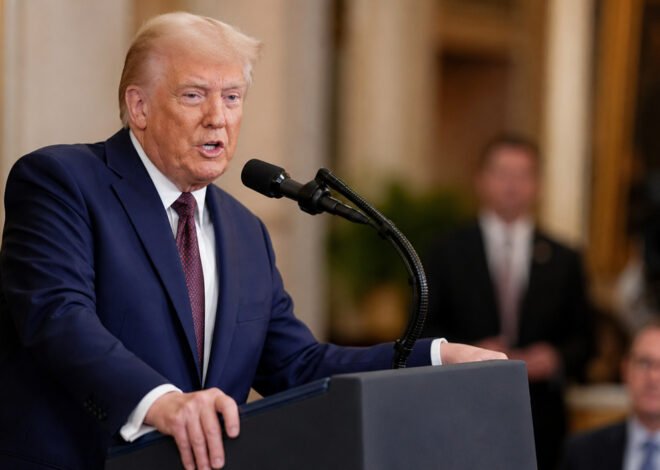
Addressing the Israeli Knesset earlier in the day, Trump declared that Israel had achieved all it could on the battlefield and now needed to translate those military victories into lasting peace and prosperity for the Middle East. “We have a once-in-a-lifetime chance to put the old feuds and bitter hatreds behind us,” Trump told Israeli lawmakers, who greeted him with multiple standing ovations. He urged leaders to “declare that our future will not be ruled by the fights of generations past.”
Later, at the international summit co-chaired with Egyptian President Abdel Fattah el-Sisi, Trump reiterated this message, calling the day “a new dawn for the Middle East.” He emphasized that “generations from now, this will be remembered as the moment that everything began to change.” The summit aimed to cement the end of the more than two-year conflict that began with Hamas’s coordinated attacks on Israel on October 7, 2023, and to lay the groundwork for Gaza’s future.
A Fragile Ceasefire and Hostage Release
The backdrop to these diplomatic efforts was a hard-won ceasefire that brought a much-needed pause to the devastating war. As part of the U.S.-brokered agreement, Hamas released all 20 remaining living Israeli hostages it held. In exchange, Israel released approximately 1,968 Palestinian prisoners. This exchange was a crucial first phase of President Trump’s comprehensive peace plan, which had been announced on September 29, 2025.
The ceasefire, effective October 10, 2025, represented a significant breakthrough after months of arduous negotiations. However, its fragility was evident, with ongoing concerns about implementation and the potential for renewed conflict.
The Sharm El Sheikh Summit: Discussing Gaza’s Future
The summit in the Egyptian resort town of Sharm El Sheikh gathered representatives from nearly three dozen countries, including many from Europe and the Middle East. Leaders from Egypt, Qatar, and Turkey, alongside the United States, signed a declaration as guarantors of the Gaza deal, affirming their commitment to peace, security, and stability in the region. Palestinian President Mahmoud Abbas also attended, signaling a potential role for the Palestinian Authority in future governance structures.
Israeli Prime Minister Benjamin Netanyahu, though invited, did not attend, with his office citing the proximity to a Jewish holiday. Nevertheless, Netanyahu had previously hailed Trump as “the greatest friend Israel has ever had in the White House” and pledged to work with him.
Trump’s 20-Point Peace Plan
The foundation for these recent developments was Trump’s extensive “Comprehensive Plan to End the Gaza Conflict,” a 20-point proposal unveiled in late September 2025. The plan outlined a path towards ending the hostilities, which included an immediate ceasefire, the return of all hostages, prisoner exchanges, the demilitarization of Gaza, the deployment of an international stabilization force, transitional governance by Palestinian technocrats under international supervision, and large-scale reconstruction. The plan also aimed to counter Hamas’s ideology through a united alliance of Israel and Arab nations.
While many countries worldwide supported the plan, Hamas had initially expressed reservations about terms like demilitarization. Nevertheless, the successful execution of the first phase—the ceasefire and hostage release—marked a critical step forward.
Challenges and Prospects for Lasting Peace
Despite the optimism surrounding the ceasefire and summit, significant challenges remain in establishing enduring peace. The future governance of Gaza, the decommissioning of Hamas weapons, and the broader Israeli-Palestinian conflict are monumental tasks that require sustained international commitment. Experts have noted that the path to lasting peace is complex, demanding more than just the silencing of weapons.
Regional stability is further complicated by the need to dismantle extremism and radicalization, as emphasized in the declaration signed at the Egypt summit. The ongoing international efforts to establish a stabilization force for Gaza, potentially led by Egypt, underscore the commitment to ensuring security and facilitating reconstruction.
Concurrent Diplomatic Shifts
In parallel to the high-stakes developments in the Middle East, October 13, 2025, also saw diplomatic progress elsewhere. India and Canada announced on this recent news day that they had agreed to restore and upgrade bilateral relations through renewed ministerial-level talks, a revived energy dialogue, and a fresh push on trade and technology cooperation. This development, following a period of diplomatic strain, signaled a broader global trend toward re-engagement and cooperation amidst geopolitical uncertainties.
A New Chapter Begins
As world leaders departed Sharm El Sheikh, the atmosphere was one of cautious hope. President Trump’s assertive push for peace, coupled with the tangible achievement of a ceasefire and hostage release, has opened a new, albeit precarious, chapter for the Middle East. The coming weeks and months will be crucial in determining whether this fragile moment of de-escalation can indeed translate into sustained peace, security, and prosperity for the region and its people. This featured news marks a significant moment in recent diplomatic history.


Related Posts