Artemis II Returns: Historic Moon Mission Concludes Safely
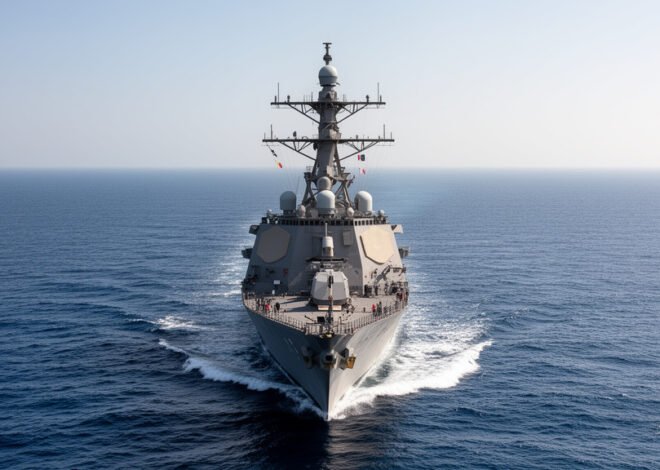
NASA’s Artemis II mission successfully concluded on April 10, 2026, marking a pivotal moment in human space exploration as the Orion spacecraft splashed down in the Pacific Ocean off the coast of San Diego. Carrying a crew of four, the mission, which represents the first human voyage to the lunar vicinity in over five decades, demonstrated the capability of the Orion Multi-Purpose Crew Vehicle to traverse deep space and return safely to Earth. The successful recovery by U.S. Navy and NASA personnel aboard the USS John P. Murtha underscores the culmination of years of rigorous training, testing, and international cooperation, setting the stage for subsequent lunar landings under the Artemis program.
Key Highlights
- The Orion spacecraft safely splashed down in the Pacific Ocean at 8:07 p.m. EDT on April 10, 2026, following a 10-day mission.
- The crew, consisting of NASA astronauts Reid Wiseman, Victor Glover, and Christina Koch, alongside Canadian Space Agency astronaut Jeremy Hansen, are reported to be in good health.
- This mission marks the first time humans have traveled to the Moon and returned safely since Apollo 17 in 1972, serving as a critical precursor to the upcoming Artemis III landing.
- The successful re-entry proved the integrity of Orion’s advanced heat shielding technology, which endured extreme temperatures during its atmospheric descent.
The Orion Homecoming: Analyzing the Artemis II Lunar Return
The return of the Artemis II crew represents more than just a successful flight; it is the validation of the foundational architecture NASA and its international partners have spent years constructing. As the Orion capsule touched the surface of the Pacific, it signaled the end of a high-stakes, 10-day operation that took humanity further from Earth than it has traveled in more than 50 years. The success of this splashdown is a technological triumph, confirming that the Orion spacecraft—a vehicle designed for the harsh realities of deep space—can successfully complete the journey from the lunar vicinity to Earth’s surface.
The Mechanics of Re-Entry and Recovery
The re-entry phase of the Artemis II mission was widely considered the most dangerous segment of the entire journey. As the capsule approached Earth, it slammed into the atmosphere at speeds exceeding 24,000 mph. The engineering challenge was immense: managing the conversion of this kinetic energy into heat while maintaining a habitable environment for the crew. The Orion heat shield, a proprietary thermal protection system, successfully dissipated temperatures reaching approximately 2,760 degrees Celsius (5,000 degrees Fahrenheit).
Following the intense heating phase, the deployment of the drogue and main parachutes was textbook. The spacecraft’s deceleration from hypersonic speeds to a splashdown velocity of about 20 mph was monitored by mission control in Houston with bated breath. The visual of the capsule floating on the Pacific, shortly after 8:00 p.m. EDT, provided the definitive answer to the primary question of the mission: could Orion survive the heat of a lunar return? The answer, unequivocally, is yes. The subsequent retrieval by the USS John P. Murtha recovery team was swift, with the crew being processed and moved to medical facilities on the vessel, initiating the first phase of post-flight biological data collection.
Scientific and Historical Implications
The Artemis II mission was designed to test human and machine, but its legacy will be its role in re-establishing human presence in the cis-lunar region. By looping around the Moon and returning, the crew—Reid Wiseman, Victor Glover, Christina Koch, and Jeremy Hansen—collected vital data on the effects of deep space radiation on human physiology, information that is strictly necessary for the long-duration missions planned for Mars in the late 2030s.
Furthermore, the inclusion of Jeremy Hansen, representing the Canadian Space Agency, highlights the shift toward an internationalized lunar economy. Unlike the space race of the 20th century, the Artemis program relies heavily on the Artemis Accords, a framework of cooperation that ensures the peaceful, collaborative exploitation of lunar resources. This mission was the proof-of-concept for that collaborative model. The data gathered during this 10-day window is currently being analyzed to calibrate the life-support and navigation systems that will be utilized for the Artemis III mission, which aims to land the first woman and person of color on the lunar south pole.
Technological Validation and Commercial Partnerships
One of the most significant secondary angles of the Artemis II success is the validation of the commercial partnership model. Orion, while a government-led program, utilizes a massive supply chain involving private sector entities like Lockheed Martin. The performance of the spacecraft—specifically its guidance, navigation, and propulsion systems—was a result of years of integrated testing between NASA and its private contractors. This successful splashdown serves as a massive endorsement for this model, proving that private-public synergies can deliver reliable, ultra-high-stakes hardware.
As the aerospace industry looks toward the next decade, the Artemis II mission provides the baseline metrics for human-rated deep space travel. The mission was not just about getting to the Moon; it was about establishing a reliable ‘space taxi’ capability. With the completion of this flight, the program now shifts focus toward the production and certification of future Orion capsules, as well as the Lunar Gateway, which will eventually serve as the staging ground for surface missions. The successful return proves that the path to the Moon is not only possible but sustainable with current technology.
FAQ: People Also Ask
1. Was the Artemis II mission a success?
Yes, the mission was a complete success. The primary objectives, including verifying the performance of the Orion spacecraft during deep space transit and re-entry, were achieved, and all crew members returned safely.
2. Who were the four astronauts on Artemis II?
The crew included NASA astronauts Reid Wiseman (Commander), Victor Glover (Pilot), and Christina Koch (Mission Specialist), along with Canadian Space Agency astronaut Jeremy Hansen (Mission Specialist).
3. Why is this mission historic?
Artemis II was the first crewed mission to travel beyond Earth’s orbit and loop around the Moon since Apollo 17 in 1972, marking a major milestone in returning humans to the lunar environment.
4. What happens to the crew now?
The crew will undergo extensive medical evaluations and debriefings to monitor the physical effects of deep space travel. These results will be critical in planning for longer-duration missions to the Moon and, eventually, Mars.
5. When is the next Artemis mission?
NASA is currently analyzing the data from Artemis II to finalize timelines for Artemis III, which will be the first mission to land astronauts on the lunar surface since the Apollo era.


Related Posts