Cuba’s Total Grid Collapse: A Nation in the Dark
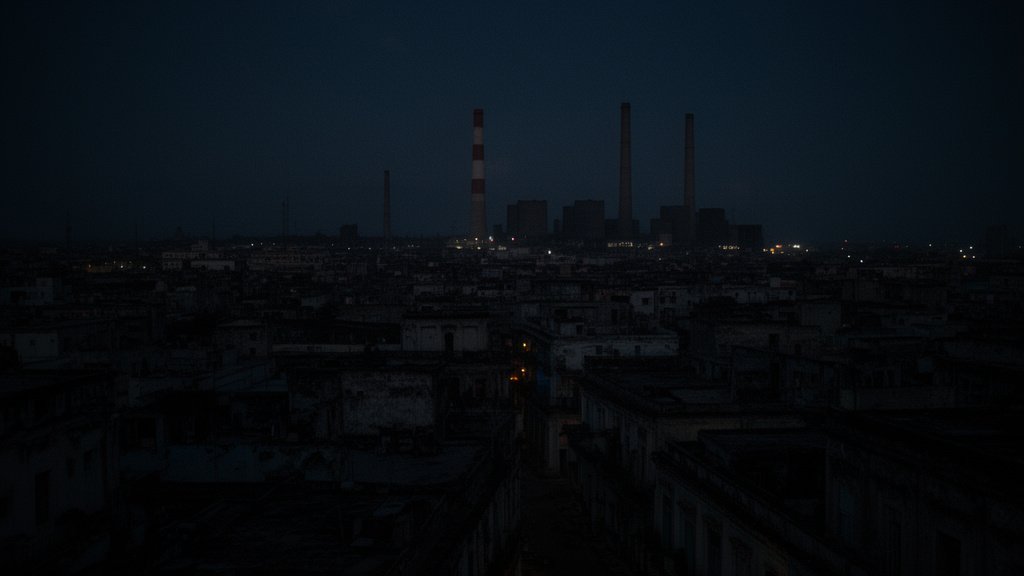
On October 18, 2024, the Cuban National Electric System (SEN) experienced a total catastrophic failure, plunging the entire island of approximately 10 million people into a nationwide blackout. The collapse occurred following the unplanned shutdown of the Antonio Guiteras power plant, the country’s most significant energy generator, setting off a cascade effect that paralyzed the electrical grid. This incident serves as the culmination of years of chronic underinvestment, severe fuel scarcity, and the mounting pressure of U.S. sanctions, leaving the island’s critical infrastructure in a state of terminal fragility.
Key Highlights
- Total Grid Failure: The SEN, the backbone of Cuba’s electrical infrastructure, suffered a complete disconnection on Friday, October 18, following the failure of the Antonio Guiteras thermoelectric plant.
- Fuel Shortage Crisis: The collapse is inextricably linked to a severe lack of fuel, primarily fuel oil, necessary to run the aging fleet of thermoelectric plants.
- Geopolitical & Environmental Factors: The situation has been exacerbated by the tightening of U.S. sanctions, which restrict financial transactions and fuel imports, alongside weather disruptions from Hurricane Milton that delayed fuel shipments.
- Government Emergency Measures: Cuban authorities suspended all non-essential state activities, including schools and non-critical public services, to conserve the dwindling energy supply.
The Anatomy of a National Blackout
The failure of the Antonio Guiteras power plant was not an isolated technical glitch; it was the ‘straw that broke the camel’s back’ for an energy system that has been teetering on the edge for years. To understand the current crisis, one must look at the structural decay of Cuba’s energy production. The majority of the country’s electricity is generated by aging thermoelectric plants, many of which were built in the Soviet era and have lacked the necessary parts, maintenance, and capital investment for decades.
The Failure of the National Electric System (SEN)
When the Guiteras plant went offline, it created a massive supply deficit. In an integrated grid, a failure of this magnitude triggers automatic protection protocols to prevent further damage to the remaining infrastructure. However, because the entire grid was already operating with almost zero reserve capacity, the failure caused a domino effect, leading to a total ‘zero voltage’ scenario. The Unión Eléctrica de Cuba (UNE), the state-run provider, has been struggling to balance a grid where demand consistently outstrips supply, leading to rolling blackouts that have defined life in Cuba for the past several years.
The Fuel Paradox: Sanctions and Sovereignty
The primary driver of this collapse is the inability to secure fuel. While the Cuban government frequently points to the U.S. embargo (the ‘bloqueo’) as the root cause of its inability to purchase fuel or upgrade plants, international energy analysts point to a more complex web of causes. Economic mismanagement, the collapse of tourism revenue post-pandemic, and the inability to secure credit on international markets mean that Cuba often cannot pay for the fuel tankers that do arrive at its ports. Furthermore, regional instability in Venezuela—historically Cuba’s primary supplier of subsidized oil—has significantly reduced the steady flow of fuel that once kept the lights on.
The Intersection of Weather and Infrastructure
The irony of the current blackout is that it coincided with the aftermath of Hurricane Milton. While the storm did not make a direct hit on the island, its path through the Gulf of Mexico caused sea conditions that prevented fuel tankers from unloading at Cuban ports. This environmental bottleneck highlights the extreme fragility of the nation’s energy supply chain: a single delay in a shipping schedule is enough to trigger a total national collapse. This degree of sensitivity to external shocks is the hallmark of an economy that has run out of buffers.
Socio-Economic Impact and the Humanitarian Cost
The blackout extends far beyond the inconvenience of flickering lights; it represents a profound crisis for public health and food security. In a tropical climate, the loss of power means the immediate failure of cold chain logistics. Refrigerators in both state-run warehouses and private homes are failing, leading to rapid food spoilage. In the healthcare sector, hospitals are heavily reliant on diesel generators, which themselves are prone to failure and are also subject to the same fuel shortages as the main grid.
The Shift to Renewables: A Distant Solution
For years, the Cuban government has touted plans to transition to renewable energy—specifically solar and wind. However, the current crisis exposes the reality that these plans are in their infancy. While foreign investment is invited to build solar parks, the lack of a stable, functional grid to distribute that energy means that even if renewables were generating at full capacity, the distribution network remains the bottleneck. Without a major overhaul of the transmission and distribution infrastructure, the ‘Green Transition’ remains a project for the future while the present is consumed by the failures of the past.
FAQ: People Also Ask
Q: Why does the Antonio Guiteras power plant failing cause a nationwide blackout?
A: The Antonio Guiteras plant is Cuba’s largest and most reliable thermoelectric generator. When it fails, the grid loses its ‘baseload’ power. Because the rest of the country’s plants are old and poorly maintained, they cannot ramp up quickly enough to compensate, causing the frequency of the grid to collapse and forcing a total system shutdown to prevent equipment damage.
Q: How do U.S. sanctions impact the Cuban power grid?
A: U.S. sanctions restrict Cuba’s access to international financial markets, making it difficult for the government to secure credit to pay for fuel imports and spare parts for its aging power plants. This creates a liquidity crisis that frequently results in the inability to purchase necessary fuel oil even when it is available on the international market.
Q: Is this the first time Cuba has experienced a total grid collapse?
A: While Cuba has suffered from chronic blackouts for years, a total nationwide grid collapse is an extreme event. While smaller, regional blackouts are frequent, the total loss of the SEN, resulting in the entire island losing power simultaneously, is a historic crisis that reflects the cumulative effect of decades of underinvestment.
Q: What is the government doing to fix it?
A: The Cuban government, through the Ministry of Energy and Mines, has mobilized repair crews to restore the grid incrementally, connecting small segments of the system at a time. They have also suspended all non-essential state services and schools to prioritize the limited remaining electricity for residential use and critical hospitals.


Related Posts