
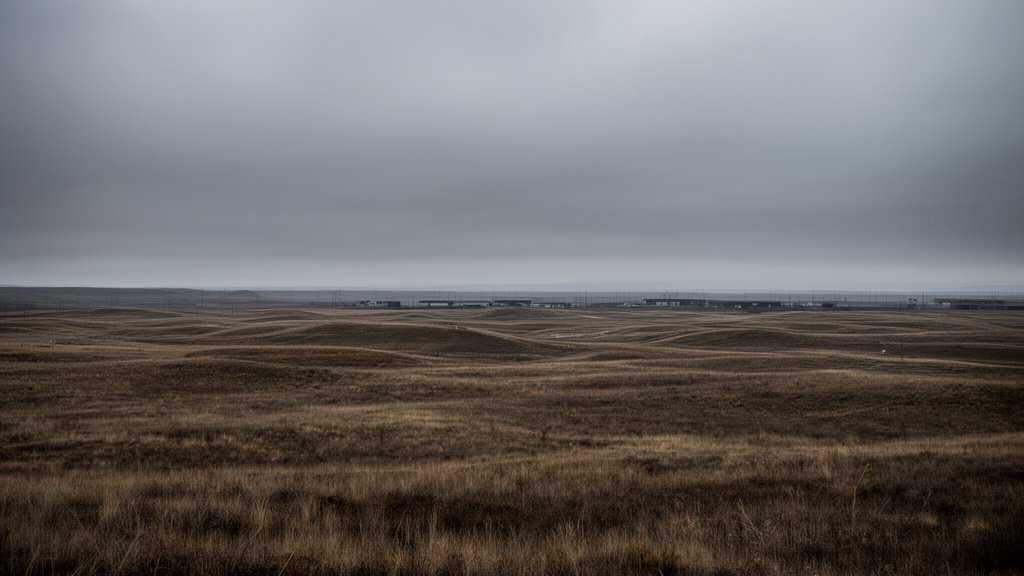
Tragic Training Accident: Wind Shift Sparks CFB Wainwright Fire
A routine training exercise at Canadian Forces Base (CFB) Wainwright in Alberta turned fatal after an unexpected, extreme wind shift pushed a controlled grass fire into live munitions, resulting in 4 deaths and dozens of injuries among the 3rd Battalion, Princess Patricia’s Canadian Infantry. The incident, which occurred during a high-stakes tactical readiness drill, has sent shockwaves through the Canadian Armed Forces and initiated a sweeping investigation into safety protocols regarding live-fire exercises.
Key Highlights
- A sudden, ‘uncommon’ weather phenomenon caused a controlled grass fire to spiral out of control, directly impacting a nearby munitions cache.
- Casualties have been confirmed among the 3rd Battalion, Princess Patricia’s Canadian Infantry, with dozens more suffering from injuries ranging from shrapnel wounds to smoke inhalation.
- Department of National Defence officials are investigating why the rapid weather shift was not anticipated by on-site safety officers.
- The disaster has ignited a national conversation regarding the balance between realistic, high-intensity training and the safety of service personnel.
The Anatomy of a Training Disaster at CFB Wainwright
The CFB Wainwright training facility, located in the rolling plains of Alberta, is a cornerstone of Canadian military readiness. It is designed to simulate the chaos of the battlefield, incorporating live-fire drills that test the mettle of infantry units like the 3rd Battalion, Princess Patricia’s Canadian Infantry. However, the unique geography of the Wainwright plains—often dry, windswept, and prone to rapid meteorological changes—can turn a controlled environment into a hazardous one in minutes.
On the day of the incident, the exercise was proceeding according to standard operating procedures. A controlled burn was being managed to simulate environmental challenges typical of austere combat zones. According to preliminary reports, the wind speed was well within the safety parameters for such an exercise. However, a localized, ‘uncommon’ wind shear occurred, creating a vortex effect that forced the blaze to jump containment lines.
This rapid shift directed the fire toward an area designated for equipment storage and active munitions staging. The heat was instantaneous, triggering the ignition of nearby explosives. The resulting secondary explosions created a blast zone that overwhelmed nearby personnel. The speed of the fire’s expansion and the subsequent munitions detonation left little time for evacuation, turning what was supposed to be a standard infantry drill into a catastrophic loss of life.
The Role of Meteorological Precision in Field Exercises
Military planners rely heavily on meteorological data to determine whether to proceed with live-fire drills. In the aftermath of this tragedy, the focus is squarely on the ‘uncommon’ nature of the wind shift. While standard forecasting tools were in use, the local terrain at CFB Wainwright can create micro-climates that are notoriously difficult to predict. This incident raises critical questions about whether the current reliance on regional weather forecasts is sufficient for high-risk training, or if specialized, real-time localized weather monitoring is required for every munitions-heavy exercise.
The Impact on the 3rd Battalion
For the 3rd Battalion, Princess Patricia’s Canadian Infantry, the loss is profound. This unit, which carries a storied history of service, is now grappling with the sudden loss of four comrades and the physical and psychological toll on the dozens of survivors. Military psychologists and trauma response teams have been deployed to the base, but the organizational impact is long-term. Questions remain about how this unit will recover its operational readiness and, more importantly, how it will honor those lost in the line of duty during training.
Secondary Angles: Understanding the Wider Context
1. Psychological Impact and Unit Cohesion
Beyond the immediate physical toll, incidents of this magnitude create a secondary crisis: a loss of trust in the training system. When soldiers are injured or killed during training, the psychological barrier between ‘preparedness’ and ‘fear’ is shattered. The military leadership must now navigate the delicate process of reassuring the rank-and-file that they can train safely without sacrificing the realism required for modern combat. Maintaining unit cohesion while grieving requires a delicate balance of transparency and support that the Canadian Armed Forces must now master.
2. Technological Integration in Weather Monitoring
This tragedy highlights an urgent technological need. The military sector often lags in adopting the hyper-local atmospheric sensors used in industries like wildfire management or commercial aviation. If a ‘common’ shift can be predicted, the military must invest in the infrastructure to predict the ‘uncommon.’ Future training exercises at CFB Wainwright and other installations may soon require a permanent, high-resolution sensor grid that can provide commanders with a real-time ‘weather heat map’ to trigger automatic cease-fire orders the moment wind shifts exceed safety thresholds.
3. Political Accountability and Defense Reform
The incident at CFB Wainwright will undoubtedly reach the halls of Parliament. Opposition parties are already calling for a comprehensive review of the Department of National Defence’s safety training manuals. Political analysts suggest this could lead to a ‘Safety First’ legislative shift in how military budgets are allocated, potentially moving funds from offensive capabilities toward infrastructure, training safety, and disaster prevention. The political pressure to ensure no mother or father receives a ‘death in training’ notice will be immense.
FAQ: People Also Ask
Q: What is a ‘controlled fire’ in a military training context?
A: It is a carefully managed burn, often used to clear vegetation or simulate the chaotic, smoke-filled environment of a battlefield. It requires strict firebreaks, wind monitoring, and immediate suppression capability.
Q: Why were munitions so close to the fire?
A: Live-fire training requires proximity to ordnance. The goal is to simulate actual combat, which involves moving equipment and explosives in proximity to soldiers, under strictly monitored conditions.
Q: Is CFB Wainwright known for these types of accidents?
A: CFB Wainwright is one of Canada’s most heavily used training grounds. While the vast majority of exercises occur without incident, the size and nature of the training (which involves heavy, complex maneuvers) naturally carry a higher risk profile than administrative military bases.
Q: What happens to the investigation results?
A: Typically, such incidents trigger a Board of Inquiry. The findings are compiled into a report that addresses the ’cause’ (the wind shift) and the ‘contributing factors’ (training protocols), which are then used to update safety procedures across the entire Canadian Armed Forces.


Related Posts


