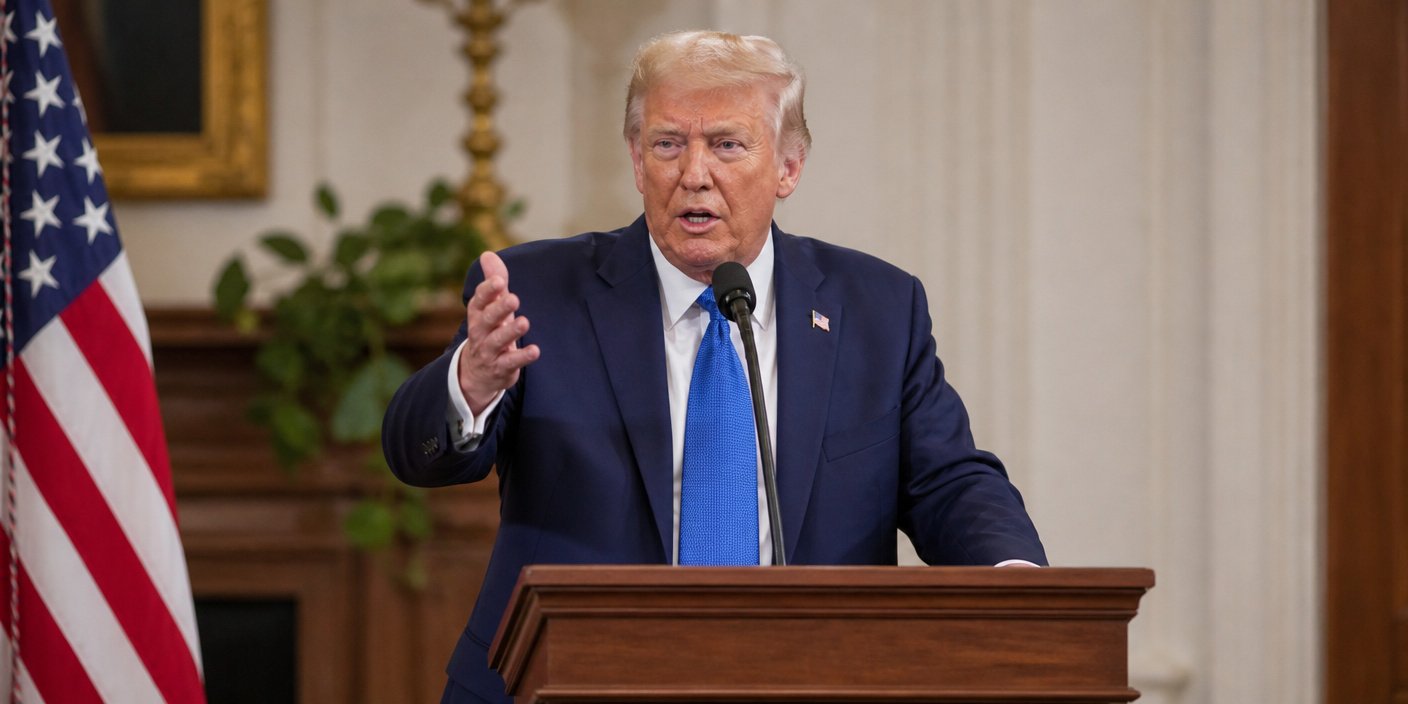
Gulf Crisis: Trump Issues Ultimatum to Oman Over Strait Access
President Donald Trump has issued a stark, unprecedented warning to the Sultanate of Oman, threatening immediate military action if the nation obstructs efforts to reopen the Strait of Hormuz. This ultimatum comes on the heels of the expiration of a 60-day U.S.-Iran ceasefire, which failed to yield a permanent diplomatic framework. As the agreement lapsed, the geopolitical volatility in the Persian Gulf has surged, with Iran formally announcing a transition to a “fully offensive” military posture, signaling a potential escalation that threatens one of the world’s most critical maritime chokepoints.
The Collapse of the 60-Day Ceasefire
The 60-day ceasefire, initially brokered as a stop-gap measure to lower regional tensions, has officially concluded without the signature of a lasting agreement. Negotiators from the U.S. State Department and Iranian representatives had been in sporadic contact, yet the fundamental disagreements regarding maritime boundaries, uranium enrichment monitoring, and regional proxy influence proved insurmountable. The failure to extend this ceasefire has left a power vacuum in the region, which has been rapidly filled by aggressive posturing from both the White House and Tehran.
President Trump’s declaration specifically targets the Sultanate of Oman, a nation long viewed as a neutral diplomatic bridge in Gulf affairs. The White House has accused Omani authorities of allowing Iranian assets to utilize territorial waters near the Musandam Peninsula to harass international shipping. Trump’s threat implies that the U.S. will no longer accept Omani neutrality as a shield for Iranian military maneuvers, asserting that any obstruction to the “freedom of navigation” will be met with direct military intervention.
The Strategic Chokepoint: Why Hormuz Matters
The Strait of Hormuz is not merely a geographic waterway; it is the jugular vein of the global energy market. Estimates from the U.S. Energy Information Administration (EIA) suggest that approximately 20 to 30 percent of the world’s total global petroleum consumption passes through this narrow passage daily. Even a minor disruption or a perceived threat to shipping has historically caused immediate spikes in crude oil prices.
By threatening to strike in the vicinity of the Strait, the U.S. administration is engaging in a high-stakes “brinkmanship” strategy. The military objective is to deter any attempt by Iran to replicate its past tactics of using asymmetric warfare—specifically speed boat swarms and naval mines—to choke off the flow of oil. However, by bringing Oman into the crosshairs, the U.S. has significantly widened the potential theater of conflict, forcing regional neighbors to choose sides in a rapidly deteriorating standoff.
Iran’s “Fully Offensive” Military Posture
Concurrent with the expiration of the ceasefire, the Islamic Revolutionary Guard Corps (IRGC) has declared a transition to a “fully offensive” military posture. This is a marked departure from the previous defensive maneuvering characterized by reconnaissance and posturing. Security analysts indicate that this shift likely involves the forward deployment of advanced anti-ship cruise missiles, the mobilization of deep-water naval mines, and the activation of drone fleets designed for swarming tactics.
This shift is calculated to present the U.S. Navy with an environment where defensive measures, such as intercepting incoming projectiles, become increasingly difficult. By pivoting to an offensive stance, Tehran is testing the resolve of the U.S. administration, aiming to force a calculation where the cost of military engagement outweighs the strategic value of maintaining open shipping lanes. The rhetoric coming from Tehran suggests that they are prepared to treat the Strait as a sovereign defensive zone, regardless of international maritime law interpretations held by the United States.
The Diplomatic and Economic Fallout
The immediate economic impact has been a sharp rise in Brent Crude futures, reflecting market anxiety over the potential for a total blockade. Supply chain managers globally are bracing for “War Risk” insurance premiums to skyrocket, which will inevitably push shipping costs higher, impacting everything from fuel to consumer goods.
Furthermore, the diplomatic landscape is fractured. The Gulf Cooperation Council (GCC) finds itself in an impossible position; member states are wary of the U.S. abandoning the region, yet they fear becoming collateral damage in a direct conflict between Washington and Tehran. Oman, in particular, now faces the difficult task of balancing its longstanding diplomatic ties with Iran against the existential threat posed by the United States’ new, aggressive ultimatum. The diplomatic architecture that once kept these tensions beneath the boiling point is effectively dismantled, and the world is currently watching a real-time erosion of international norms in the Gulf.
Future Trajectory: What Comes Next?
As of this writing, there is no indication of a return to the negotiating table. The U.S. Seventh and Fifth Fleets have reportedly increased their readiness levels, positioning assets to respond to any incursion near the Strait. Experts suggest that the next 72 hours will be the most critical; if there is a naval incident involving an Iranian patrol or an Omani blockade, the path to de-escalation becomes significantly narrower. The current situation represents a total failure of the previous “restraint” policy, replacing it with a doctrine of “total deterrence” that leaves little room for error or misunderstanding between the competing military forces.


Related Posts