
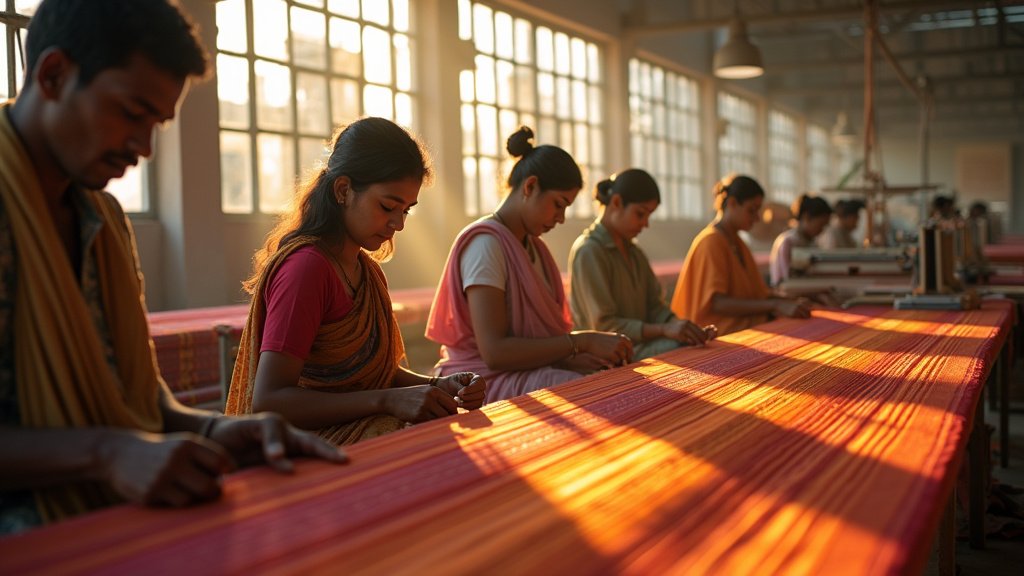
India’s New Labour Codes Ignite Textile Growth and Worker Empowerment
India’s new labour codes represent a significant overhaul of employment regulations, aiming to streamline processes and stimulate economic growth. The consolidation of 29 old laws into four comprehensive statutes, known as the **India Labour Codes**, is designed to enhance worker welfare and foster improved industrial relations. These pivotal **India Labour Codes** were slated for nationwide implementation on November 21, 2025, heralding a new era for businesses and employees alike and aligning India with global best practices through these critical **India Labour Codes**.
Understanding the India Labour Codes Framework
The framework of the **India Labour Codes** comprises four essential statutes: the Code on Wages, the Industrial Relations Code, the Code on Social Security, and the Occupational Safety, Health, and Working Conditions Code. These **India Labour Codes** replace a complex and outdated legislative structure, establishing a unified and more efficient system. This modernized approach is crucial for developing a future-ready workforce and strengthening industries, moving past colonial-era legislation to foster a more self-reliant India. The comprehensive nature of these **India Labour Codes** ensures a more robust environment for employment regulation and worker empowerment.
Boosting Competitiveness with the New Labour Codes
The introduction of the new labour codes is anticipated by industry stakeholders to significantly improve the ease of doing business. The textile industry, for example, expects substantial benefits, with simplified compliance through unified registration and licensing processes. The inspector-cum-facilitator model replaces the previous punitive enforcement system, fostering greater operational flexibility and enhancing global competitiveness. These **new labour codes** are instrumental in preparing the nation for potential Free Trade Agreements and supporting textile industry growth. India aims to solidify its position as a global sourcing hub, bolstered by increasing textile and apparel export growth, all facilitated by these essential **India Labour Codes**.
Empowering Workers Through the India Labour Codes
Worker empowerment is a central tenet of the **new labour codes**, with enhanced wage protection and guaranteed minimum wages for all workers. Timely wage payments are now mandatory, alongside a significant social security expansion, extending coverage for provident fund, ESIC, and insurance benefits. A major advancement is the formal recognition of gig worker rights and platform worker rights, alongside improved benefits for contract workers. Fixed-term employees now enjoy parity with permanent staff, including gratuity eligibility after just one year of service. Migrant worker rights are strengthened with provisions for equal wages and enhanced welfare benefits, including portability for Public Distribution System (PDS) services. The **India Labour Codes** also extend the claim period for pending dues to three years and mandate double wages for overtime work, reinforcing worker welfare laws.
Enhanced Occupational Safety and Gender Equality Workplace Under the India Labour Codes
The **India Labour Codes** introduce crucial upgrades in occupational safety, guaranteeing safer conditions for all workers. Free annual health check-ups are now mandatory for workers aged 40 and above, contributing to better occupational safety. Furthermore, these reforms actively promote gender equality in the workplace. Women can now work night shifts in all sectors, with their consent and the implementation of adequate safety measures. This significant change opens avenues for higher incomes, particularly beneficial for the apparel sector, which has a predominantly female workforce. The principle of equal pay for equal work is also mandated, and grievance committees will ensure women’s representation, promoting a better gender equality workplace. The definition of family has also been broadened to include parents-in-law, reflecting a more inclusive approach to worker welfare laws.
Textile Sector Specific Gains from India Labour Codes
Textile workers are poised to receive specific advantages under the **India Labour Codes**. They benefit from equal wages, provisions for migrant worker rights, extended claim periods, and double overtime rates. The allowance for women to work night shifts is particularly beneficial, enabling factories to operate more efficiently and potentially increasing production and textile industry growth. This enhances the global competitiveness of Indian garments, aligning with the overall goal of expansion for the textile industry. The implementation of these **India Labour Codes** ensures alignment with global accountability norms, marking substantial national progress.
A Balanced Future with the India Labour Codes
The new **India Labour Codes** successfully strike a balance between protecting workers’ interests and simplifying business compliance, promoting ease of doing business. These comprehensive India Labour Codes reforms aim for sustained economic growth by supporting both productivity and protection. This represents a significant stride towards creating a positive labour ecosystem, poised to drive further textile industry growth and elevate worker welfare laws across the nation.


Related Posts