Trump Administration Issues Autism-Acetaminophen Warning Amid Kimmel’s Return and International Palestine Recognition
A series of significant national and international developments have captured public attention in recent days, spanning health policy, media, and geopolitical affairs.
Health Advisory Issued on Prenatal Acetaminophen Use
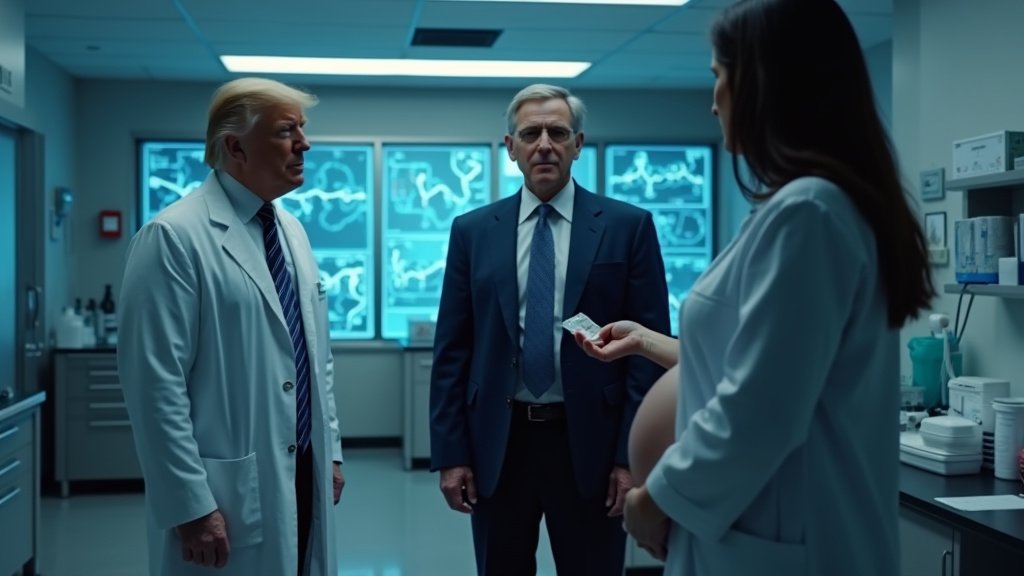
In a notable public announcement on September 22, 2025, the Trump administration, led by President Donald Trump and HHS Secretary Robert F. Kennedy Jr., highlighted new actions concerning autism spectrum disorder (ASD). The administration drew attention to a growing body of research suggesting a potential association between acetaminophen (commonly known as Tylenol) use during pregnancy and an increased risk of autism in children. While President Trump issued strong admonitions urging pregnant women to limit their use of the drug, the official guidance from the FDA and HHS emphasized a more nuanced perspective. The FDA announced it would update acetaminophen labeling and notify physicians about potential risks, recommending that pregnant individuals use the lowest effective dose for the shortest duration when medically necessary.
This initiative also included the launch of the Autism Data Science Initiative (ADSI) by the NIH, allocating $50 million to accelerate autism research, and the establishment of a pathway for a potential treatment for speech-related deficits in children with ASD. However, many medical experts and organizations, including the American College of Obstetricians and Gynecologists (ACOG), stressed that current evidence does not definitively establish a causal link between prudent acetaminophen use during pregnancy and autism, and that untreated maternal fever also carries risks. Pharmaceutical companies like Kenvue also maintained that there is no causal link.
Jimmy Kimmel Live! Returns to Air After Suspension
In entertainment news, late-night host Jimmy Kimmel made a widely anticipated return to his show, “Jimmy Kimmel Live!,” on September 23, 2025, following a week-long suspension. The production halt was initiated after Kimmel’s monologue on September 17, 2025, which addressed the assassination of conservative activist Charlie Kirk. Critics, including some affiliated with the Trump administration, deemed his remarks insensitive and potentially misleading, leading to pressure on ABC and its parent company, Disney. The Federal Communications Commission (FCC) Chairman Brendan Carr even warned of potential regulatory actions against the network. Several ABC affiliate groups initially announced they would preempt the show upon its return, though this stance was later reversed. Disney stated that the decision to suspend and subsequently reinstate the show followed “thoughtful conversations” with Kimmel, aiming to de-escalate a tense situation.
International Recognition of Palestine Signals Diplomatic Shift
On the international stage, France, Canada, the United Kingdom, and Australia formally recognized the State of Palestine on or around September 21-22, 2025, a move described as a significant diplomatic development aimed at bolstering the prospects for a two-state solution. This coordinated action, undertaken during the United Nations General Assembly period, adds to the over 145 UN member states that already acknowledge Palestinian statehood. The United States, alongside Israel, voiced strong opposition to these recognitions, reiterating that Palestinian statehood must emerge from direct bilateral negotiations and that unilateral actions at the UN are counterproductive. Israeli Prime Minister Benjamin Netanyahu criticized the move as a reward for terrorism. The recognitions represent a notable shift, with Canada, France, and the UK becoming the first G7 nations to officially recognize Palestine as a state.
These diverse events underscore a dynamic period of news, reflecting ongoing debates in public health, the intersection of media and politics, and evolving international relations.


Related Posts