Trump Signs Executive Order Paving Way for Investor Group to Acquire TikTok’s U.S. Operations
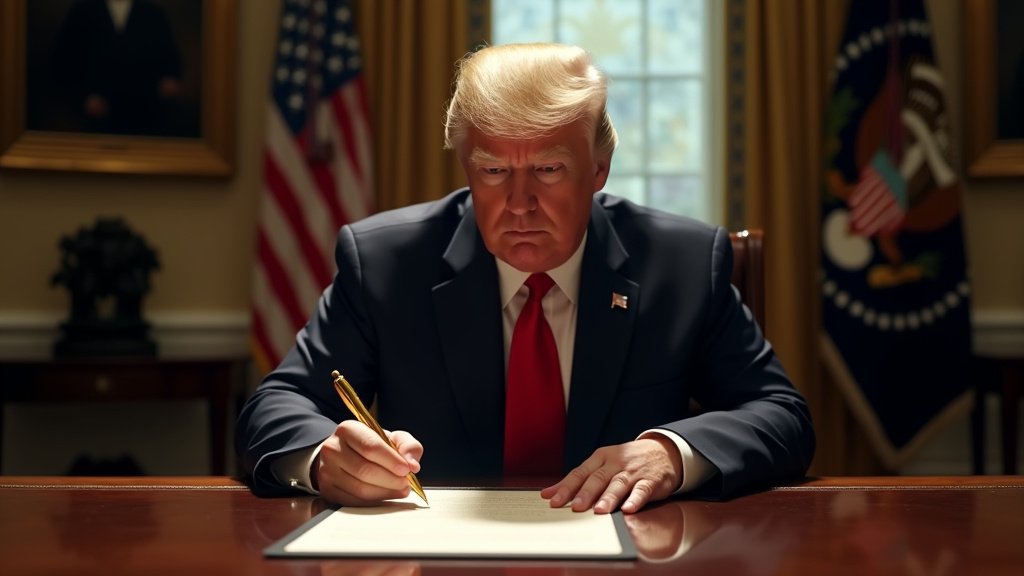
Washington D.C. – In a significant development reshaping the landscape of social media and international technology relations, President Trump has signed a new executive order that permits TikTok’s American operations to be acquired by a consortium of investors. This landmark decision aims to resolve ongoing national security concerns while allowing the popular app to continue functioning within the United States.
Background: National Security and Tech Tensions
The move comes after years of escalating tensions between the United States and China concerning data security and potential foreign influence. U.S. officials have repeatedly voiced concerns that TikTok’s parent company, ByteDance, could be compelled by the Chinese government to hand over sensitive user data or manipulate content, posing a risk to national security. These worries have fueled a broader trend of technological decoupling between the two global powers, impacting various tech sectors from telecommunications to social media platforms.
Previous administrations, including President Trump’s first term, attempted to ban TikTok and other Chinese technology firms, citing similar national security justifications. These efforts often encountered legal challenges and complex negotiations, highlighting the intricate geopolitical and economic factors at play. The core of the issue has centered on ensuring that data belonging to American users remains secure and inaccessible to foreign adversaries, a priority underscored by recent executive orders focused on cybersecurity and the protection of critical national infrastructure.
The New Executive Order and Deal Structure
The recently signed executive order provides a new framework for addressing these security concerns by mandating a change in ownership for TikTok’s U.S. operations. The order facilitates the acquisition of the app’s American business by a designated investor group, effectively placing its management and data under U.S. oversight. This strategic divestiture is intended to comply with existing legislation, such as the Protecting Americans from Foreign Adversary Controlled Applications Act, which aims to mitigate risks associated with foreign-controlled technology applications.
While specific details of the investor group are still emerging, reports indicate a significant role for private equity firms, including existing ByteDance investors like Susquehanna International Group, General Atlantic, and KKR, who have been central to discussions aimed at reducing foreign ownership below critical thresholds. The involvement of these entities suggests a complex restructuring that could involve significant capital investment and a redefinition of TikTok’s corporate structure within the U.S.
Oracle’s Pivotal Role in Data Management
A key component of the approved plan involves Oracle Corporation, a prominent American technology giant, managing the security and cloud computing infrastructure for TikTok’s U.S. division. This strategic partnership leverages Oracle’s extensive experience in enterprise software, cloud services, and data management. Larry Ellison, Oracle’s co-founder and executive chairman, a well-known figure with strong ties to the Republican Party and past engagements with President Trump, is expected to play a crucial role in this endeavor. Oracle’s involvement signals a commitment to ensuring that TikTok’s U.S. user data is stored and managed domestically, aligning with the administration’s national security priorities.
Investment Landscape and Geopolitical Implications
The transaction is also drawing attention from global investment players. While the initial context mentioned the United Arab Emirates-backed MGX, broader trends show significant investment interest from Middle Eastern entities, particularly Saudi Arabia’s Public Investment Fund (PIF), in technology and AI infrastructure within the region and globally. Such investments underscore a growing effort by these nations to diversify their economies and become hubs for technological innovation, often partnering with U.S. technology firms.
This recent news from the executive branch, which follows a history of attempts to compel divestment or ban the app, may signal a shift toward a more managed coexistence in the U.S.-China tech relationship, moving away from outright decoupling in some areas. For the over 150 million U.S. users of TikTok, the immediate impact may be minimal in terms of app functionality, but the underlying ownership and data governance structures are set to undergo significant changes.
The decision represents a complex negotiation balancing national security imperatives with the economic realities of a globalized digital market. As the deal progresses, further details regarding the investor group and operational specifics are expected to emerge, continuing to shape the ongoing narrative of technological competition and cooperation in the 21st century. This recent executive action is a significant piece of national news, reflecting the administration’s ongoing strategy in managing foreign technology’s presence within the United States.


Related Posts