US Retaliates: Strikes Iran After Apache Downing
The United States has launched retaliatory strikes against Iran following the downing of an Apache helicopter, escalating tensions in the region. The incident marks a significant development in ongoing geopolitical conflicts, with global implications for regional stability and international relations.
Key Highlights:
- US launches strikes against Iranian targets.
- Incident follows the downing of a US Apache helicopter.
- Tensions escalate in the Middle East.
- International community closely monitoring developments.
US Strikes Iran Amidst Helicopter Downing Crisis
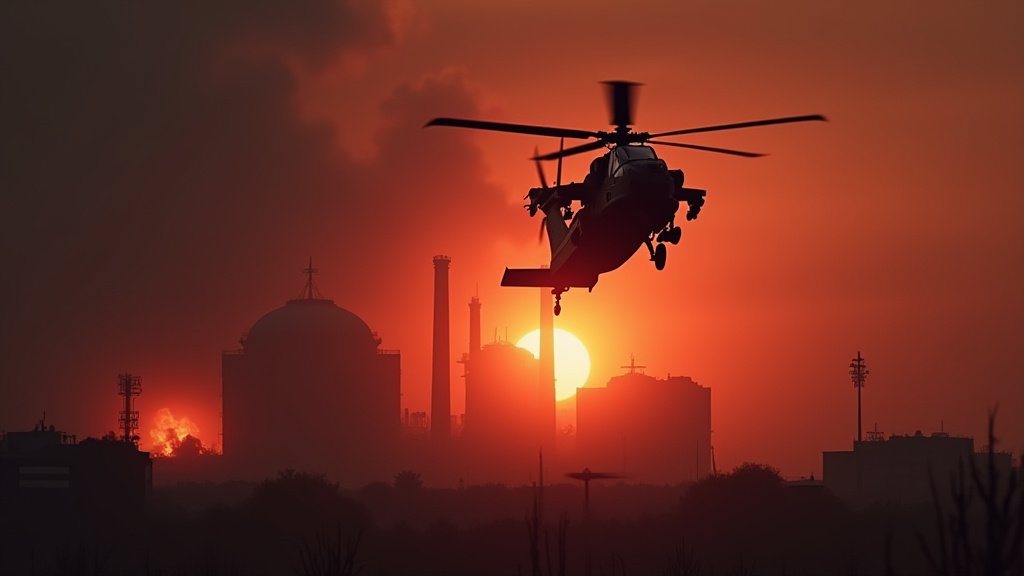
In a swift and decisive response to the downing of a United States Army Apache helicopter, American forces have initiated strikes against targets within Iran. The precise nature and scope of the strikes are still emerging, but officials indicate they are directly linked to the hostile action against the US aircraft. This aggressive posture by the United States signals a firm stance against what it perceives as Iranian aggression, potentially altering the delicate balance of power in the Middle East.
Geopolitical Ramifications
The downing of the Apache helicopter, a sophisticated attack helicopter known for its potent offensive capabilities, has been a major point of contention. While details surrounding the incident remain scarce, including the exact location and circumstances, the US response indicates a belief that Iran was directly or indirectly responsible. This retaliatory action carries significant geopolitical ramifications, potentially drawing the US and Iran into a more direct confrontation and impacting global energy markets and diplomatic relations. The international community is keenly observing these developments, with calls for de-escalation and restraint from various global powers.
Historical Context of US-Iran Tensions
Relations between the United States and Iran have been fraught with tension for decades, marked by periods of proxy conflicts, diplomatic standoffs, and economic sanctions. The current incident is not an isolated event but rather a continuation of this complex and often volatile relationship. Understanding the historical backdrop, including the 1979 Islamic Revolution, the Iran-Iraq War, and more recent nuclear chương trình disputes, is crucial to contextualizing the present crisis. Each escalation brings the two nations closer to a direct military confrontation, a scenario with catastrophic potential for the region and the world.
Aviation Security and International Law
The downing of military aircraft raises critical questions about aviation security and the adherence to international law. The rules of engagement in contested airspace, the definition of hostile acts, and the proportionality of responses are all central to this discussion. International bodies such as the United Nations will likely play a role in mediating the situation, demanding transparency, and potentially investigating the incident. The incident underscores the need for clear communication channels and adherence to international norms to prevent further escalation and maintain global peace.
Economic and Strategic Implications
The immediate economic and strategic implications of US strikes against Iran are likely to be far-reaching. Global oil prices could see a significant surge due to the perceived instability in a key oil-producing region. Furthermore, the strikes could impact ongoing military operations in neighboring countries and alter strategic alliances. The US aims to deter future attacks, while Iran may seek to demonstrate its resolve, leading to a dangerous cycle of escalation. The long-term consequences will depend on the extent of the conflict and the ability of international diplomacy to de-escalate the situation.
FAQ: People Also Ask
How was the Apache helicopter downed?
While specific details are still emerging, US officials have indicated that the Apache helicopter was downed by Iranian forces or Iranian-backed militias, leading to the subsequent US retaliatory strikes.
What are the primary targets of the US strikes?
The exact targets have not been disclosed, but they are understood to be related to the incident and aimed at deterring future hostile actions against US assets and personnel in the region.
What is the historical context of US-Iran relations?
US-Iran relations have been strained for decades, characterized by diplomatic disputes, economic sanctions, and proxy conflicts, particularly following the 1979 Iranian Revolution.
What are the potential consequences of this escalation?
Potential consequences include heightened regional instability, disruption of global energy markets, increased diplomatic tensions, and the risk of a wider military conflict.
Which international bodies are involved?
The United Nations and other international diplomatic bodies are expected to monitor the situation closely and may become involved in mediating or investigating the incident.


Related Posts