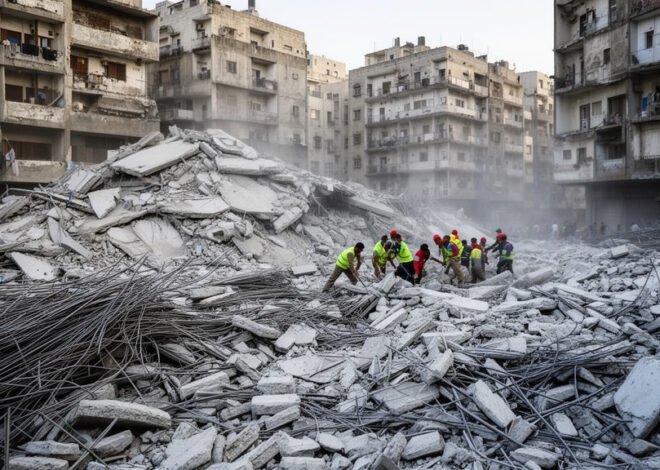
Russia Issues Stark Warning to NATO Against Direct Involvement in Ukraine Attacks Following Deadly Strikes
Russia has issued a severe Russia NATO Warning, cautioning the alliance against direct involvement in the ongoing attacks within Ukraine. This stern message comes in the wake of recent deadly strikes and amid escalating tensions that have reshaped the geopolitical landscape. Russian officials have articulated that any decision by NATO countries, including the United States and European nations, to permit Ukraine to use Western-supplied long-range missiles to strike Russian territory would be unequivocally interpreted as direct participation in the military conflict. This stance signifies a potential drastic shift in the nature and scale of the war, making the Russia NATO Warning a critical point of discussion.
Context of Escalation and Deadly Strikes: The Russia NATO Warning
The Russia NATO Warning follows a period of intensified hostilities and deadly strikes across Ukraine. Russian forces are reportedly attempting to advance on Ukrainian positions in the Orikhiv direction. Meanwhile, Ukraine’s intelligence services have reported that Russia is actively engaging in the serial production of aerial bombs equipped with new guidance modules, capable of striking targets up to 200 kilometers away. These upgraded munitions, including Russian glide bombs, have reportedly been used against Ukrainian cities, contributing to the growing geopolitical tensions.
The potential for Ukraine conflict escalation looms large, with discussions in the United States and the United Kingdom concerning the lifting of restrictions on Ukraine’s use of Western missiles to target sites within Russia. This has prompted sharp rebukes from Moscow, with Russia’s Ambassador to the UN, Vasily Nebenzya, stating that strikes on Russian territory with Western weapons would “directly involve” NATO in the war. He also reminded Ukraine’s allies of Russia’s nuclear capabilities, urging consideration of the risks associated with this critical Russia NATO Warning.
Russia’s Evolving Arsenal: Glide Bombs and the Russia NATO Warning
A significant development highlighted by Ukrainian intelligence is Russia’s mass production of sophisticated Russian glide bombs. These weapons are designed to strike targets deep within Ukraine, with a claimed operational radius of up to 200 kilometers. The introduction of these guided munitions, which are essentially converted free-fall bombs, allows for stand-off delivery from combat aircraft. Russia has reportedly introduced an electronic-warfare-resistant guidance system to enhance accuracy and jamming resilience. This move is seen as a strategic effort to increase offensive capabilities, turning conventional bombs into guided aerial munitions. The widespread use of these Russian glide bombs has been noted as a significant threat, with Ukraine itself developing domestic glide bomb systems to counter this challenge. This ongoing development underscores the gravity of the Russia NATO Warning.
Ground Operations and Geopolitical Tensions: Heeding the Russia NATO Warning
On the ground, fierce fighting continues, particularly in the Zaporizhzhia region. Russian troops are reportedly stepping up combat operations in the Orikhiv and Huliaipole sectors, with daily clashes and attempts at assaults. Russian forces are attempting to advance, with reports indicating they have seized three settlements amidst intense fighting, further highlighting the realities of the military conflict.
The broader geopolitical implications are substantial. Russia has consistently condemned Western military aid to Ukraine, arguing it exacerbates the conflict and heightens the risk of NATO direct involvement. Moscow has also accused the West of fueling the conflict through NATO expansion and the deployment of weapon systems near its borders. Despite ongoing tensions, Russia has indicated that contact with the United States will continue. Russian Foreign Minister Sergei Lavrov has expressed hope that Washington would avoid actions that could further escalate the war, while voicing cautious optimism about continued dialogue under U.S. President Donald Trump. Lavrov has also accused European leaders of “openly preparing for a new major European war against Russia”, a sentiment echoing the core of the Russia NATO Warning.
NATO’s Strengthened Presence and Exercises: Responding to the Russia NATO Warning
In response to the evolving security landscape and the significant Russia NATO Warning, NATO has increased its military activity and coordination with allied nations. Finland, having recently joined NATO, is hosting large-scale military exercises, such as Dynamic Front, involving thousands of troops and numerous weapon systems from 28 allied and partner nations. These exercises are focused on artillery interoperability and warfighting, reflecting NATO’s commitment to regional stability and deterrence, particularly concerning Eastern flank defense. U.S. B-52 bombers have also been engaged in training missions across Europe and the Nordic region, including flights over Finland and Estonia near the Russian border, aimed at improving joint readiness with NATO allies. This increased military presence and coordinated action by NATO underscores the alliance’s heightened focus on its eastern flank and the Nordic region in the current global news environment, a direct response to the ongoing warnings.
The current situation highlights a critical juncture in the ongoing conflict. Russia’s explicit warnings to NATO signal a red line regarding the direct use of Western missile use on its territory, while the alliance and its members continue to bolster their defensive and deterrent posture. The ongoing deadly strikes and ground offensives underscore the persistent challenges and the complex geopolitical dynamics at play in this critical global news story, making the Russia NATO Warning a paramount concern.


Related Posts