Merrie Monarch: Hawaii’s Cultural Heartbeat Unveiled
In the shadow of Maunakea, the town of Hilo has once again transformed into the global epicenter of Hawaiian culture. While the world-renowned hula competitions at the Edith Kanakaʻole Stadium often dominate the headlines, the official Merrie Monarch Hawaiian Arts & Crafts Fair at the Afook-Chinen Civic Auditorium serves as the festival’s functional and spiritual anchor. This is not merely a marketplace where local vendors sell wares; it is a profound, living demonstration of cultural endurance. For those walking the aisles of the fair this week, the experience is a masterclass in the intersection of commerce, community, and the preservation of ancestral knowledge. The fair functions as a bustling, high-energy environment where the ‘aloha spirit’ is palpable, serving as a reminder that the festival is, at its core, a celebration of a legacy revived by the ‘Merrie Monarch’ himself, King David Kalākaua.
Key Highlights
- A Cultural Conduit: The fair serves as a critical space for the transmission of ‘ike (knowledge), where master artisans demonstrate traditional practices like kapa crafting and lei making in real-time.
- Economic Stewardship: Beyond commerce, the fair acts as an economic engine for Native Hawaiian businesses, emphasizing the importance of keeping resources within the local community.
- Honoring a Legacy: The event directly continues King Kalākaua’s vision of reviving Hawaiian arts, music, and dance during his reign, which was once suppressed.
- Community Nexus: It creates a rare, intergenerational gathering point where locals and visitors engage in a dialogue about Hawaiian identity, sovereignty, and history.
The Living Repository of Hawaiian Heritage
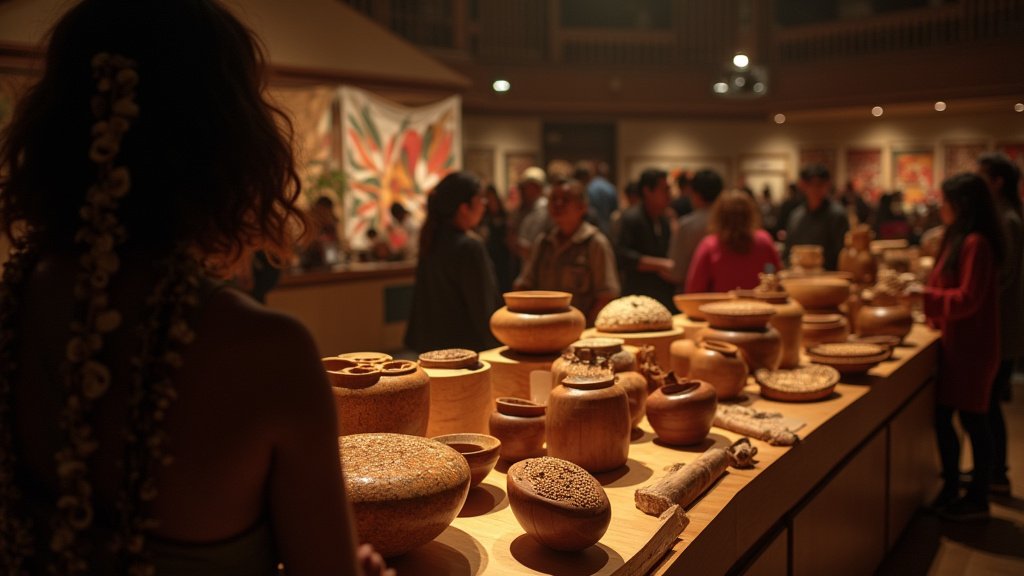
To view the Merrie Monarch arts and crafts fair as a retail event is to overlook its primary function: the preservation of indigenous practices. Unlike traditional commercial exhibitions, this space is curated with a deep reverence for the lineage of the artists involved. Each booth, from the carvers utilizing native woods to the weavers working with lauhala, acts as a temporary classroom.
The Artisan as Cultural Steward
At the heart of the fair are the artisans—the kumu and the practitioners—who act as custodians of history. In many instances, the items for sale are secondary to the demonstration of the process. When a visitor stops to watch a master kapa maker beat the wauke bark into fabric, they are witnessing a tradition that was nearly lost to time. These demonstrations are pivotal; they bridge the gap between the modern, fast-paced consumer culture and the deliberate, time-intensive methods of the past. The fair provides a platform where the ‘old ways’ are not just preserved in museums, but are actively practiced, taught, and sold.
The Economic Ecosystem of Hilo
Economically, the fair is a force multiplier for the Big Island. For many local businesses, the revenue generated during this single week is vital. However, the narrative goes deeper than balance sheets. There is a distinct, collective effort to ensure that the wealth remains within the Hawaiian community. By prioritizing local vendors and authentic, locally-sourced materials—such as koa wood, Niʻihau shell jewelry, and indigenous botanical products—the festival strengthens the local economy. It creates a circular flow of resources that directly benefits families who have dedicated their lives to sustaining traditional crafts.
Generational Transmission of ‘Ike
Perhaps the most moving aspect of the fair is the presence of the youth. Hālau members, students, and apprentice artists are frequently seen working alongside their elders. This intergenerational transmission of knowledge is the festival’s lifeblood. When a grandmother teaches her granddaughter the specific knot patterns for a lei, or a master carver explains the cultural significance of a specific wood grain to a teenager, they are engaged in the act of nation-building. The fair is not just about the finished object; it is about the persistence of the spirit of the people, ensuring that the next generation understands not only how to make an object, but why that object matters to their identity.
Challenges and Resilience in the Modern Era
Operating a major cultural event in 2026 requires balancing the influx of global attention with the preservation of sacred spaces. The festival organizers manage this delicate ecosystem by integrating traditional protocols into the logistical framework of the event. Even the traffic patterns and the way the fair is structured within the Afook-Chinen complex are designed to facilitate this flow of culture. Despite the external pressures of modern tourism, the fair remains staunchly focused on its core mandate: honoring the Merrie Monarch, King Kalākaua, and his dedication to the survival of the Hawaiian lāhui (nation). It serves as a defiant, beautiful reminder that Hawaiian culture is not a relic of the past, but a dynamic, evolving, and thriving reality.
FAQ: People Also Ask
1. Is the Merrie Monarch arts and crafts fair open to the public, and is there an entry fee?
Yes, the fair is open to the public and admission is free. It serves as an accessible cultural hub for anyone attending the festival week in Hilo, offering a chance to see local artisans and performers without needing a ticket to the main hula competition.
2. What distinguishes this fair from a standard craft market?
Unlike standard markets, the Merrie Monarch fair prioritizes cultural authenticity and education. Vendors are often required to demonstrate their crafts, and the event serves as a platform for cultural practitioners to engage directly with the public, preserving historical techniques and indigenous knowledge.
3. Why is King David Kalākaua considered the patron of this festival?
King Kalākaua, often called the ‘Merrie Monarch,’ was instrumental in the late 19th century for championing the revival of Hawaiian culture, including hula, music, and traditional arts, at a time when they were being suppressed. The festival is dedicated to his legacy and his belief that the hula is the heartbeat of the Hawaiian people.
4. How does the fair impact the local Hilo community?
It provides a massive economic boost to Hilo by bringing thousands of visitors to the town. Furthermore, it supports Native Hawaiian entrepreneurs and artisans, ensuring that economic benefits from the festival are reinvested into the community and the perpetuation of local arts.


Related Posts