Intuitive Machines Secures Dual-Unit IM-300 Satellite Deal
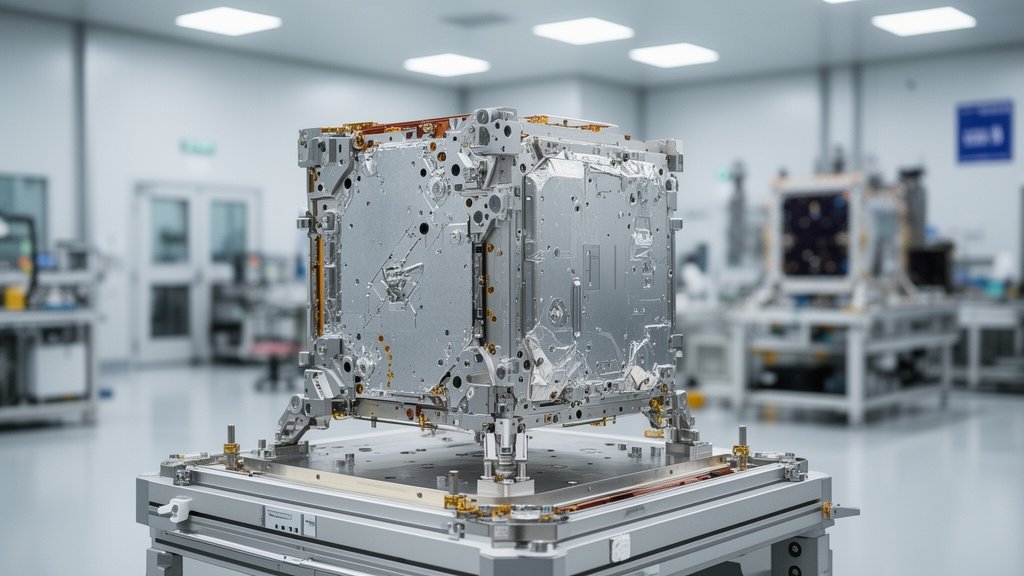
Intuitive Machines has officially secured a strategic contract to manufacture two IM-300 series spacecraft platforms for an undisclosed customer, marking a significant evolution in the company’s mission profile. By pivoting from its specialized lunar landing heritage into the broader satellite production market, Intuitive Machines is signaling a new phase of industrialization, moving beyond one-off exploration missions to the recurring manufacturing of modular orbital assets. This order represents a critical step in diversifying the company’s revenue streams and cementing its role in the next generation of space-based infrastructure.
The IM-300 Platform: Engineering for Flexibility
The Shift to Modular Architecture
At the core of this new agreement is the IM-300 series, a spacecraft platform engineered specifically to address the modern space industry’s demand for high mission flexibility. Unlike purpose-built satellites that often require extensive redesigns for unique payloads, the IM-300 utilizes a highly modular architecture. This design philosophy is increasingly becoming the industry standard, allowing Intuitive Machines to deploy a common “bus” or foundational chassis that can be quickly adapted for varying mission requirements—ranging from high-resolution imaging and communications relay to specialized national security payloads.
By leveraging this modularity, the company is positioning itself to compete more effectively with established prime contractors. The standardization of the IM-300 platform reduces the “non-recurring engineering” (NRE) costs that typically plague aerospace projects, allowing Intuitive Machines to offer faster delivery times and lower price points for its customers. This efficiency is the cornerstone of the company’s strategy to transition from a venture-backed research firm to a reliable, industrial-grade space manufacturer.
Dual-Use Capabilities
One of the most noteworthy aspects of the IM-300 contract is the specific utility mentioned: the support of both commercial and national security payloads. The duality of this spacecraft platform is significant. In the current geopolitical climate, the ability to serve both commercial broadband operators and sensitive government intelligence programs is a massive competitive advantage. By building a platform that meets the stringent reliability and security requirements of national security customers, Intuitive Machines implicitly upgrades the trust-grade of its commercial offerings, making the IM-300 an attractive option for a wider array of high-value mission profiles.
Market Dynamics and Economic Implications
Reducing Dependency on Lunar Programs
While Intuitive Machines gained global fame through its Commercial Lunar Payload Services (CLPS) missions, including the Nova-C lander, relying solely on lunar exploration contracts presents significant long-term volatility. The IM-300 order serves as a strategic hedge against the potential lull in deep-space contract cycles. By establishing a foothold in the LEO (Low Earth Orbit) and GEO (Geosynchronous Equatorial Orbit) markets, the company creates a more predictable, recurring revenue pipeline. This transition is essential for attracting institutional investors who prioritize consistent growth over the episodic, high-risk, high-reward nature of lunar surface operations.
The Industrialization of LEO
This contract is also a microcosm of the broader “New Space” trend, where the manufacturing of orbital assets is moving from artisanal, boutique builds to semi-automated, repeatable assembly lines. As the customer remains undisclosed, analysts speculate this indicates the secretive nature often associated with national security procurement or proprietary commercial constellation infrastructure. Regardless of the identity of the client, the purchase order confirms that Intuitive Machines has achieved the production maturity required to deliver flight-ready hardware on contract, rather than merely pitching concepts or research prototypes.
The Future of Orbital Infrastructure
Looking ahead, the IM-300 series is likely to serve as the technological bedrock for Intuitive Machines’ future expansion. If the company can successfully deliver these two units on schedule, it will unlock a critical performance history that is required to bid on larger, multi-unit constellation contracts. These constellations—used for everything from space-based global internet to orbital sensing—are the next frontier of space economics, and the ability to manufacture two units is the first step toward the ability to manufacture two dozen.
Furthermore, the IM-300’s modularity suggests that the company is planning for upgradeability. In the future, this could mean the ability to integrate advanced AI-driven data processing units or next-generation optical communications terminals into the standard IM-300 bus, extending the operational life and utility of their satellites long after launch. As space becomes increasingly crowded, the capability to quickly adapt orbital assets to new threats or opportunities will be the defining trait of the industry’s leaders.
FAQ: People Also Ask
Q: What exactly is the IM-300 platform?
A: The IM-300 is a modular spacecraft bus designed by Intuitive Machines. It is built to be a versatile foundation that can host a variety of payloads, making it suitable for both private commercial missions and national security applications.
Q: Why is the customer for this order undisclosed?
A: It is common in the aerospace and defense industry for clients—particularly those in the government, intelligence, or high-end commercial sectors—to request non-disclosure regarding the specific procurement of spacecraft to protect sensitive mission profiles or competitive advantages.
Q: How does this order change the business outlook for Intuitive Machines?
A: It diversifies the company’s portfolio. Previously heavily reliant on lunar landing contracts, this deal proves their ability to sell modular hardware, creating a pathway to consistent, repeatable manufacturing revenue that is less dependent on government space exploration budgets.
Q: Will this platform be used for the moon?
A: While the IM-300 is designed for versatility, it is primarily marketed for Earth-orbit operations. Its modular nature allows it to be configured for various altitudes and mission types, though its current architectural focus is on providing a flexible, high-reliability platform for LEO and GEO applications.


Related Posts