NMAAHC at 10: A Decade of Resilience Amid Political Pressure
The Smithsonian’s National Museum of African American History and Culture (NMAAHC) marks a monumental milestone this week, celebrating its 10th anniversary of operation on the National Mall in Washington, D.C. Since its grand opening on September 24, 2016, the museum has served as a central pillar of American historical preservation and public education. However, this decade-mark arrives under a cloud of distinct political tension. Amid ongoing pressure and scrutiny regarding its curation and administrative focus from the Trump administration, the institution has remained, by all accounts, undaunted in its commitment to telling the full, unvarnished story of the African American experience.
Key Highlights
- A Decade of Truth: Marking 10 years since its 2016 opening, the NMAAHC remains the preeminent institution dedicated to the African American experience.
- Political Headwinds: The museum currently navigates significant political pressure from the Trump administration, which has raised concerns over the museum’s educational scope and historical narratives.
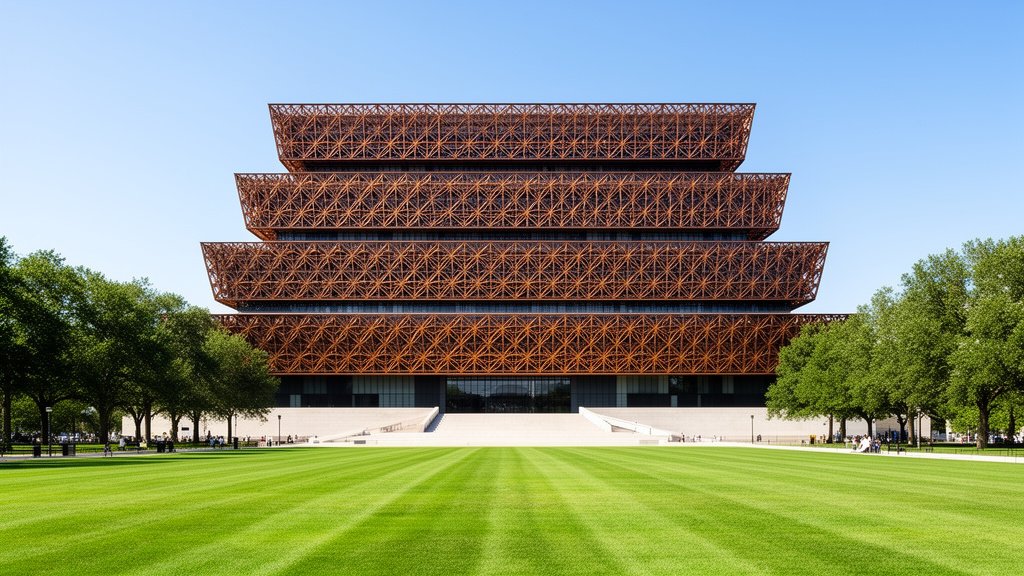
- Architectural Resilience: The building itself, designed by David Adjaye, stands as a symbol of historical endurance on the National Mall.
- Institutional Impact: Since its inception, the museum has transformed national dialogue on race, slavery, and civil rights, maintaining high visitor attendance despite political interference.
The Iron Corona: A Decade of Architectural and Historical Defiance
When the National Museum of African American History and Culture opened its doors in 2016, it was the culmination of a century-long struggle to establish a place for Black history on the American national stage. Designed by world-renowned architect David Adjaye, the museum’s bronze-colored, three-tiered corona is not merely a design choice; it is an architectural manifesto. As it hits its 10th anniversary, that architecture feels more significant than ever. The building, which reflects light differently throughout the day, has become a physical representation of the resilience required to maintain such an institution in a fluctuating political climate.
Throughout the last decade, the NMAAHC has curated a vast collection of over 40,000 artifacts, ranging from the harrowing realities of the Middle Passage to the triumph of the Civil Rights Movement and the cultural contributions of the Harlem Renaissance. The current administration has signaled a desire to reassess the focus of federal cultural institutions, placing the museum’s leadership in a position where they must defend the necessity of documenting difficult histories. The ‘pressure’ from the Trump administration—manifested through funding discussions, board appointments, and public statements criticizing ‘divisive’ historical narratives—has not deterred the museum’s mandate. Under the guidance of Smithsonian leadership, including the legacy left by founding director Lonnie G. Bunch III, now Secretary of the Smithsonian, the museum continues to operate with a steadfast adherence to historical accuracy.
Navigating Federal Scrutiny
Administrative pressure is not new to the Smithsonian, but the current climate is uniquely charged. In recent years, the museum has faced critiques that it overemphasizes systemic issues rather than patriotic contributions. However, proponents argue that the museum’s primary value lies in its ability to force the American public to confront the dualities of its history—the ‘splendid and the terrible,’ as the museum’s own motto suggests. The institution’s curators have maintained that to dilute this narrative for the sake of political expediency would be an abdication of their core responsibility to the public and to future generations.
The Role of Truth in the Public Square
In an era of information fragmentation, the NMAAHC provides a centralized, vetted, and deeply researched archive of African American history. Its exhibitions, such as ‘Slavery and Freedom’ and ‘Defending Freedom, Defining Freedom,’ serve as primary educational resources for students and researchers globally. The pressure from the executive branch has sparked a broader debate about the independence of museums. The NMAAHC remains a federal entity within the Smithsonian Institution, governed by a Board of Regents. This structure offers a degree of insulation, yet the museum is highly sensitive to the political winds of the capital. Despite these challenges, the institution has seen consistently high engagement numbers, proving that its presence on the National Mall is not only desired but essential to the American narrative.
Archival Importance and Cultural Preservation
One of the most vital secondary angles in this story is the museum’s role as an archive. The collection is not merely an exhibit of objects; it is an act of historical salvage. Many of the items in the museum’s care—documents, personal effects, and artistic creations—would have been lost to time without the specialized preservation efforts of the NMAAHC. As the museum enters its second decade, it is expanding its digital archival initiatives, ensuring that these stories are accessible beyond the physical walls on the Mall. This digital reach acts as a safeguard against political pressures that seek to limit the visibility of specific historical themes within the physical museum.
Economic and Community Impact
Beyond its educational mandate, the NMAAHC has a massive economic footprint. It draws millions of visitors to the National Mall, stimulating local tourism, hotel revenue, and support for ancillary cultural businesses in the District of Columbia. Critics of the administration’s pressure note that undermining the museum could have detrimental effects on Washington’s broader cultural economy. The museum is a cornerstone of the tourism sector, and its continued, untarnished operation is vital for the city’s post-pandemic recovery and continued growth. By maintaining its focus on the truth, the museum sustains the interest of a global audience that demands integrity in cultural institutions.
Future Predictions: The Next Decade of Advocacy
As the NMAAHC moves into its next decade, the outlook is one of tempered anticipation. The museum is expected to double down on its scholarly output and public engagement programs. While it may continue to face political pushback, the museum’s established reputation as a world-class institution provides a strong defense. The next ten years will likely see the museum transition into a more vocal advocate for historical truth-telling, potentially leading to more direct clashes with political entities. However, if the first decade is any indication, the museum is built to withstand such pressure, anchored by the strength of its collection and the unyielding necessity of its message.
FAQ: People Also Ask
Q: Why is the Trump administration pressuring the NMAAHC?
A: The administration has expressed concerns regarding the museum’s focus on systemic inequality, arguing that some narratives presented in the exhibits promote a divisive view of American history rather than a unifying one.
Q: Does the museum have the authority to resist political pressure?
A: As a Smithsonian institution, it is overseen by the Board of Regents, which provides a layer of structural independence. The museum operates on a mandate of historical accuracy and educational integrity, which it uses to justify its curation choices.
Q: How has the museum changed since it opened in 2016?
A: While its core mission remains the same, the museum has significantly expanded its digital footprint, increased its artifact collection, and deepened its research programs, becoming more of a global hub for the study of the African American experience.
Q: Is the NMAAHC still free to the public?
A: Yes, the museum remains a part of the Smithsonian Institution and maintains free admission, ensuring that its vital historical lessons remain accessible to all, despite ongoing budget and political discussions.


Related Posts