Trump’s Triumphal Arch Clears Key Design Vote
The U.S. Commission of Fine Arts has voted to approve the concept design for President Trump’s proposed “Triumphal Arch,” a monumental 250-foot structure slated for Memorial Circle in Washington, D.C. This decision represents a significant, if preliminary, victory for the administration’s ambitious plans to reshape the nation’s capital. The vote comes after months of speculation and recent releases of architectural renderings that depict an imposing edifice intended to stand as a permanent tribute to the United States’ 250th anniversary.
While the commission’s endorsement marks a major procedural hurdle cleared, the project remains embroiled in heated debate. Critics, including military veterans and historic preservationists, argue that the sheer scale of the arch—which would tower over the neighboring Arlington National Cemetery and obstruct iconic sightlines between the cemetery and the Lincoln Memorial—violates the solemnity of the area. As the administration pushes forward with its aesthetic vision, the project has become a lightning rod for broader tensions regarding federal authority, historical preservation, and the future of Washington’s monumental core.
Key Highlights
- Commission Approval: The U.S. Commission of Fine Arts voted to approve the concept design for the 250-foot arch, a project spearheaded by the Trump administration.
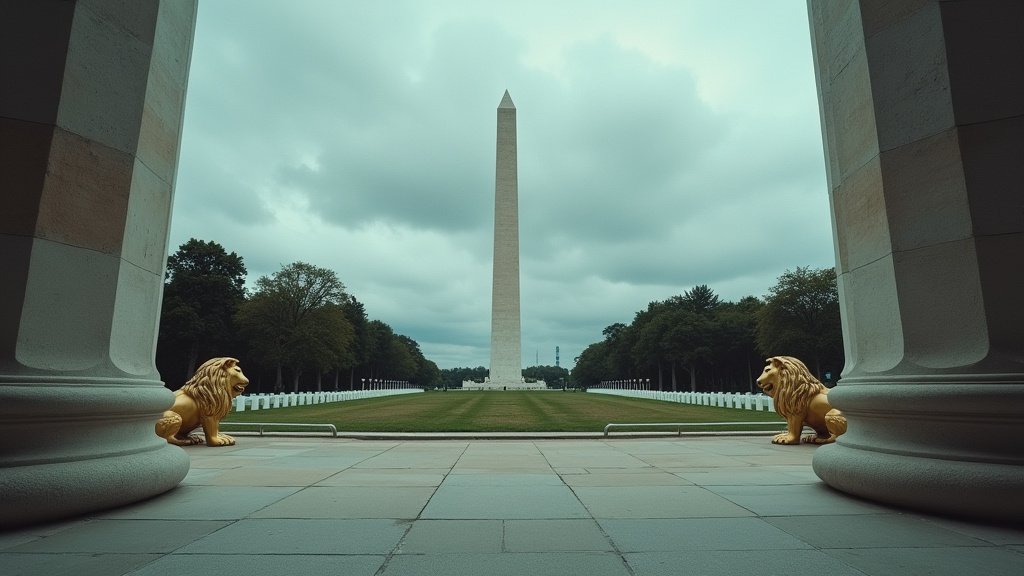
- Design Specifics: The proposed arch by Harrison Design features gilded statues, including lions at the base and a winged figure reminiscent of the Statue of Liberty at the apex, with the inscriptions “One Nation Under God” and “With Liberty and Justice for All.”
- Ongoing Legal Battles: Vietnam War veterans have filed lawsuits to halt construction, asserting that the project lacks necessary Congressional authorization and ignores established zoning protections.
- Planning Controversies: Critics warn that the 250-foot height—intended to symbolize the 250th anniversary of the Declaration of Independence—threatens to dominate the surrounding landscape and compromise the historic sightlines of the National Mall.
Navigating the Monumental Controversy
The approval of the concept design is not the final word on the Triumphal Arch, but it signifies the administration’s determination to leave a lasting architectural imprint on the capital. The Commission of Fine Arts, an advisory body currently composed of appointees aligned with the president’s vision, serves as the gatekeeper for such large-scale aesthetic projects in the District. By voting to advance the concept, the commission has signaled its support for a structure that, in size and ambition, aims to rival the world’s most iconic arches, including the Arc de Triomphe in Paris.
The Design Vision vs. The Historic Landscape
Architectural renderings provided by Harrison Design offer a glimpse into a monument defined by neoclassical grandiosity. The structure is heavily gilded and features prominent symbolic elements: a torch-bearing figure atop the crown, two flanking eagles, and four lions at the base. The architect, Nicolas Charbonneau, has framed the 250-foot height as a deliberate nod to the 250th anniversary of the Declaration of Independence. However, urban planners and historians have pointed out that such a massive structure, located at the traffic circle connecting the Lincoln Memorial to Arlington National Cemetery, would fundamentally alter the spatial logic of the area.
Political and Legal Headwinds
The administration’s push for the arch is part of a wider series of initiatives aimed at altering Washington’s skyline and infrastructure, including proposed changes to the Eisenhower Executive Office Building. Yet, the path forward is anything but clear. The legal challenges brought forth by veteran groups highlight a central conflict: the extent of executive power in modifying federal lands that hold significant cultural and military weight. For many, the land surrounding Arlington National Cemetery is sacred, and the introduction of a “victory arch”—regardless of its celebratory intent—is viewed as an infringement on the reflective and somber nature of the site.
Future of D.C. Development
This project raises critical questions about the future of commemorative space in the U.S. Is Washington a “living city” where new, bold monuments are constantly erected to match the current political era, or should it remain a preserved museum of historical gravity? The Trump administration clearly favors the former, viewing the arch as an “iconic landmark” that will enhance the visitor experience. Conversely, those opposed see it as an ego-driven architectural intrusion that places politics over preservation. As the project moves into the next phase of review—likely involving further design adjustments and, inevitably, more courtroom skirmishes—the Triumphal Arch remains the most divisive topic in Washington, D.C.
FAQ: People Also Ask
Is the Triumphal Arch officially approved for construction?
No. The Commission of Fine Arts approved the concept design, which allows the project to move to the next phase of planning. Further reviews, design iterations, and potential legislative or judicial interventions must occur before any ground is broken.
Why is the arch being built at this specific location?
Memorial Circle, a traffic roundabout near Arlington National Cemetery, has long been eyed by city planners for a monument. The administration chose this site to create a prominent, highly visible gateway between the Lincoln Memorial and the cemetery.
What are the primary arguments against the monument?
Opponents, including veterans’ groups and preservationists, cite concerns regarding the obstruction of historic sightlines, the monumental scale of the arch which they argue diminishes the surrounding memorials, and the potential lack of Congressional oversight for such a significant federal project.


Related Posts