Modi Unveils IIT Nepal Campus & West Bengal Rename
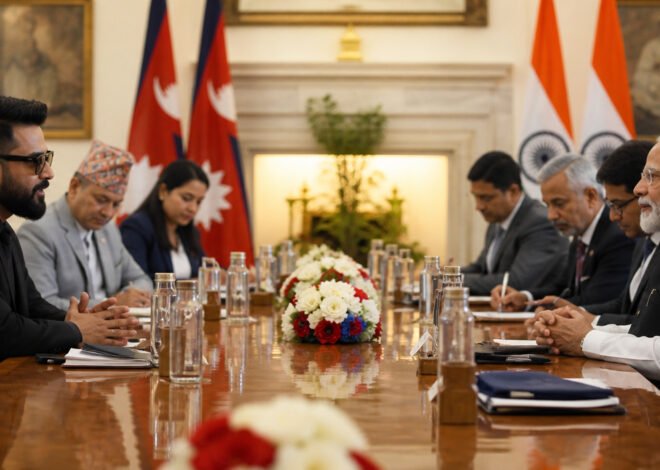
In a momentous development strengthening South Asian bilateral relations, Indian Prime Minister Narendra Modi and Nepalese Prime Minister Balendra Shah have formalized an agreement to establish an offshore campus of the Indian Institute of Technology (IIT) in Nepal. This landmark announcement, made during a high-level summit in New Delhi, marks a significant escalation in technological education cooperation between the two nations. Simultaneously, the Indian government confirmed the long-awaited administrative renaming of the state of West Bengal to ‘Paschim Banga,’ a shift aimed at aligning the state’s nomenclature with local linguistic roots.
Key Highlights
- IIT Expansion: An offshore campus of the prestigious Indian Institute of Technology is set to be established in Nepal to bolster regional technical education.
- Bilateral Summit: The agreement was formalized during high-level talks between PM Narendra Modi and Nepalese PM Balendra Shah in New Delhi.
- West Bengal Rename: The state of West Bengal will officially transition its designation to ‘Paschim Banga’ following constitutional and administrative approval.
- Educational Diplomacy: The IIT initiative represents a strategic shift toward ‘soft power’ diplomacy, fostering human capital development across borders.
A New Chapter in Cross-Border Educational Synergy
The decision to establish an offshore IIT campus in Nepal represents one of the most ambitious educational collaborations in the history of the Indian subcontinent. The Indian Institute of Technology system, globally renowned for its rigorous engineering curriculum and high-caliber research output, serves as the cornerstone of India’s technological prowess. By exporting this pedagogical model to Nepal, India is not merely providing a service; it is creating a long-term pipeline for collaborative innovation.
Strategic Objectives of the IIT Campus
The primary objective of this new campus is to mitigate the regional disparity in advanced technical education. By providing Nepalese students access to the world-class curriculum, research facilities, and faculty exchange programs inherent to the IIT ecosystem, both nations aim to cultivate a new generation of engineers and technologists capable of addressing regional challenges—ranging from infrastructure resilience in the Himalayas to sustainable energy transitions. This initiative is expected to facilitate a robust exchange of knowledge, enhancing the technological competitiveness of the Himalayan region.
Geopolitical Significance of Education
Beyond academics, the establishment of this campus is a clear signal of deepening Indo-Nepal ties. The ‘Knowledge Corridor’ being developed aims to reduce the reliance of regional talent on Western or distant educational institutions, keeping expertise within the South Asian ecosystem. It underscores a shift in diplomatic strategy where shared intellectual capital is prioritized as a bedrock for national security and economic prosperity. Observers note that the alignment of interests between PM Modi and PM Balendra Shah suggests a pragmatic, results-oriented approach to bilateral cooperation, moving away from purely political rhetoric toward concrete developmental outcomes.
Administrative Transformation: The West Bengal Renaming
Parallel to the international announcement, the domestic policy landscape in India has been updated with the formal confirmation of the renaming of West Bengal to ‘Paschim Banga’. This change, which has been under consideration for years, is more than a superficial rebranding; it is a profound nod to the cultural identity of the region.
The Cultural Context of Paschim Banga
For decades, the name ‘West Bengal’ has been viewed by many local proponents as a colonial artifact—a directional tag assigned during the British Raj partition. ‘Paschim Banga’ serves as the phonetic and cultural embodiment of the state’s identity. The shift is designed to standardize the name across all official documentation, ensuring that the state’s nomenclature resonates with its linguistic heritage. Proponents argue that this change is essential for preserving cultural integrity in a modern, post-colonial democratic framework.
Constitutional and Bureaucratic Implications
The transition to Paschim Banga requires systematic updates across all federal and state infrastructure. This includes updating constitutional documents, legislative records, and administrative interfaces. While such transitions are logistically complex, they represent a significant step in the alignment of state-level policy with local grassroots sentiment. The central government’s endorsement of this renaming indicates a broader willingness to engage with state-specific requests for identity-based administrative adjustments.
Future Trajectories and Secondary Angles
1. The Impact of ‘IIT Diplomacy’
The successful implementation of the Nepal IIT campus could set a precedent for other nations in the Global South. If successful, this model of exporting educational excellence may become a cornerstone of India’s foreign policy, potentially extending to other neighboring countries and strategic partners, thereby positioning India as a global hub for high-end technical training.
2. Economic Multipliers of the Name Change
While the renaming to Paschim Banga is largely cultural, there is an underlying economic argument. A unified identity can strengthen state branding in international investment forums. By streamlining its name, the state seeks to present a cohesive image to global investors, potentially simplifying its administrative interaction with foreign entities who often struggle with the legacy nomenclature of the region.
3. The Future of Indo-Nepal Connectivity
The education campus is likely the first of many infrastructure projects. With technical expertise now being nurtured locally, the infrastructure development sector in Nepal—ranging from hydro-power projects to digital connectivity—stands to gain from a homegrown, highly skilled workforce. This creates a self-sustaining cycle of development that benefits both the Indian educational sector and the Nepalese labor market.
FAQ: People Also Ask
Q: What is the specific goal of the new IIT campus in Nepal?
A: The goal is to provide world-class technical education to Nepalese students, fostering regional technological cooperation and creating a sustainable pipeline for high-level engineering research and development within the Himalayan corridor.
Q: How does the renaming of West Bengal to Paschim Banga affect official records?
A: The renaming triggers a comprehensive administrative update. All state and federal legal documents, identity records, and constitutional references will be systematically updated to reflect the new designation, ensuring consistency across all government platforms.
Q: Is this the first time an IIT has opened an offshore campus?
A: While IITs have previously engaged in international research collaborations, this initiative represents a major institutionalized offshore campus structure, signaling a new era of ‘educational diplomacy’ for the IIT system.
Q: What was the motivation behind the timing of these announcements?
A: These announcements emerged from a strategic bilateral summit designed to foster immediate, tangible outcomes in both geopolitical cooperation and internal administrative alignment, demonstrating a decisive approach to governance.

Related Posts