Press Freedom at Stake: CNN, MS NOW, and Politico Sue Trump Administration
The White House press briefing room, long considered the frontline of American democracy, has become the center of a constitutional firestorm. In a coordinated emergency legal filing, a coalition comprised of CNN, digital-first powerhouse MS NOW, and legacy publication Politico has formally sued the Trump administration. The lawsuit follows the administration’s decision to revoke the permanent press credentials of reporters from these outlets, an action the plaintiffs argue constitutes a clear and direct violation of the First Amendment rights of both the journalists and the public they serve.
Key Highlights
- Constitutional Challenge: The lawsuit invokes First Amendment protections, arguing that the revocation of access is an unconstitutional act of viewpoint-based retaliation.
- Emergency Injunction: Plaintiffs are seeking an immediate emergency injunction to restore credentials while the case proceeds through the court system.
- Unified Front: The alliance of legacy media giants and digital-native outlets like MS NOW represents a significant shift in media solidarity against executive overreach.
Legal Precedent: The filing cites historic precedents, including Sherrill v. Knight*, which established that the White House cannot arbitrarily exclude reporters from the press corps.
The Constitutional Battle for Press Access
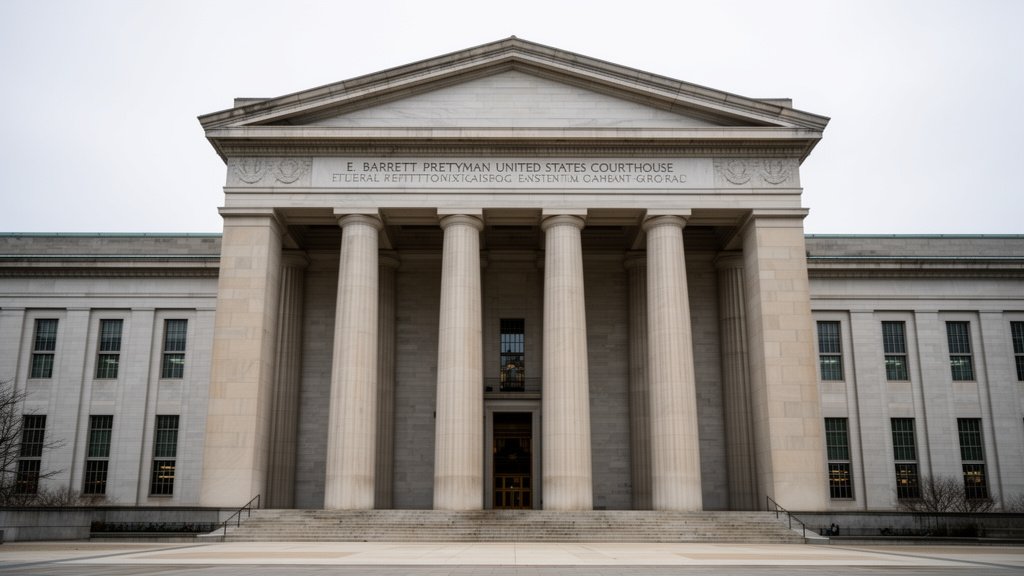
The legal complaint, filed in the U.S. District Court for the District of Columbia, alleges that the Trump administration’s decision to ban specific journalists—and by extension, their respective news organizations—from White House access is not merely a logistical matter, but an attempt to stifle critical coverage. The plaintiffs contend that the administration’s criteria for access have been applied inconsistently, effectively silencing voices that frequently challenge executive policy.
The Legal Argument: A Question of Due Process
At the heart of the litigation is the issue of due process. The lawsuit asserts that the administration failed to provide adequate notice or a transparent mechanism for appeal when the credentials were revoked. The plaintiffs are arguing that the press credentialing process must be content-neutral, as the White House acts as a public forum for the exchange of ideas between the government and the electorate. By restricting access based on the administration’s dissatisfaction with editorial content, the suit claims, the government is engaging in unconstitutional viewpoint discrimination.
Legal experts suggest that this case could have profound implications for the relationship between the Executive Branch and the media. If the court rules in favor of the news outlets, it would reinforce the legal standard that the White House press room is not a private domain of the administration, but a space held in trust for the public. Conversely, a ruling for the administration could grant the executive branch unprecedented power to curate its own press coverage, potentially reshaping the landscape of presidential reporting for future generations.
The Shift in Media Solidarity: MS NOW and the Digital Landscape
Perhaps the most compelling element of this lawsuit is the inclusion of MS NOW, a rapidly rising digital media entity, alongside established names like CNN and Politico. This alliance signals a changing tide in how modern newsrooms approach adversarial power dynamics. While CNN and Politico have long navigated the complex legalities of Washington reporting, the addition of a digital-native platform like MS NOW demonstrates that the administration’s actions are viewed as an existential threat to the entire media ecosystem, regardless of the delivery platform.
By uniting, these organizations are framing the issue not as a clash between specific networks and the President, but as an institutional fight for the integrity of the Fourth Estate. The collaboration highlights a sophisticated, cross-platform strategy designed to ensure that the administration cannot ‘divide and conquer’ different sectors of the press.
Secondary Angles: The Future of Political Reporting
1. The Digital Disruption: As digital outlets like MS NOW gain influence, the definition of a ‘legitimate’ press organization is being tested. This lawsuit may ultimately force a clearer legal definition of what constitutes a press organization, impacting how independent and alternative media outlets interact with future administrations.
2. Historical Parallels and Precedents: The reliance on Sherrill v. Knight (1977) reminds us that this is not the first time the executive branch has attempted to limit access. This case will likely serve as the definitive update to that precedent, determining if the digital age changes the nature of ‘access’ and ‘exclusion.’
3. The Economic Impact on Media Access: While the primary focus is on civil rights, the financial reality for news organizations is significant. The ability to report directly from the White House provides unparalleled value to subscribers and advertisers. Excluding outlets is not just a free-speech issue; it is a market-distorting action that penalizes organizations for critical reporting.
FAQ: People Also Ask
Q: What specific laws are the news outlets citing in this lawsuit?
A: The lawsuit primarily cites the First Amendment, which protects freedom of the press, and the Fifth Amendment, which guarantees due process. It argues that the administration’s actions deprived the journalists of their constitutional rights without proper procedure.
Q: Has the White House responded to the suit?
A: The White House press office has maintained that it has the ‘broad discretion’ to determine who receives credentials, citing safety and decorum as primary concerns in their earlier, non-legal statements.
Q: What is the significance of the ’emergency injunction’?
A: An emergency injunction is a legal request to restore the status quo—in this case, press access—immediately, before the full trial concludes. It prevents irreparable harm to the news organizations’ ability to cover the administration while the court deliberates on the merits of the case.
Q: Why is this considered a ‘landmark’ case?
A: Because it tests the boundaries of Executive power in the digital era, involving a coalition of diverse media entities that suggests a broader, systematic legal challenge to how the administration manages the press corps.


Related Posts