Trump Declares ‘Double-Tailed Monster’ of Migration and Green Energy Devastating Europe in Fiery UN Address; Condemns Palestinian State Recognition
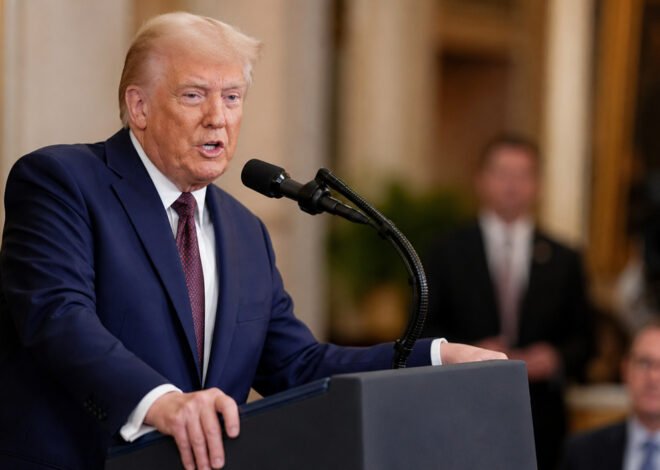
United Nations, New York – September 23, 2025 – In a combative address to the United Nations General Assembly on Tuesday, President Donald Trump issued stark warnings to European nations, characterizing uncontrolled migration and what he termed “green energy policies” as a “double-tailed monster” actively destroying their countries. The President also used the prominent global stage to condemn recent moves by several Western nations to recognize a Palestinian state, asserting such actions would “reward” Hamas for its atrocities.
Trump’s speech, delivered with his characteristic directness, targeted the United Nations itself, questioning its purpose and effectiveness while boasting of his administration’s foreign policy achievements. The remarks underscored a return to an unapologetic “America First” posture, often at odds with the multilateral ideals the UN aims to uphold.
Europe’s ‘Double-Tailed Monster’: Migration and Green Energy
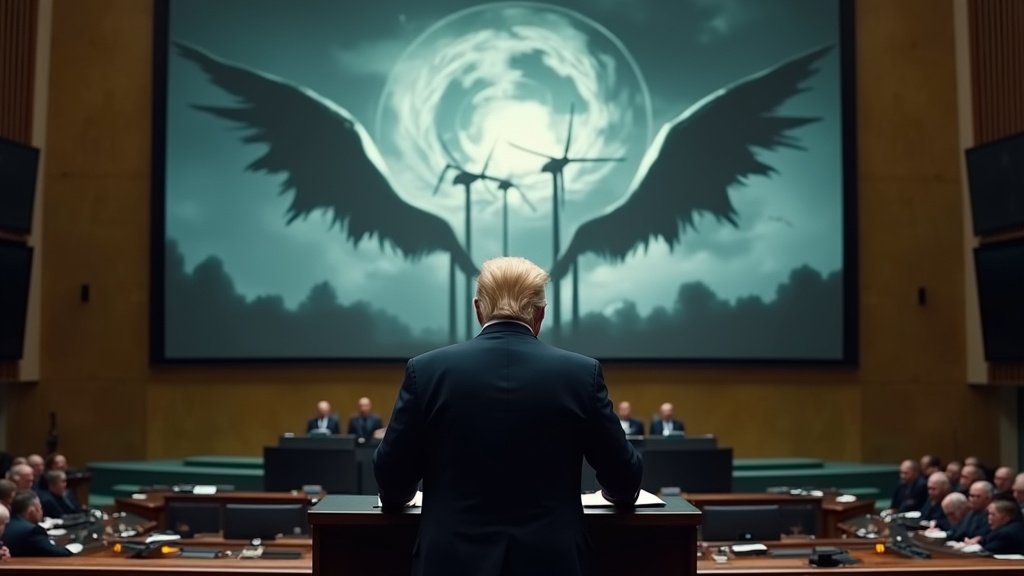
President Trump directed significant portions of his address towards Europe, painting a dire picture of its future if current policies remain unchanged. He specifically identified what he described as the “unmitigated immigration disaster,” warning that countries failing to control their borders and halt the influx of migrants are “going to hell.” According to Trump, these nations are being “devastated” by an influx of people with whom they have “nothing in common,” attributing this to misplaced “political correctness” among European leaders.
He coupled this critique with a scathing assessment of European renewable energy initiatives, labeling them a “green energy scam” and a “con job.” Trump argued that these policies, often driven by climate change agendas, are imposing exorbitant costs on European economies and leading to their ruin. He contended that embracing traditional energy sources and securing borders are essential for nations to “be great again”. This recent development comes amidst ongoing debates within the EU about balancing climate goals with energy security and affordability, with initiatives like the European Green Deal aiming to accelerate renewable energy development. However, Trump’s rhetoric suggested a deep skepticism towards these efforts, framing them as detrimental rather than beneficial.
Criticisms of the United Nations and Claims of Peacemaking
The President did not spare the UN from his criticism, reiterating his long-held view that the organization is largely ineffectual. “What is the purpose of the United Nations?” Trump questioned, asserting that the body has “tremendous potential” but is “not even coming close to living up to that potential”. He characterized the UN’s output as primarily “empty words” and “strongly-worded letters” that fail to resolve conflicts.
Trump contrasted the UN’s perceived inaction with his own administration’s accomplishments, prominently boasting that he had “ended seven unendable wars” in a mere seven months. He suggested that these peacemaking efforts, which he believes saved millions of lives, warrant a Nobel Peace Prize, though he also stated that the lives saved are the true reward. This claim of ending multiple conflicts has been a recurring theme in his public statements.
Opposition to Palestinian Statehood Recognition
A significant portion of Trump’s address was dedicated to denouncing the recent decision by several countries, including the United Kingdom, Canada, Australia, and Portugal, to formally recognize a Palestinian state. He framed this move as an encouragement of continued conflict and a direct “reward for Hamas terrorists” and their “horrible atrocities,” specifically referencing the October 7th attacks. Trump emphasized that efforts should instead focus on securing the release of hostages held by Hamas.
This stance places the U.S. at odds with a growing international consensus, as a significant number of UN member states already recognize Palestine. The recognition by European nations, including G7 members like the UK and Canada for the first time, represents a notable diplomatic shift driven by frustration over the ongoing conflict in Gaza and a desire to revive the two-state solution.
Broader Implications and a ‘Golden Age’ for America
The President’s speech offered a blend of grievance and self-congratulation, portraying his presidency as a period of renewed American strength and global respect. He contrasted this with what he described as the U.S. being a “laughingstock” prior to his administration. His message to Europe also implicitly advocated for a more protectionist and nationalist approach to governance, urging leaders to prioritize their own citizens and national interests above globalist or “politically correct” agendas.
The recent news from the UNGA highlighted the persistent divisions in international policy, particularly concerning the Israeli-Palestinian conflict and approaches to climate change and migration. Trump’s remarks signal a continued commitment to an “America First” foreign policy, prioritizing national sovereignty and challenging established international norms and institutions.
In conclusion, President Trump’s address at the 80th United Nations General Assembly served as a platform to articulate his distinctive vision for global affairs. His warnings to Europe about migration and green energy, his sharp critiques of the UN, and his firm opposition to recognizing a Palestinian state underscore a foreign policy centered on national interests and a skepticism of multilateral cooperation. The speech, a featured moment of this year’s assembly, reaffirms the significant ideological divides shaping contemporary international relations.


Related Posts