
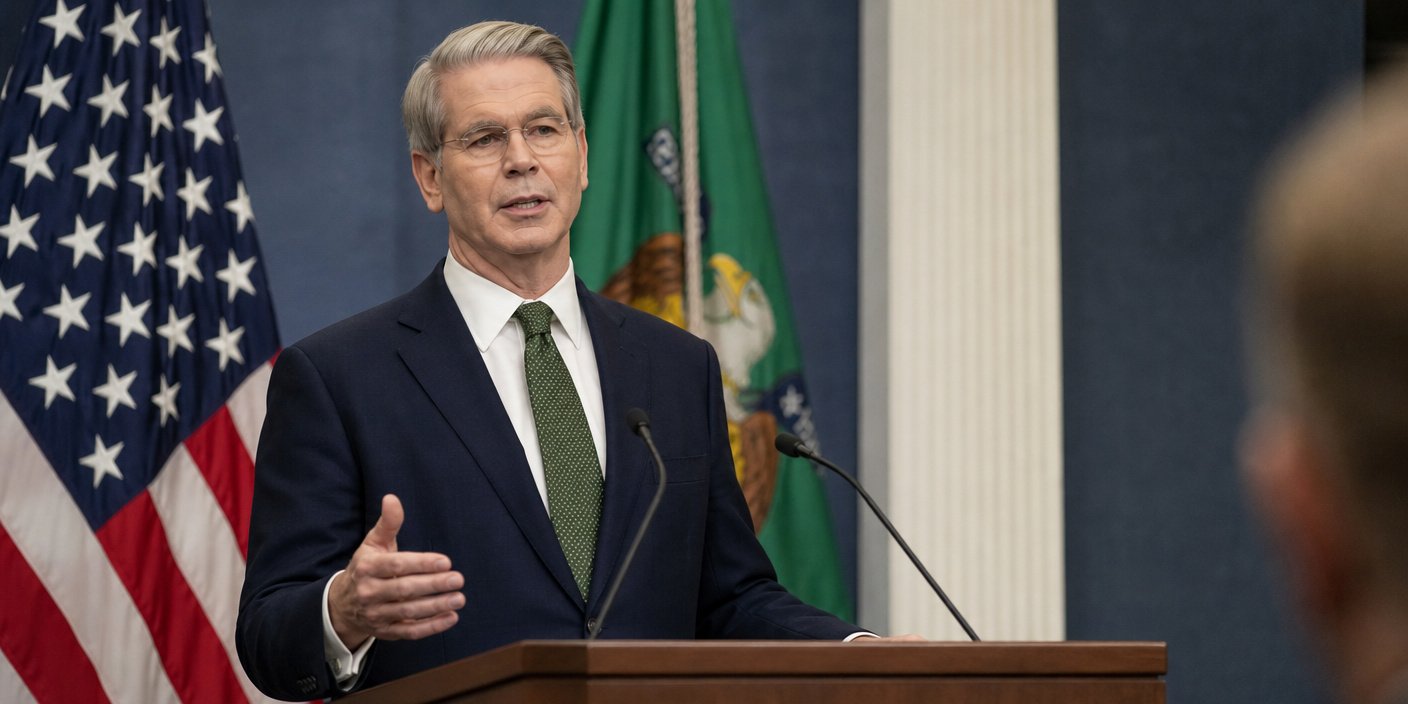
Bessent Unleashes ‘Operation Economic Outcast’ on Iran
U.S. Treasury Secretary Scott Bessent formally announced the launch of ‘Operation Economic Outcast’ on August 25, 2026, a sweeping, multi-vector initiative designed to systematically decouple the Islamic Republic of Iran from the global financial system. The directive, which takes immediate effect, significantly expands the scope of secondary sanctions, shifting the focus from general trade embargoes to highly specific, high-velocity assets including aviation logistics, decentralized digital assets, and the cross-border movement of gold. This strategy marks a pivot in U.S. economic statecraft, aiming to shrink the operational space for the Iranian state by targeting the specific conduits used to bypass traditional banking restrictions.
Key Highlights
- Targeted Isolation: Operation Economic Outcast specifically isolates Iran’s aviation, digital asset, and gold trade sectors from international clearinghouses.
- Secondary Sanctions Expansion: The Treasury has authorized OFAC (Office of Foreign Assets Control) to aggressively penalize third-party entities, including international banks and logistics firms, found facilitating transactions in these sectors.
- Digital Frontier: For the first time, digital assets and crypto-exchanges are explicitly identified as primary targets, signaling a crackdown on the use of blockchain for state-sponsored trade.
- Gold and Hard Assets: The initiative targets refineries and intermediaries attempting to convert Iranian oil proceeds into hard gold assets, viewing this as a direct breach of existing monetary restrictions.
The Siege of Shadow Finance: Deciphering Economic Outcast
With the unveiling of ‘Operation Economic Outcast,’ the U.S. Department of the Treasury has moved beyond the traditional ‘maximum pressure’ campaigns of the past decade. Secretary Bessent’s announcement underscores a recognition that previous sanctions frameworks were often reactive, chasing illicit flows through legacy banking channels that have increasingly been sidelined by the Iranian state. By pivoting to aviation, digital assets, and gold, the Treasury is attempting to sever the physical and technological lifeblood of the Iranian economy.
The Aviation Chokepoint
The decision to make aviation a primary target of secondary sanctions is a calculated strategic move. Aviation infrastructure—spare parts, maintenance, and insurance—is notoriously difficult to maintain in isolation. By threatening secondary sanctions against any global entity that services, insures, or provides logistical support to Iranian commercial or cargo flights, the Treasury aims to ground the logistical network that facilitates the movement of both goods and high-value cargo. This is not merely about blocking trade; it is about preventing the physical mobility required for the state to maintain its external networks. The Office of Foreign Assets Control (OFAC) has signaled that the definition of ‘material support’ to these aviation entities will be interpreted as broadly as possible, effectively forcing global airlines and insurers to choose between access to the U.S. financial system and their business relationships with Iranian aviation sectors.
The Digital Asset Frontier
Perhaps the most technologically significant aspect of the operation is the direct assault on the use of digital assets. For years, observers have noted that Iran has increasingly utilized decentralized ledgers and cryptocurrency to facilitate trade that would otherwise be blocked by the SWIFT network. Secretary Bessent’s directive explicitly brings these digital assets into the regulatory crosshairs. This involves identifying specific wallets, exchanges, and miners that provide liquidity to the Iranian state and threatening them with severe financial penalties. This places immense pressure on centralized exchanges worldwide, forcing them to implement rigorous compliance protocols that effectively treat Iranian-linked assets as toxic. It is a tacit acknowledgement that in the digital age, financial isolation requires as much attention to code as it does to currency.
The Gold Standard of Circumvention
Gold has long served as the final refuge for sanctioned nations seeking to convert oil revenue into a stable, portable store of value. ‘Operation Economic Outcast’ aims to close this door by targeting the refineries and intermediaries that purchase Iranian gold. By leveraging the cooperation of international oversight bodies, the Treasury intends to make Iranian-origin gold ‘unmarketable’ on the global stage. This requires a complex coordination of supply chain mapping, forcing bullion dealers and refineries globally to perform enhanced due diligence on the origin of any gold bar or bullion entering the legitimate market.
Secondary Angles: A Strategic Analysis
1. The End of Passive Enforcement (Historical Context)
This operation marks the end of what might be termed the ‘passive enforcement’ era. Historically, sanctions were often enforced through fines on major banks. Operation Economic Outcast, however, creates an active environment where third-party intermediaries—middlemen in logistics, tech, and precious metals—are now the primary targets. It is an acknowledgment that the ‘Big Bank’ approach has reached a point of diminishing returns, and the state must now hunt illicit flows in the granular, fragmented parts of the supply chain.
2. The Liquidity Squeeze (Economic Impact)
The cumulative effect of these sanctions is a significant liquidity squeeze. By targeting the three pillars of gold, crypto, and aviation, the U.S. is attacking the convertibility of wealth. If Iran cannot move goods via aviation, cannot settle payments via crypto, and cannot store wealth in gold, the state faces a massive deficit in its ability to manage its international balance sheet. This is likely to lead to significant domestic inflationary pressure within Iran as the state is forced to rely on more inefficient, black-market alternatives that carry higher transaction costs.
3. The Future of Financial Statecraft (Future Predictions)
If Operation Economic Outcast succeeds in its stated goals, it will likely set the template for future U.S. foreign policy toward other pariah states. We are entering an era where financial sanctions are becoming ‘digitally native.’ Future initiatives will almost certainly involve increased utilization of AI-driven supply chain analysis and automated financial monitoring. The precedent set here suggests that the U.S. is comfortable utilizing its dominance of the global financial clearing system to fundamentally alter the behavior of global non-state actors, including crypto-exchanges and specialized logistics providers who previously operated in the gray zones of international law.
FAQ: People Also Ask
What are secondary sanctions, and why are they effective?
Secondary sanctions allow the U.S. to penalize non-U.S. persons or entities for engaging in specific transactions with a sanctioned country. They are effective because they force global companies to choose between doing business with the target nation or maintaining access to the massive U.S. financial market.
Why is the U.S. focusing on digital assets now?
Digital assets provide an alternative settlement rail to the traditional banking system (SWIFT). As Iran and other sanctioned nations have increasingly turned to crypto to facilitate trade, the U.S. is modernizing its sanctions toolkit to capture these non-bank transactions.
How does this impact the average Iranian citizen?
While the goal is to isolate the state, these measures often result in currency devaluation and rising costs for imported goods, which are typically felt by the broader population as the state attempts to compensate for lost revenue.
Is there a way for international firms to comply?
International firms must now drastically increase their ‘Know Your Customer’ (KYC) and supply chain transparency protocols. Compliance now requires monitoring not just financial transactions, but the movement of physical goods (aviation) and the origin of precious metals (gold).


Related Posts


