
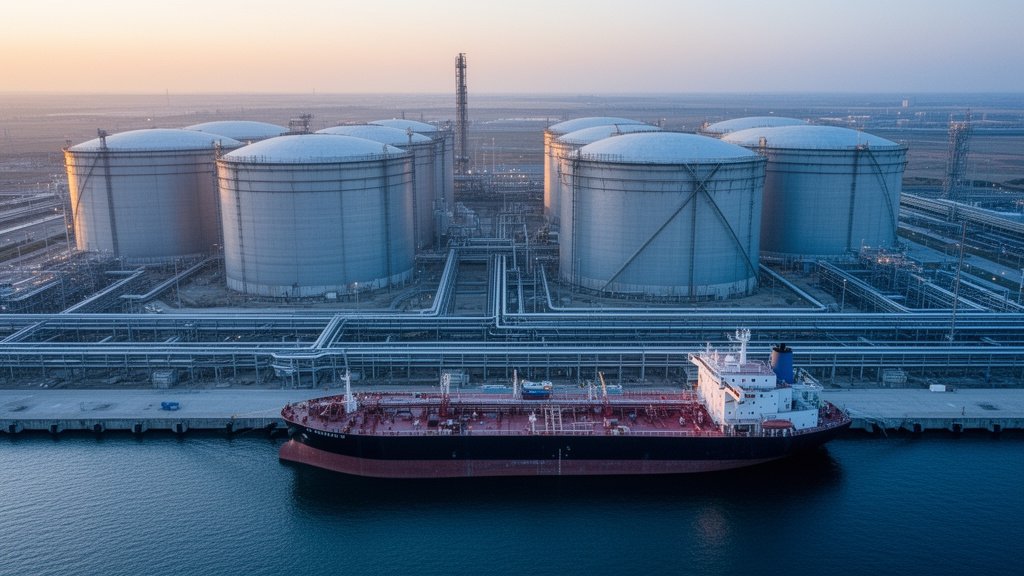
G7 Unlocks 100M Oil Barrels Amid Trump Pressure
On October 2, the Group of Seven (G-7) nations reached a critical consensus, agreeing to release 100 million barrels of diesel and crude oil from strategic emergency reserves. This synchronized international action represents a significant intervention in global energy markets, designed to counteract the aggressive fuel price surges that have threatened economic stability across the Western hemisphere. The agreement follows weeks of intense diplomatic pressure exerted by the Trump administration, which had explicitly signaled potential restrictions on diesel exports to the European Union if key allies refused to take tangible action to increase global supply.
Key Highlights
- Coordinated Release: A total of 100 million barrels of crude and diesel are being mobilized from national emergency reserves to stabilize global prices.
- The U.S. Ultimatum: The Trump administration leveraged the threat of a complete ban on U.S. diesel exports to the European Union to force the coalition’s hand.
- Targeted Intervention: The release specifically prioritizes diesel—a vital component for industrial logistics and global shipping—alongside crude oil.
- October 2 Deadline: The pact was finalized on October 2, setting an immediate timeline for the deployment of reserves to market participants.
The Strategic Energy Pivot: Analyzing the October 2 Accord
The decision to tap into emergency stockpiles on October 2 was not merely a reaction to current market volatility; it was a calculated exertion of geopolitical and economic leverage. For months, the global economy has been grappling with a dual-crisis: soaring crude oil costs and a critical deficit in refined petroleum products, particularly diesel. Because diesel serves as the lifeblood of logistics, agriculture, and manufacturing, the price of diesel often acts as a multiplier for inflation, affecting the final cost of nearly every consumer good. By forcing a G-7 agreement, the Trump administration aimed to bypass the traditional, slow-moving mechanisms of the International Energy Agency (IEA) and secure immediate relief.
The Anatomy of the ‘Diesel Diplomacy’
The defining characteristic of this agreement was the U.S. threat to curtail diesel exports to the European Union. Europe has been particularly vulnerable, struggling with persistent supply shortages and high reliance on external imports. By signaling a potential ‘America First’ policy on fuel distribution, the Trump administration essentially cornered European partners into the agreement. This diplomatic maneuver highlights a significant shift in energy geopolitics: the willingness of the United States to weaponize its energy production capacity to ensure domestic price stability and force global market adjustments.
This strategy is multifaceted. While the U.S. remains the world’s largest oil producer, its ability to refine that crude into diesel is constrained by domestic refinery capacity. Therefore, by threatening to hoard its own refined product, the U.S. sent a clear message to the G-7: if global partners did not contribute their own reserves to flood the market with supply, American diesel would remain within U.S. borders, exacerbating Europe’s already dire energy crisis.
Market Dynamics: Crude vs. Diesel
It is vital to distinguish between the two commodities involved in this 100-million-barrel release. Crude oil is the raw input, while diesel is the refined product. Crude oil price spikes are often headline-driven and psychologically taxing to the stock market, but diesel price spikes are physically destructive to the real economy. A lack of diesel creates immediate bottlenecks in trucking, shipping, and heating sectors.
Market analysts have observed that the 100-million-barrel figure is significant enough to suppress immediate ‘panic buying’ premiums. By injecting this volume, the G-7 effectively short-circuited the speculative futures trading that had been driving prices upward. The market reaction to the October 2 announcement was swift, with immediate downward pressure on energy commodity futures as traders priced in the incoming supply influx.
Geopolitical Ramifications and Future Predictions
Looking beyond the immediate price impacts, this intervention sets a new precedent for energy security cooperation. The reliance on centralized, government-controlled reserves—previously used as ‘break-glass-in-case-of-emergency’ measures for war or natural disasters—is evolving into a tool of economic management. Critics argue that using strategic reserves to manage retail prices is a short-term fix that may leave nations vulnerable to genuine supply shocks in the future. Proponents, however, contend that in an era of rapid energy transition and supply chain fragility, the ability to act decisively is a requisite for national security.
Furthermore, the success of this maneuver may influence future trade agreements. If the Trump administration’s threat of a diesel export ban yields positive economic results at home, it is likely that this tactic will be formalized as a standard negotiating pillar. Nations within the G-7 bloc will now have to factor in ‘American energy policy’ as a primary variable in their own domestic economic planning. The October 2 agreement has effectively shifted the center of gravity in energy negotiations, placing the U.S. in a dominant position to dictate terms that prioritize its own industrial and consumer price stability.
As the 100 million barrels begin to move through pipelines and distribution networks, the global community will be watching closely to see if this injection is sufficient to bridge the supply gap until new refinery capacity or renewable alternatives can scale. For now, the G-7 has successfully utilized its combined influence to halt a potential runaway inflation cycle, but the long-term sustainability of this ‘reserve-tap’ model remains a subject of intense debate among energy economists and policymakers alike.
FAQ: People Also Ask
1. Why did the G-7 target diesel specifically in the October 2 release?
Diesel is the primary fuel for industrial logistics, heavy trucking, and shipping. While crude oil releases lower global prices, releasing diesel addresses the ‘supply-side’ bottleneck that directly impacts the cost of consumer goods, transportation, and agricultural machinery, making it more effective for curbing everyday inflation.
2. Was the threat to the EU a bluff?
While the diplomatic posture was firm, the Trump administration’s signaled intent to restrict diesel exports was viewed by market analysts as a credible ultimatum. Given the fragile state of European energy reserves and the high reliance on imported refined products, the potential for a U.S. export ban presented a risk that European nations were unwilling to take, ultimately forcing the consensus.
3. How does this release affect long-term energy security?
Critics argue that depleting strategic reserves for price management leaves countries with smaller buffers for genuine emergency scenarios, such as geopolitical conflicts or major infrastructure failures. Supporters believe it is a necessary tool to prevent economic destabilization in an era of volatile energy markets.


Related Posts


