
Trump Iran Remarks Ignite Political Firestorm
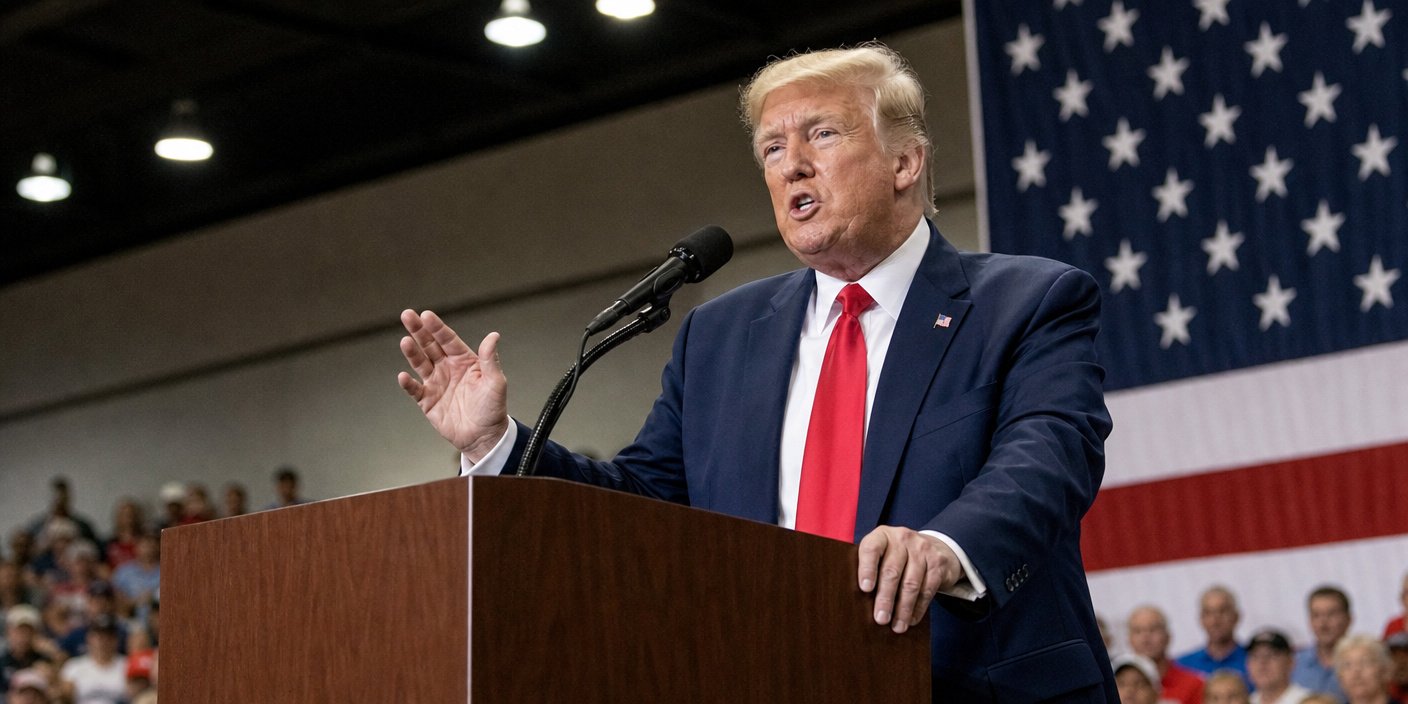
Former President Donald Trump faced immediate and widespread scrutiny following comments made during a recent campaign rally in Grand Island, Nebraska, where he suggested that a potential Iranian attack on U.S. cities such as Los Angeles and San Diego could be a “small price to pay.” The remarks, delivered during a broader discussion concerning foreign policy and international military engagement, were quickly seized upon by political opponents and local government leaders, resulting in swift, sharp condemnation from California Governor Gavin Newsom, Los Angeles Mayor Karen Bass, and San Diego Mayor Todd Gloria, who denounced the rhetoric as both reckless and inherently dangerous.
Key Highlights
- The Controversial Statement: During a campaign stop in Grand Island, Nebraska, Donald Trump hypothesized about an Iranian military strike, suggesting that the destruction of major coastal cities like Los Angeles and San Diego could be considered a “small price to pay” in a specific geopolitical scenario.
- California Leadership Responds: Governor Gavin Newsom led the condemnation, labeling the rhetoric as a disregard for the safety of millions of Americans and a dangerous departure from presidential standards.
- Mayoral Outrage: Los Angeles Mayor Karen Bass and San Diego Mayor Todd Gloria both issued statements characterizing the language as deeply irresponsible and anti-American, highlighting the unique vulnerability and economic importance of their respective cities.
- Foreign Policy Context: The comments occurred against a backdrop of ongoing debates regarding the U.S.’s “Maximum Pressure” approach to Iran, a policy championed during the Trump administration and frequently scrutinized by both domestic and international observers.
Rhetorical Escalation: Analyzing the Grand Island Incident
When a former President of the United States speaks on matters of national security, the gravity of the language is expected to reflect the weight of the office once held. The recent comments in Grand Island, Nebraska, have disrupted that expectation, creating a volatile narrative centered on the potential sacrifice of American urban centers. While political rallies are historically venues for hyperbole and aggressive posturing, the specific framing of Los Angeles and San Diego—two of the nation’s most populous and economically vital cities—as expendable variables in a hypothetical military conflict represents a significant escalation in campaign rhetoric.
The Anatomy of the Criticism
The immediate backlash was not merely partisan but deeply protective of the targeted locales. California Governor Gavin Newsom was among the first to address the remarks, arguing that the former president’s words undermine the core duty of any American leader: the protection of the citizenry. Governor Newsom’s office emphasized that such rhetoric does not exist in a vacuum; rather, it emboldens adversaries while simultaneously demoralizing the very communities a commander-in-chief is sworn to protect.
Los Angeles Mayor Karen Bass, representing a city that is a global hub for entertainment, aerospace, and international trade, called the remarks “disqualifying.” The sentiment was mirrored by San Diego Mayor Todd Gloria, who noted that San Diego’s deep military connections, including its significant naval and marine presence, made the comment particularly jarring. For both mayors, the rhetoric represents a fundamental disconnect between campaign strategy and the reality of municipal governance, where the safety of millions is the primary objective.
Foreign Policy and the Shadow of the JCPOA
To understand the provocation, one must look at the historical trajectory of the U.S.-Iran relationship. During his presidency, Donald Trump withdrew the United States from the Joint Comprehensive Plan of Action (JCPOA), often referred to as the Iran Nuclear Deal, and initiated a “maximum pressure” campaign characterized by heavy economic sanctions and the assassination of Qasem Soleimani. Supporters of this approach argue that it effectively contained Iranian influence. However, critics, including those reacting to the Nebraska rally, contend that such an approach has pushed the two nations toward the brink of direct conflict.
By suggesting that an Iranian strike on U.S. soil is a permissible outcome, the former president is signaling a potential shift in isolationist doctrine. This “America First” perspective, when pushed to this extreme, suggests that the physical territory of the United States is less important than the outcome of foreign entanglements—a pivot that has deeply unsettled foreign policy analysts and national security experts who view the sanctity of the homeland as the bedrock of the global order.
The Implications for Domestic Security
Beyond the political theater, the rhetoric forces a conversation about the nature of domestic vulnerability. Los Angeles and San Diego are not merely administrative districts; they are essential nodes in the American economy. San Diego serves as a strategic cornerstone for the U.S. Pacific Fleet, while Los Angeles is one of the world’s busiest ports and a leading manufacturing center. Dismissing the potential destruction of these assets as a “small price” is viewed by many as a failure of basic strategic assessment. If the deterrent capability of the United States is predicated on the idea that the American homeland is inviolable, then suggesting otherwise—even in a hyperbolic, hypothetical context—weakens the very posture of strength the former administration claims to represent.
Rhetoric vs. Reality: The Campaign Trail Effect
We must also consider the environment in which these words were spoken: a rally in Nebraska. Campaign rallies are designed to generate soundbites, stir emotions, and solidify base support. Often, the intensity of the crowd’s reaction encourages speakers to push boundaries. However, there is a clear distinction between domestic policy rhetoric and commentary on national existential threats. By naming specific cities, the former president shifted the focus from abstract “foreign policy” to concrete, personal stakes for millions of Californians. This shift has galvanized local opposition, creating a bridge between those who oppose the former president on ideological grounds and those who are now motivated by direct, local concern.
As the 2024 political cycle intensifies, the role of rhetoric will continue to be a primary battleground. The Grand Island incident serves as a stark reminder of the power and danger of words in an era of heightened polarization. Whether this specific comment functions as a liability or a rallying cry for his base remains to be seen, but the reaction from California’s leadership ensures that the debate over the safety of American cities will remain at the forefront of the national conversation.
FAQ: People Also Ask
1. Did Donald Trump explicitly call for an attack on Los Angeles and San Diego?
No. The former president did not call for an attack. Rather, he posited a hypothetical scenario involving Iranian military retaliation, suggesting that the destruction of these cities could be considered a “small price to pay” in the context of his broader foreign policy perspective.
2. Why are Los Angeles and San Diego specifically mentioned in the criticism?
These cities are the homes of the critics who spoke out. Los Angeles Mayor Karen Bass and San Diego Mayor Todd Gloria represent two of the largest cities in the United States, both of which have massive economic, strategic, and military importance. The criticism focused on the fact that the former president was treating the lives and infrastructure of these specific American communities as expendable.
3. How has the Trump campaign addressed the backlash?
The Trump campaign has generally maintained that the remarks were taken out of context and were intended to illustrate the supposed failure of current U.S. foreign policy to deter Iranian aggression, rather than a literal desire to see American cities destroyed.
4. What is the significance of the Grand Island, Nebraska location?
Grand Island is a key location for campaign rallies in the Midwest. While the location itself is not central to the foreign policy issue, the rally environment is known for encouraging unfiltered, spontaneous, and often inflammatory rhetoric intended to energize the political base.
5. Does this impact the broader conversation on U.S.-Iran relations?
Yes. This rhetoric brings the debate over U.S. isolationism versus interventionism to the forefront. It highlights the stark divide between those who believe the U.S. should prioritize domestic safety above all foreign entanglements and those who believe such rhetoric undermines national security and the credibility of U.S. deterrence.


Related Posts


