Grid Security: U.S. National Emergency Explained
The United States government has officially declared a national emergency to address the escalating vulnerabilities within the nation’s bulk-power system (BPS). This decisive action, rooted in Executive Order 13920, underscores the federal government’s commitment to securing the critical infrastructure that powers the American economy. By asserting emergency authority, the executive branch aims to proactively mitigate the risks posed by foreign adversaries who may seek to exploit supply chain gaps in our electrical grid. This order serves as a foundational shift from a reactive security posture to a proactive, risk-based management system designed to insulate the grid from sabotage and foreign digital interference.
Key Highlights
- Emergency Declaration: The executive order invokes the International Emergency Economic Powers Act (IEEPA) to secure the U.S. bulk-power system.
- Foreign Supply Chain Risks: The policy specifically targets equipment manufactured by companies owned, controlled, or subject to the jurisdiction of foreign adversaries.
- Regulatory Authority: The Secretary of Energy is empowered to develop and implement processes to identify and mitigate “undue or unacceptable risk” to the BPS.
- Interagency Cooperation: The Department of Energy (DOE) coordinates with the Federal Energy Regulatory Commission (FERC) and the North American Electric Reliability Corporation (NERC) to enforce grid security standards.
Securing the American Grid: A Strategic Infrastructure Overhaul
The declaration of a national emergency regarding the bulk-power system is not merely a bureaucratic formality; it is a structural realignment of how the United States procures and manages electrical grid hardware. At the heart of this initiative is the recognition that the grid is no longer just a physical network of wires and transformers; it is a complex, digitally integrated system susceptible to high-level state-sponsored cyber-espionage and remote sabotage.
The Genesis of the Emergency Declaration
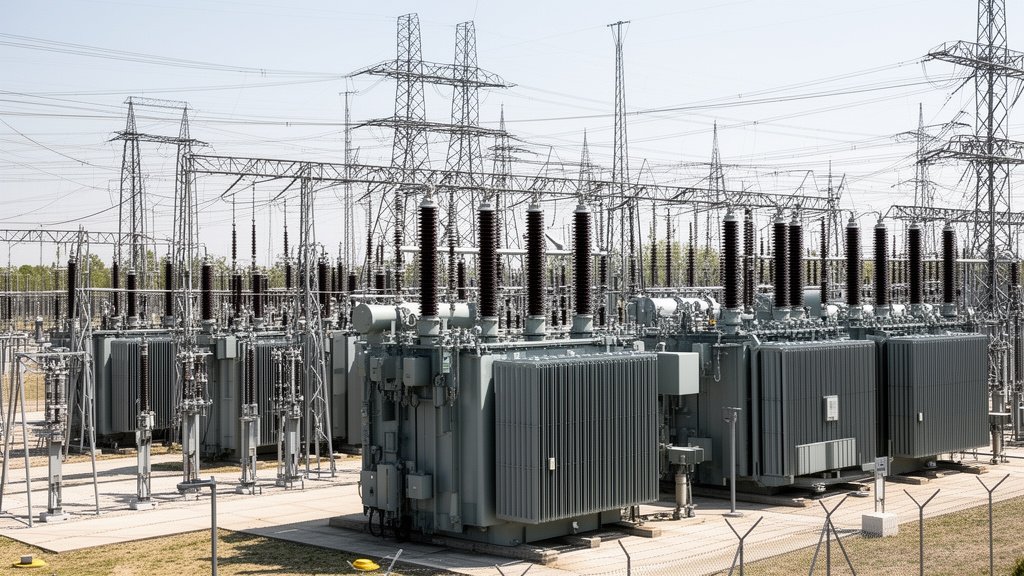
The bulk-power system encompasses the massive network of transmission lines, substations, and generation facilities that deliver electricity across the country. Historically, procurement for this equipment was driven primarily by cost-efficiency and performance metrics. However, Executive Order 13920 fundamentally changed this calculus by introducing national security as a primary procurement criterion. The administration identified that large-scale transformers, relays, and other critical components manufactured by entities linked to foreign adversaries could contain “backdoors” or hardware vulnerabilities. These vulnerabilities theoretically allow an adversary to remotely disrupt the flow of power or exfiltrate sensitive grid control data, posing an unacceptable risk to national security.
Managing the Supply Chain Landscape
One of the most complex challenges following this executive order is the integration of diverse equipment sources. The Department of Energy (DOE) now plays a central role in vetting vendors and products. This shift requires utilities to perform extensive due diligence before installing new grid components. The secondary angle here is the economic impact on the utility sector. Smaller rural cooperatives, which often operate on thinner margins than massive investor-owned utilities, faced significant logistical hurdles when the emergency order first restricted the use of certain foreign-sourced components. The industry is currently balancing the rapid modernization of the grid with the necessity of utilizing trusted, domestic, or allied-nation supply chains. This has spurred a renewed focus on American manufacturing of high-voltage transformers, a sector that had previously seen a significant decline.
Technical Resiliency and Cybersecurity
Beyond the physical supply chain, the emergency declaration highlights the convergence of operational technology (OT) and information technology (IT) in the modern power grid. Traditionally, grid infrastructure was “air-gapped” or isolated, but the push for “smart grid” technology and real-time distribution management systems has exposed these components to the internet. The technical security of these devices is paramount. The order empowers the Secretary of Energy to establish criteria that exclude equipment that poses an undue risk. This implies that manufacturers must now prove their hardware is free of unauthorized communication pathways. Experts in cybersecurity argue that this is a necessary evolution, as state actors have moved beyond simple data theft to targeting the control logic of industrial systems, which could theoretically cause cascading blackouts.
Long-Term Strategic Outlook
The long-term implications of this national emergency are twofold. First, it cements the role of the government as a direct regulator of grid component integrity, rather than relying solely on industry-led standards like those provided by NERC. While industry collaboration remains vital, the government has signaled that it will intervene when necessary to protect the nation’s backbone. Second, this creates a market incentive for the development of “secure by design” energy infrastructure. Future procurement contracts are increasingly likely to include rigorous cybersecurity clauses, forcing manufacturers to provide transparency into their software and hardware supply chains. This evolution is essential for maintaining the reliability of the bulk-power system in an era where infrastructure is increasingly viewed as a theater of geopolitical competition.
FAQ: People Also Ask
Q: What is the Bulk-Power System (BPS)?
A: The BPS is the large-scale interconnected electrical system comprising generation facilities, transmission lines, and associated equipment necessary for the reliable operation of the electric grid.
Q: Who has the authority to implement these security measures?
A: Under the executive order, the Secretary of Energy has the authority to identify, screen, and prohibit the acquisition or installation of any equipment that poses an undue risk to the BPS.
Q: How does this affect current utility operations?
A: Utilities must now incorporate rigorous supply chain risk management programs to ensure new equipment complies with the criteria set by the DOE, which may restrict the use of certain foreign-made components.
Q: Does this order shut down the power grid?
A: No. The order is a risk-mitigation framework designed to prevent future threats and secure existing infrastructure, not to disrupt current electrical service.


Related Posts