Artemis II: Heroes Return as Historic Moon Mission Splashes Down
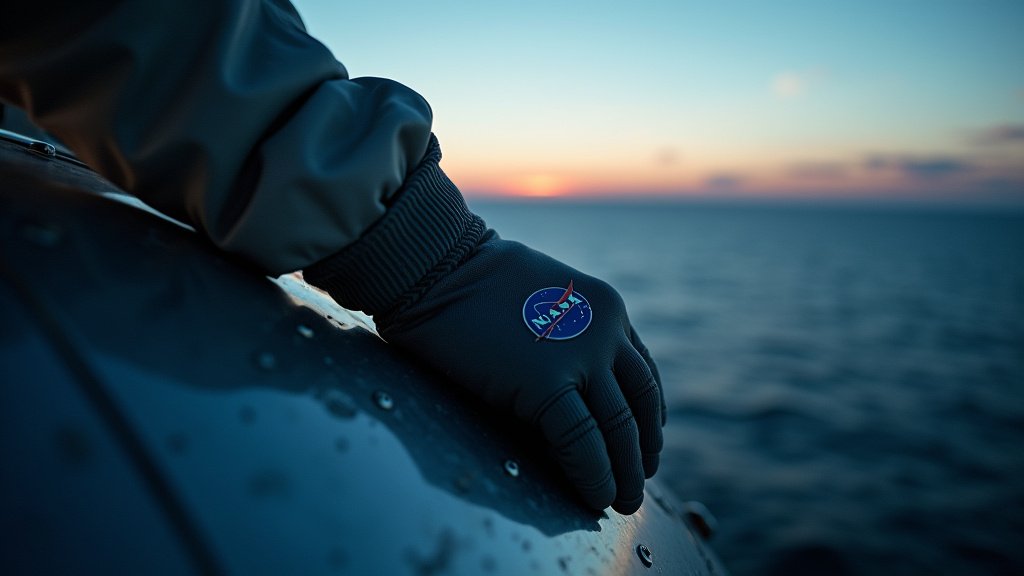
The Pacific Ocean off the coast of San Diego became the epicenter of human history on April 10, 2026, as the Orion spacecraft, carrying the crew of NASA’s Artemis II, successfully splashed down. This moment signaled the end of a 10-day journey that reestablished humanity’s reach beyond Earth’s orbit, proving that the dream of sustained lunar exploration is no longer a distant theoretical goal, but a tangible, operational reality. As the capsule bobbed in the water, secured by recovery teams from the USS John P. Murtha, the mission effectively closed the door on a fifty-year hiatus from crewed lunar travel and opened a new chapter for the Artemis program.
The Final Descent: A Fiery Return
The return journey was a masterclass in aerospace engineering, testing the limits of the Orion capsule during the critical re-entry phase. As the spacecraft pierced Earth’s atmosphere, it traveled at roughly 35 times the speed of sound, generating temperatures exceeding 2,700 degrees Celsius (5,000 degrees Fahrenheit). This intense heat created a plasma sheath around the capsule, leading to the expected but always tension-filled six-minute communications blackout. For mission control in Houston and the anxious families of the astronauts, those minutes were the longest of the mission. When the drogue parachutes deployed, followed by the three massive main chutes, it confirmed that the heat shield—a major point of concern following the uncrewed Artemis I test—had performed its duty flawlessly.
Meet the Crew: Ambassadors of the Lunar Era
The four individuals aboard Orion have now etched their names into history, joining the elite, narrow fraternity of humans who have ventured to the Moon. Commander Reid Wiseman, Pilot Victor Glover, and Mission Specialist Christina Koch represented NASA’s diverse and highly skilled astronaut corps, while CSA astronaut Jeremy Hansen carried the hopes of the Canadian space program. Their collective experience, psychological resilience, and technical precision were the mission’s greatest assets. Throughout their 10-day voyage, they maintained a grueling schedule of systems checks, radiation monitoring, and public engagement, serving not just as pilots and scientists, but as the first voices from deep space in over half a century.
The Strategic Future of Deep Space Exploration
While the splashdown is a moment for celebration, the broader implication is the validation of the entire Artemis architecture. This mission was never merely about the flyby; it was a stress test for the infrastructure that will support the Artemis III lunar landing and the eventual construction of a permanent base at the Moon’s South Pole.
Validating the Artemis Infrastructure
The mission confirmed the viability of the Orion Multi-Purpose Crew Vehicle (MPCV) for long-duration deep space transit. By successfully navigating the lunar sphere of influence and maintaining life support and communications across nearly 250,000 miles, NASA and its international partners have de-risked the most critical systems required for future missions. The data gathered during the mission—specifically regarding the radiation environment, the effectiveness of the life support systems, and the psychological impact of the mission duration—will be exhaustively analyzed to refine the protocols for Artemis III.
The Human Factor: Psychological and Medical Insights
One of the secondary, yet critical, angles of this mission is the study of human performance in deep space. Unlike the rapid transit of the Apollo missions, the Artemis II crew lived in a cramped, high-tech capsule where every resource was monitored. Medical teams on the USS John P. Murtha are now conducting immediate post-mission evaluations, focusing on how the crew’s physiology adapted to the transition from microgravity to Earth’s gravity after being away from the planet for over a week. This data is paramount for planning future Mars missions, where transit times will be significantly longer and the margin for physiological error is much thinner.
A New Era of International Cooperation
Jeremy Hansen’s presence on the mission underscores the shift from the nationalistic space race of the 1960s to the collaborative international model of the 2020s. This isn’t just an American project; it is a global endeavor. The integration of the Canadian Space Agency’s expertise and the logistical support of international naval partners for recovery operations demonstrate that the modern lunar economy is built on a foundation of shared goals and cross-border cooperation. As NASA looks toward 2028 and beyond, these alliances will be the bedrock upon which lunar bases are constructed and maintained.
FAQ: People Also Ask
Q: Was the Artemis II splashdown considered a success?
A: Yes, NASA classified the mission as a complete success. The Orion capsule performed within nominal parameters, the heat shield successfully managed the intense re-entry temperatures, and all four crew members were retrieved in good health.
Q: What happens to the crew after they are recovered?
A: After being extracted from the capsule and transported to the USS John P. Murtha, the astronauts undergo initial medical evaluations on the ship. They are then flown back to shore and transferred to NASA’s Johnson Space Center in Houston for intensive debriefing, medical analysis, and reintegration.
Q: How does Artemis II differ from the Apollo missions?
A: While both involve traveling to the Moon, Artemis II uses the modern Orion spacecraft, which is significantly more advanced in terms of computing power, life support, and re-entry technology. Furthermore, the goal of the Artemis program is not just to visit, but to establish a sustainable human presence on the lunar surface.
Q: When is the next Artemis mission?
A: NASA is currently preparing for Artemis III, which is aimed at landing humans on the lunar surface, potentially as early as 2028. The data from Artemis II is being used to finalize the planning for this next, even more complex phase.


Related Posts