DHS Launches ‘Securing the Next 250’ Plan for 2026 Election Security
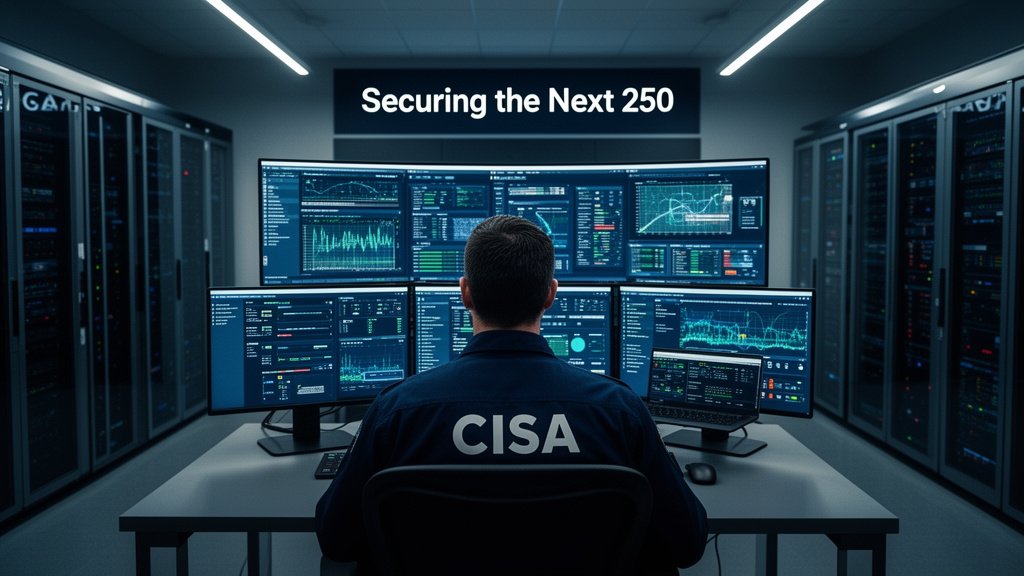
The U.S. Department of Homeland Security (DHS), in coordination with the Cybersecurity and Infrastructure Security Agency (CISA), has officially launched its comprehensive 2026 Election Infrastructure Security Plan, aptly titled “Securing the Next 250.” This strategic initiative marks a significant advancement in federal support for state and local election administrators, providing a suite of voluntary, no-cost resources designed to bolster the resilience of the nation’s electoral processes. As the country approaches its 250th anniversary in 2026, the DHS has framed this plan not merely as an IT update, but as a critical mission to ensure the durability and integrity of the American democratic process against a backdrop of increasingly sophisticated cyber-physical threats.
The ‘Securing the Next 250’ Strategic Framework
The central pillar of the initiative is the provision of direct, actionable technical support to the jurisdictions responsible for conducting elections. Unlike previous federal efforts that often relied on broad guidance, “Securing the Next 250” prioritizes granular, hands-on cooperation. The DHS and CISA have designed this program to be entirely voluntary, respecting the decentralized nature of U.S. elections while ensuring that no county or municipality lacks the tools necessary to defend against foreign and domestic digital incursions. The plan focuses on four primary areas: robust vulnerability scanning, proactive threat intelligence sharing, rigorous physical and cyber assessment, and comprehensive technical incident support.
Expanding the Defensive Perimeter: Vulnerability and Intelligence
At the core of the 2026 plan is the expansion of CISA’s cyber-hygiene services. State and local officials now have streamlined access to automated vulnerability scanning, which identifies weak points in network configurations, public-facing applications, and database security protocols before they can be exploited. By automating this process, the DHS aims to reduce the burden on local IT staff who may be under-resourced or overwhelmed by the complexity of modern threat landscapes.
Furthermore, the initiative enhances the flow of classified and unclassified threat intelligence. By establishing a direct pipeline between federal intelligence agencies and local election offices, CISA ensures that officials are alerted to emerging phishing tactics, ransomware vectors, and potential physical security compromises in real-time. This “intelligence-to-action” loop is essential for maintaining a defensive posture in an environment where adversarial tactics are evolving at a breakneck pace.
Secondary Angle: The Evolution of Cyber-Physical Threats
The landscape of election interference has shifted dramatically over the last decade. While earlier concerns focused primarily on basic hacking of voter registration databases, the current threat environment includes AI-driven misinformation, deepfakes targeting election officials, and coordinated attacks on the physical infrastructure that supports voting machines and tabulation centers. “Securing the Next 250” acknowledges this shift by integrating physical security audits into the broader cybersecurity framework. CISA agents are now working with localities to assess the security of the physical “air-gapped” systems, ensuring that even systems disconnected from the internet are shielded from social engineering and insider threats. This holistic approach recognizes that the security of an election is only as strong as its weakest link—whether that is a firewall or a physical door lock.
Secondary Angle: Balancing Federal Support with State Sovereignty
A perennial challenge in U.S. election administration is the tension between federal intervention and state-level authority. The U.S. election system remains highly decentralized, managed by thousands of county-level officials. The DHS has navigated this by strictly maintaining the “voluntary, no-cost” nature of the program. By positioning CISA as a support partner rather than a regulator, the agency has successfully encouraged participation even in politically sensitive regions. This structure fosters a collaborative environment where local officials feel empowered to request aid without the fear of federal oversight interfering with their specific operational workflows. This model of “service-oriented security” is key to the plan’s long-term viability.
Secondary Angle: Future-Proofing Democratic Resilience
Looking toward the 250th anniversary of the founding of the United States, the “Securing the Next 250” initiative serves as a symbolic and practical bridge to the future. It is not just about the 2026 midterms; it is about establishing a permanent, high-baseline standard for election security that can adapt to future technological advancements. Whether addressing the integration of quantum-resistant encryption, the management of IoT devices in polling stations, or the protection of supply chains for voting technology, this plan establishes a platform that can scale. By investing in these foundational technologies today, the DHS is attempting to “future-proof” the electoral process, ensuring that the infrastructure remains resilient for the next 250 years of democratic governance.
FAQ: People Also Ask
Is the 2026 Election Infrastructure Security Plan mandatory for states?
No, the program is entirely voluntary. The DHS and CISA provide these resources at no cost to empower state and local election officials, but participation remains at the discretion of local jurisdiction leaders.
What kind of specific tools are offered under the ‘Securing the Next 250’ plan?
Participating jurisdictions can access automated vulnerability scanning, threat intelligence alerts, cybersecurity training for staff, physical security assessments of election facilities, and direct technical support from CISA field personnel during incident responses.
How does this plan address the rising threat of artificial intelligence in elections?
While the plan focuses on infrastructure, it includes intelligence sharing specifically regarding the use of AI in cyberattacks, such as sophisticated phishing campaigns or attempts to breach databases using machine-learning tools, helping officials detect and neutralize these threats early.
Who is eligible to request these resources?
State and local election officials, including county clerks, IT directors, and heads of boards of elections, are eligible to coordinate with CISA to request these services for their respective jurisdictions.


Related Posts