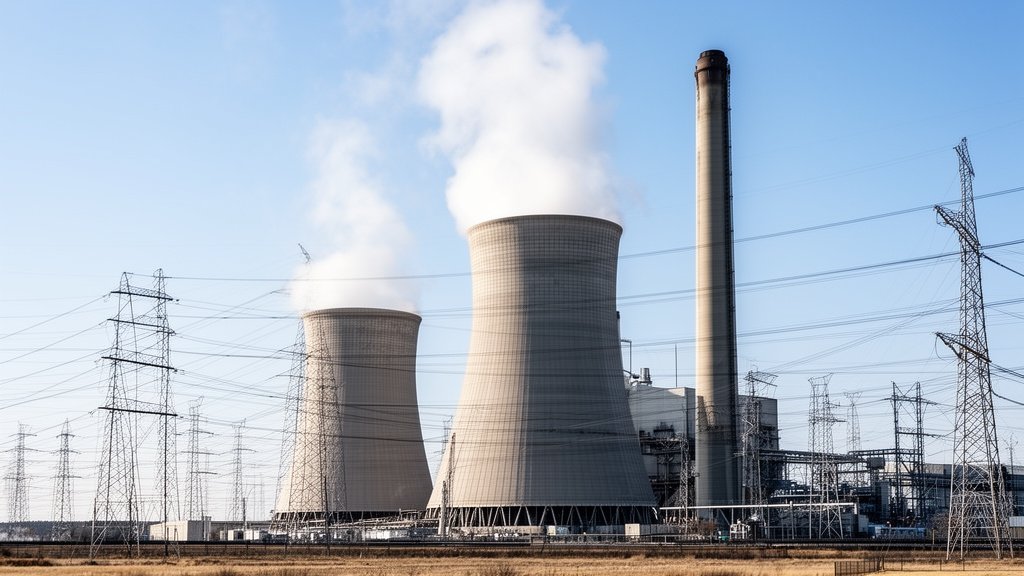
Federal Order Keeps Key Indiana Coal Plants Online for Grid Reliability
The U.S. Department of Energy, under the leadership of Secretary Chris Wright, has issued emergency directives mandating that two pivotal Indiana coal-fired power facilities, the R.M. Schahfer Generating Station and the F.B. Culley Generating Station, remain operational beyond their originally scheduled retirement dates. This federal intervention is a calculated move to reinforce grid reliability across the Midwest, specifically targeting the mitigation of potential power capacity shortfalls during periods of peak demand. As the regional energy landscape undergoes a rapid transition, federal officials have increasingly utilized emergency authorities to ensure that base-load generation remains intact to prevent the types of widespread outages that have plagued other interconnected grid regions.
The Strategic Necessity of Base-Load Reliability
The decision to prioritize the continued operation of the R.M. Schahfer and F.B. Culley plants is rooted in a fundamental concern regarding grid resilience. As utility providers move toward intermittent renewable sources like wind and solar, the capacity cushion—the extra margin of power generation available above peak demand—has tightened significantly. The Midwest, managed heavily by the Midcontinent Independent System Operator (MISO), has faced increased pressure to maintain frequency and voltage stability. By forcing these plants to stay online, the Department of Energy is effectively treating them as essential insurance policies against potential supply chain disruptions or sudden spikes in consumer energy demand. This move highlights a broader national debate on whether current decommissioning schedules for fossil fuel assets are outpacing the installation of viable, grid-scale storage technologies.
Technical Implications for Regional Grids
The R.M. Schahfer Generating Station, a major asset in Northern Indiana, and the F.B. Culley plant, located along the Ohio River, serve critical roles in balancing the local and regional energy mix. These plants were not merely selected at random; their geographical positioning allows them to serve as anchor nodes for high-voltage transmission lines that supply a significant portion of the Midwest industrial corridor.
Under the terms of the federal order, the operators must maintain fuel stockpiles and ensure the facility is staffed to meet full output capacity on demand. The technical complexity of ‘mothballing’ a power plant—the process of taking it offline and decommissioning it—is substantial. Reversing this process involves significant logistical challenges, including the re-hiring of specialized personnel, the securing of reliable coal supply chains, and environmental compliance monitoring that must be reconciled with federal mandates. The order effectively pauses the decommissioning timelines that utility companies had already planned, creating a ripple effect in capital expenditure planning and long-term grid integration strategies.
The Legal and Economic Framework
These directives are generally issued under Section 202(c) of the Federal Power Act, which grants the Secretary of Energy the authority to require entities to generate, transmit, or sell electric energy in emergency circumstances to alleviate capacity shortages. While such orders are not unprecedented, their frequency has increased as political administrations place a higher premium on energy security over the aggressive timelines for carbon reduction.
Economically, this mandate introduces a unique set of challenges. Utilities are now forced to operate facilities that were otherwise identified as liabilities in their long-term fleet management strategies. The additional costs associated with maintaining these aging assets—including maintenance, emission control updates, and fuel procurement—must be balanced against the regulatory necessity of ensuring the lights stay on. Industry analysts suggest that this creates a ‘regulatory floor’ for coal pricing, as the government is essentially creating a captive market for the coal required to keep these plants running, regardless of market-based renewable energy competition.
Future-Proofing the Grid: Challenges Ahead
Looking forward, this intervention underscores the precarious nature of the energy transition. If the grid’s reliability is contingent upon emergency orders to keep legacy coal plants alive, the underlying question remains: when will the replacement infrastructure be sufficient? The reliance on R.M. Schahfer and F.B. Culley is, according to the Department of Energy, a bridge measure. However, as these facilities continue to age, the cost of keeping them in a state of ‘operational readiness’ will inevitably climb.
Furthermore, this move may influence how private utility companies approach future retirement announcements. By signaling that the federal government will intervene if grid stability is threatened, the administration is subtly changing the risk assessment for utilities planning their asset portfolios. Companies may now be more cautious about retiring any base-load capacity without definitive federal sign-off, potentially slowing the transition to a cleaner energy mix in the short term, but arguably providing a safer buffer for the regional grid until more modern energy storage solutions can be deployed at scale.


Related Posts