Global Turmoil: Russia Unleashes Massive Drone Assault on Ukraine as Trump Brokers Gaza Ceasefire; France Plunges into Political Crisis
In a day marked by simultaneous major global developments, Russia launched one of its largest air assaults on Ukraine, while former U.S. President Donald Trump announced a significant breakthrough in the Gaza conflict, and France found itself on the brink of governmental collapse. These interconnected events paint a picture of a world grappling with escalating conflicts and profound political instability.
Russia’s Intensified Assault on Ukrainian Cities
On the night of September 7-8, 2025, Russia unleashed a colossal air attack across Ukraine, deploying an estimated 810 to 818 drones and more than a dozen missiles in what has been described as the largest assault of the war. The barrage targeted critical infrastructure and civilian areas in multiple cities, including Kyiv, Odesa, Kremenchuk, Sumy, Dnipro, Kryvyi Rih, and Zaporizhzhia. In the Ukrainian capital, the Cabinet of Ministers building sustained damage, and residential areas were hit, leading to casualties. Reports indicate that at least six civilians were killed and 21 injured, with other accounts suggesting over 40 injured nationwide and some reports detailing up to 80 casualties. Ukrainian President Volodymyr Zelenskyy acknowledged the brazen nature of the attacks, emphasizing Russia’s intent to inflict pain and stressing the crucial need for continued international support, particularly for air defense systems. Despite the scale of the offensive, Ukraine’s air defense forces demonstrated remarkable effectiveness, intercepting a substantial majority of the incoming threats, with over 90% of launched weapons reportedly neutralized. Analysts suggest these widespread attacks are not random but are part of Russia’s strategic preparations for a decisive offensive in the Donbas region, signaling a new phase of tactics aimed at crippling Ukraine’s logistical capabilities.
Trump Secures Tentative Gaza Ceasefire Agreement
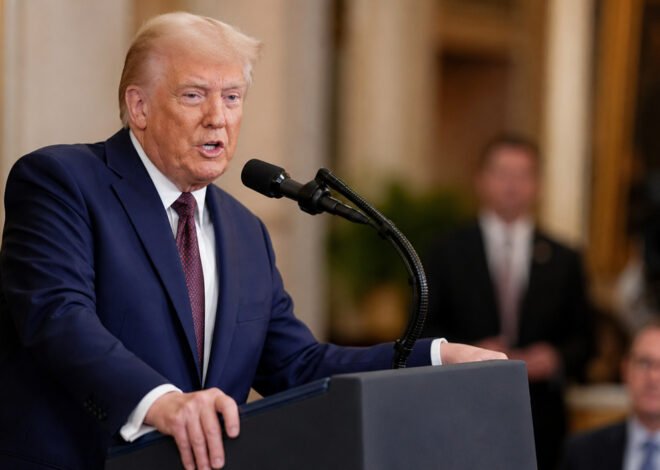
Amidst the escalating conflict in Eastern Europe, former U.S. President Donald Trump announced on September 8, 2025, that Israel had accepted his proposed terms for a ceasefire in Gaza. Trump declared, “The Israelis have accepted my Terms. It is time for Hamas to accept as well,” issuing a final warning to the militant group. Israeli Foreign Minister Gideon Saar corroborated this, stating that Israel was prepared for a comprehensive deal that would include the release of hostages and Hamas laying down its arms. The proposed framework centered on Hamas releasing all living hostages in exchange for Palestinian prisoners and a withdrawal of Israeli forces. Specifically, Hamas was expected to release 20 living hostages and the remains of 28 deceased individuals, while Israel would free over 1,000 Palestinian prisoners.
Hamas responded positively to the U.S.-backed proposal, acknowledging certain elements such as relinquishing power and freeing hostages, though it indicated further internal consultations were necessary. A significant development occurred on October 8, 2025, when Israel and Hamas officially agreed to the initial phase of a ceasefire, largely adhering to Trump’s 20-point plan. This phase involved the crucial exchange of hostages and prisoners. However, Hamas’s full commitment was contingent on specific conditions, including the meeting of field conditions for the exchange and notably, it did not fully commit to disarmament or relinquishing influence in Gaza. By late October, the ceasefire, while providing a respite, was described as having a rocky implementation and remaining fragile, with the path to subsequent phases uncertain.
France Gripped by Political Crisis as Prime Minister Ousted
France found itself embroiled in a deep political crisis on September 8, 2025, as Prime Minister François Bayrou’s government was toppled in a pivotal confidence vote. The vote was triggered by Bayrou himself, who sought parliamentary backing for his austere budget plan. This controversial budget aimed to slash €44 billion in public spending to address France’s significant deficit of 5.8% of GDP and its mounting debt of 114% of GDP, and included unpopular measures such as the removal of two public holidays. Opposition parties, spanning the political spectrum from the far-right National Rally to left-wing factions, had pledged to vote against the government. The gamble by Bayrou backfired spectacularly, resulting in his overwhelming defeat in the National Assembly with 364 deputies voting against his government and only 194 in favor. This outcome made Bayrou the first modern French prime minister to be removed through a confidence vote rather than a no-confidence motion, plunging the nation into further political uncertainty. The collapse of his administration, which had been in power for just nine months, has compelled President Emmanuel Macron to initiate a search for a fourth prime minister in a little over a year, exacerbating concerns about legislative deadlock and the timely approval of the crucial 2026 budget.
Other Developments and Global Context
In parallel, the Trump administration initiated “Operation Midway Blitz” in Chicago around September 6-8, 2025, an immigration enforcement surge targeting “criminal illegal aliens” and sanctuary cities. This operation, characterized by aggressive tactics, led to the arrest of hundreds of immigrants, sparking protests and fueling tensions. Meanwhile, Israel had begun the initial stages of a significant military offensive in Gaza City, codenamed Operation Gideon’s Chariots II, on August 20, 2025, with a main offensive commencing on September 15, 2025.
These widely disparate yet significant recent events underscore a period of intense global flux, with conflicts in Eastern Europe and the Middle East continuing to dominate headlines, while domestic political stability remains a challenge for major European powers.


Related Posts