Kohat Police Complex Massacre: 31 Killed in Targeted Attack
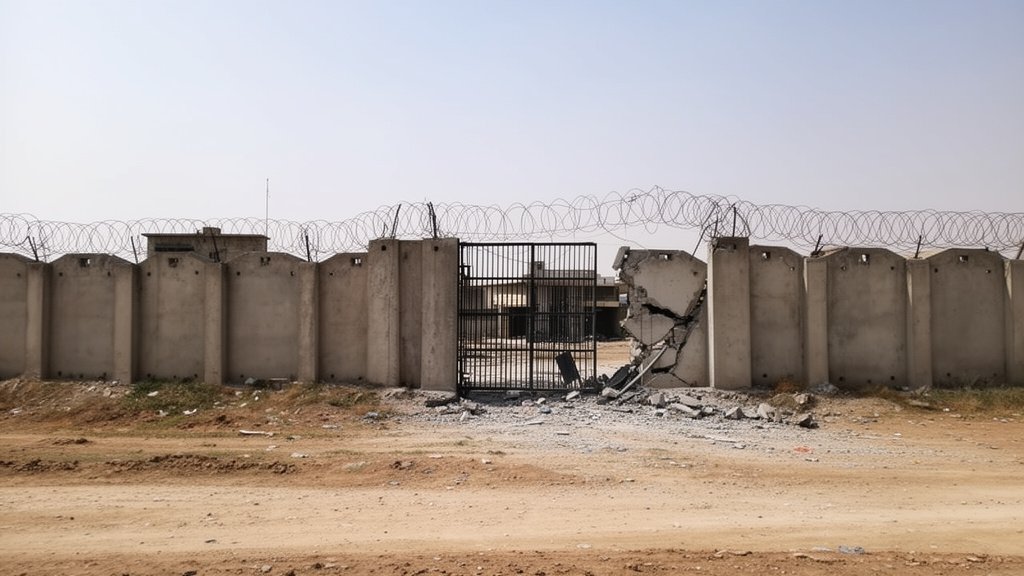
The security situation in Pakistan has faced a harrowing setback following a coordinated and violent attack on a police complex in the city of Kohat, located in the Khyber Pakhtunkhwa province. The assault, which claimed the lives of at least 31 individuals, has sent shockwaves through the region, marking one of the most significant security breaches in recent memory. Authorities are currently engaged in a massive forensic and intelligence operation to trace the origins of the assailants, while the local population remains under a heightened state of alert as officials scramble to reinforce protective measures.
Key Highlights
- Death Toll: At least 31 people confirmed dead, with several others sustained injuries during the prolonged siege.
- Strategic Location: The attack targeted a police complex in Kohat, a critical junction in the Khyber Pakhtunkhwa province known for its strategic importance in counter-terrorism operations.
- Security Escalation: The incident marks a significant escalation in regional violence, challenging the operational capabilities of local law enforcement against organized militant factions.
- Investigation Ongoing: Intelligence agencies and the Counter-Terrorism Department (CTD) are investigating potential links between the attackers and regional extremist organizations.
The Siege of Kohat: Unpacking the Security Catastrophe
The attack on the Kohat police complex represents more than a singular event; it serves as a grim indicator of the evolving tactics employed by non-state actors in the Khyber Pakhtunkhwa (KP) region. The sheer precision and lethality of the operation suggest a high level of logistical coordination, raising difficult questions about the vulnerabilities within local law enforcement infrastructure. As investigators comb the scene, the focus remains on how a heavily fortified facility was breached and what this signifies for the broader security apparatus of Pakistan.
The Operational Reality of the Assault
Initial reports indicate that the attackers utilized a combination of small arms fire and, in some instances, explosive devices to overwhelm the perimeter security of the police complex. The speed of the incursion prevented an immediate defensive response, allowing the militants to secure key positions within the facility before eventually being confronted by security reinforcements. This specific methodology—striking at the heart of law enforcement hubs—is often utilized to demoralize local police forces and force a diversion of resources away from border defense and towards domestic urban security.
The human cost is devastating. With 31 lives lost, the attack has devastated the families of police personnel and administrative staff who were on duty during the incident. The psychological impact on the remaining force is profound, as law enforcement agencies across the region are now forced to operate under a cloud of uncertainty, anticipating further incursions.
Secondary Angle 1: The Resurgence of Militancy in KP
The Khyber Pakhtunkhwa province has long been a frontline in the struggle against militancy. Historically, the mountainous terrain and proximity to the border made this region a logistical hub for extremist groups. In recent years, while there was a period of relative calm, this latest attack signals a potential resurgence. The tactical sophistication suggests that these groups have not only regrouped but are actively adapting their strategies to counter the surveillance capabilities of the state. This trend forces a reevaluation of the current counter-insurgency doctrine.
Secondary Angle 2: The Infrastructure of Vulnerability
A critical analysis of the Kohat event highlights a glaring issue: the physical security of law enforcement installations in secondary and tertiary cities. While major urban centers like Islamabad or Lahore benefit from high-level, centralized intelligence monitoring, smaller police complexes in regions like Kohat often suffer from outdated defensive architecture. The lack of blast-proof perimeter walls, limited electronic surveillance, and reliance on human-sentries alone makes these facilities “soft targets” for highly motivated, armed groups. This incident will likely spark a massive budget reallocation toward infrastructure hardening.
Secondary Angle 3: The Economic and Social Fallout
Beyond the immediate tragedy, the attack carries heavy economic consequences for Kohat. Increased security measures mean longer commute times, disruption to trade routes, and a general climate of fear that stifles commercial activity. Investors, wary of the instability, often pause operations, leading to a localized economic slowdown. For a city that relies on steady economic output to support its growing population, this instability acts as an invisible tax, draining resources that could otherwise be used for urban development and public services.
FAQ: People Also Ask
Q: What is the current status of the investigation into the Kohat attack?
A: The Counter-Terrorism Department (CTD) and provincial intelligence services have cordoned off the area and are currently gathering forensic evidence. No group has immediately claimed responsibility, but investigators are actively mapping communication patterns and potential ideological links to known militant factions operating within the province.
Q: Why was the Kohat police complex targeted specifically?
A: Kohat serves as a strategic crossroads between major provinces and tribal districts. By attacking a police complex, the perpetrators aim to undermine state authority, disrupt law enforcement communications, and create a narrative of impunity that challenges the government’s grip on the region.
Q: How will this affect security measures in the region?
A: Security experts anticipate a rapid rollout of “Red Zone” protocols across police facilities in KP. This includes increased vehicle screening, mandatory perimeter hardening, the installation of advanced surveillance cameras, and a possible increase in paramilitary patrols to support local police.
Q: Is there a history of violence in this specific part of Pakistan?
A: Yes. Khyber Pakhtunkhwa has historically been a focal point for conflict due to its geography. The region has seen cycles of violence involving various factions, including the TTP (Tehreek-e-Taliban Pakistan) and other splinter groups, making security a permanent and paramount concern for provincial governance.


Related Posts