Moscow Rocked: Ukraine Launches Massive, Record-Breaking Drone Assault
The night sky over the Russian capital was pierced by a wave of incoming projectiles as Ukraine launched its most extensive drone attack on Moscow since the inception of the 2022 conflict. Authorities reported a coordinated strike involving a massive fleet of unmanned aerial vehicles, forcing Russian air defenses into a high-intensity engagement that lasted into the early hours of the morning. This unprecedented aerial offensive, which targeted critical infrastructure and residential outskirts, marks a strategic turning point in the asymmetric warfare between Kyiv and Moscow, signaling a shift in Ukraine’s capability to project power deep into Russian territory while the nation undergoes a period of significant political maneuvering.
Key Highlights
- Unprecedented Scale: The assault involved one of the largest single-night drone deployments against the Moscow region, overwhelming air defense systems in multiple districts.
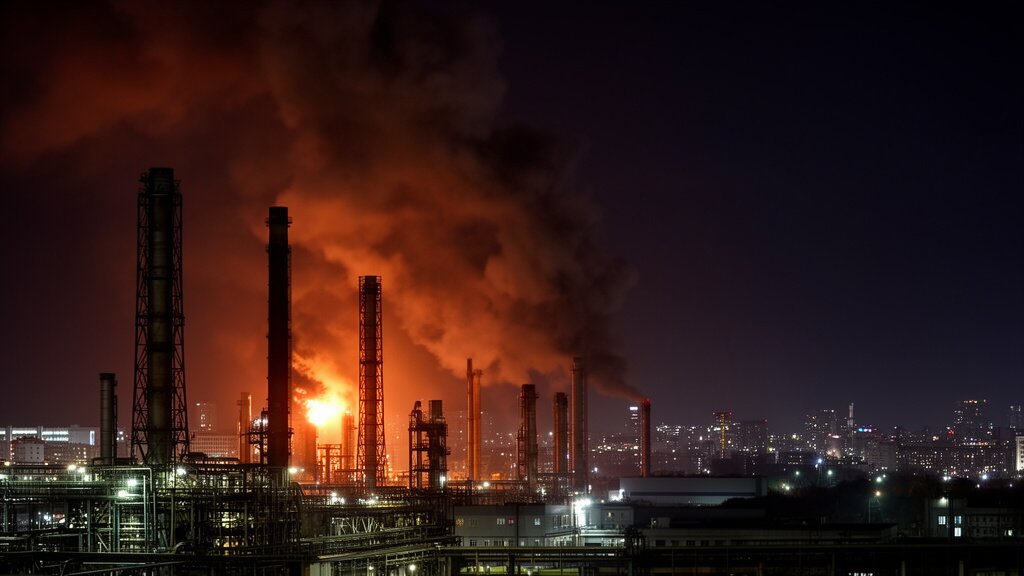
- Energy Infrastructure Hit: A significant fire broke out at the Moscow Oil Refinery in the Kapotnya district, raising concerns about the security of Russia’s domestic fuel supply chain.
- Election Timing: The attack coincided directly with Russia’s “Unified Voting Day,” a series of parliamentary and regional elections, creating a stark visual contrast between political stability and aerial vulnerability.
- Widespread Air Defense: Russian officials confirmed that dozens of drones were intercepted, though the sheer volume of the incoming swarm resulted in physical damage across multiple Moscow-area sites.
Escalation in the Heartland: Analyzing the Moscow Drone Strike
The most recent Ukraine drone attack on Moscow represents a significant recalibration of the battlefield. For months, Kyiv has incrementally expanded the operational radius of its domestically produced long-range loitering munitions. However, this specific operation demonstrates a new level of sophistication: mass saturation tactics designed to overwhelm dense, multi-layered air defense networks. By deploying a swarm of low-altitude, inexpensive drones, Ukrainian forces successfully bypassed localized protection, forcing the Russian military to expend high-value interceptor missiles on relatively low-cost targets.
Targeting the Energy Spine
One of the most consequential outcomes of this operation was the strike on the Moscow Oil Refinery, located in the Kapotnya district. Historically, energy infrastructure has been a sensitive pressure point in the conflict. By targeting the refinery, Ukraine is not only attempting to disrupt the logistics of fuel distribution for the Russian military but also aiming to undermine the perception of normalcy within the Russian interior. The fire reported at the facility underscores the vulnerability of stationary industrial assets to drone warfare. Analysts suggest that if such attacks continue, the economic impact could extend beyond immediate repair costs, potentially affecting domestic fuel prices and industrial output in the Moscow region.
Political Symbolism and the Election Context
The timing of the assault cannot be overlooked. Occurring during Russia’s “Unified Voting Day,” the attacks serve a dual purpose. Militarily, they force the Kremlin to divert resources from the front lines to protect the capital and other major urban centers. Politically, they act as a psychological intervention. By bringing the reality of the war directly to the streets of Moscow during a period intended to showcase national unity and political continuity, Ukraine is effectively challenging the Kremlin’s narrative that the “special military operation” remains a distant, managed conflict with minimal domestic impact.
The Technological Evolution of the Raid
The evolution of drone technology is the defining variable in this operation. Intelligence reports indicate that these were not off-the-shelf hobbyist drones, but rather specialized, longer-range platforms equipped with advanced navigation capabilities. This shift suggests a robust investment by the Ukrainian Armed Forces in domestic manufacturing, reducing reliance on Western-supplied weapon systems that often come with restrictive usage policies regarding strikes inside Russian sovereign territory. The ability to manufacture and launch these assets independently provides Kyiv with strategic autonomy, enabling them to strike deep into the Russian heartland at times of their choosing.
Strategic Outlook and Future Risks
Looking ahead, the success of this large-scale raid suggests a new normal. If Ukraine can reliably penetrate Moscow’s airspace, the Russian Ministry of Defense will be forced to reconsider its allocation of assets. This could lead to a permanent thinning of air defense capabilities on the actual front lines, as Moscow prioritizes the protection of the capital. For the civilian population, this means a new reality of frequent air raid sirens and the lingering threat of debris-related damage. The conflict has moved decisively from a static trench war into a highly fluid, deep-strike engagement that threatens the political and economic centers of the aggressor nation.
FAQ: People Also Ask
Q: How many drones were involved in this specific attack?
A: While exact numbers fluctuate as official reports are updated, Russian authorities and independent observers noted a massive, multi-wave swarm exceeding typical defensive capacities, effectively marking it as the largest such coordinated strike in the conflict to date.
Q: Were there casualties reported from the refinery strike?
A: Local emergency services in Moscow reported initial incidents of casualties and injuries; however, full assessment teams were deployed to the Kapotnya refinery to manage fire suppression and search operations, with precise fatality figures being carefully vetted by official agencies.
Q: How does this impact Russia’s parliamentary elections?
A: The elections, part of the annual “Unified Voting Day,” continued despite the drone threat. However, the psychological impact of the attack, forcing citizens in the capital to confront the war directly, created a tense atmosphere that stood in direct contradiction to the Kremlin’s narrative of stability.
Q: Are these attacks likely to continue?
A: Military analysts largely agree that the development of long-range drone capabilities by Ukraine makes further strikes on Moscow and other major Russian industrial centers not only likely but probable, as Kyiv seeks to apply persistent pressure on the Russian interior.


Related Posts