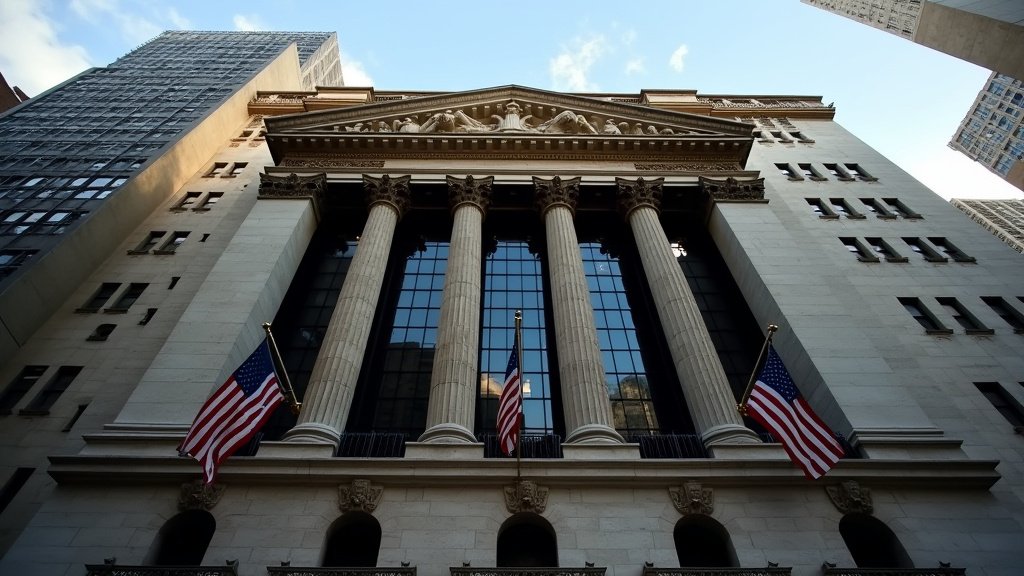
Nasdaq Surges as Oil Dips: Market Risk Appetite Returns
Wall Street saw a decisive shift to risk-on sentiment this Monday, September 21, 2026, as the Nasdaq Composite surged, fueled by a sharp retreat in global oil prices and growing optimism regarding central bank interest-rate trajectories. Following weeks of volatility driven by persistent inflationary fears, investors are now recalibrating their portfolios to favor technology and growth-oriented equities, buoyed by the prospect of reduced input costs for global industry and a stabilization in economic forecasts.
Key Highlights
- Nasdaq leads the market rally as declining energy costs alleviate pressure on corporate margins.
- Investor risk appetite returns to the fore as inflation concerns temporarily subside.
- Market participants are closely watching the upcoming US-China summit for potential cooling of trade tensions.
- Developments at the United Nations General Assembly (UNGA) are being monitored for clues on global policy alignment and geopolitical stability.
The 2026 Market Pivot: Why Risk Appetite is Returning
The market narrative shifted abruptly on September 21, 2026. After a period defined by defensive positioning and an obsessive focus on interest-rate hikes, the primary indices, particularly the Nasdaq, responded with enthusiasm to a downward trend in oil prices. The correlation is historical and fundamental: when energy prices spike, they act as an implicit tax on both consumers and the corporate sector, squeezing profit margins and fueling inflation. As these prices retreated during today’s trading session, the relief was palpable, allowing investors to move back into high-growth sectors, specifically software, semiconductors, and large-cap tech platforms that had been previously oversold.
The Correlation Between Oil and Tech
Technology stocks often share an inverse relationship with energy costs. While energy companies benefit from high commodity prices, the broader economy—and the tech sector in particular—suffers when logistical and power costs rise. The sudden retreat in oil benchmarks today provided a double tailwind: first, it suggested that the inflationary “heat” of the last quarter may be beginning to dissipate, potentially easing the Federal Reserve’s need for further aggressive tightening. Second, it improved the forward-looking earnings guidance for companies that rely on global supply chains, which have been plagued by transportation and production costs throughout 2026. This dynamic is currently the primary driver of the Nasdaq’s outperformance relative to the Dow Jones Industrial Average.
Geopolitical Crosscurrents: UNGA and US-China Relations
While the market is celebrating the relief in commodity prices, a significant portion of today’s volume is being driven by anticipation. All eyes are on the diplomatic calendar. The upcoming US-China summit is not merely a political event; for institutional investors, it represents the potential for a breakthrough in trade barriers that have hampered global manufacturing for months. If the summit results in even minor tariff concessions or clearer regulatory frameworks for technology export controls, analysts expect a further rally in cross-border tech equities.
Simultaneously, the UN General Assembly (UNGA) is serving as a backdrop for discussions on global economic cooperation. The presence of key financial ministers and heads of state at the UNGA provides a venue for tacit agreements that can stabilize currency markets and reduce the “uncertainty premium” that has plagued the S&P 500 throughout the summer. The market is currently pricing in a scenario of “geopolitical normalization,” assuming that the diplomatic talks will serve as a floor for market volatility rather than a catalyst for new conflict.
Analyzing the Inflation Outlook
We must remain objective: while today is a win for the bulls, the underlying inflationary environment remains complex. September 2026 has been marked by a tug-of-war between strong labor data and cooling commodity prices. Today’s surge suggests that the market has temporarily decided that the cooling in energy costs is a more significant long-term signal than the recent labor reports. This reflects a “Goldilocks” hope: that inflation can moderate without necessitating a recessionary hard landing. However, until the next Consumer Price Index (CPI) print, this remains a sentiment-driven rally rather than one based on finalized macro-economic data.
Sector Rotation and Investor Strategy
Savvy investors are currently rotating out of safe-haven commodities and into growth-stage companies. The move is not just a reaction to the Nasdaq’s momentum, but a strategic reallocation. When oil drops, the “cost of doing business” for tech giants drops immediately. We are observing increased inflows into cloud computing and cybersecurity sub-sectors, which are viewed as essential infrastructure rather than discretionary spending. For the retail investor, the advice remains the same: monitor the volatility indices (VIX). If the Nasdaq maintains these gains through the close of the week, it will confirm that the current risk-on sentiment has legs, provided that geopolitical negotiations remain stable.
FAQ: People Also Ask
1. Why do falling oil prices help the Nasdaq specifically?
Falling oil prices act as a direct cost-reducer for the tech sector. Tech companies, particularly those involved in hardware, shipping, and cloud infrastructure (which requires massive power consumption), see their operational costs decrease, which directly improves their bottom-line earnings and forward-looking growth forecasts.
2. How does the US-China summit impact market volatility?
Markets despise uncertainty. The US-China relationship is the single largest “unknown variable” in global trade. A summit provides a mechanism for conflict resolution. Even the act of diplomacy signals to the market that both nations are seeking stability, which reduces the perceived risk and encourages institutional capital to enter the market.
3. What should investors look for in the UN General Assembly outcomes?
Investors should monitor for any joint statements regarding supply chain cooperation, energy policy, or trade regulations. Specifically, any announcements that imply a coordinated effort to manage global energy reserves or trade, rather than unilateral actions, will be viewed positively by global equity markets.


Related Posts